climax
Morinda Spruce
kachal
Picea smithiana
Also known as Kachal (Pakistan), West Himalayan Spruce (UK & Ireland).
- kpk hills
International hardiness
- USDA 6-8
- RHS H6
- AU: Cool temperate
Where it grows — regional guide
| Zones / rating | Regional notes |
|---|---|
USDA 6-8 | No region-specific data yet |
| Zones / rating | Regional notes |
|---|---|
H6 (-20 to -15C) | Hardy at RHS H6 and grown as a striking ornamental specimen; it requires cool, moist temperate conditions and deep, well-drained ground. |
| Zones / rating | Regional notes |
|---|---|
Cool temperate | No region-specific data yet |
| Zones / rating | Regional notes |
|---|---|
USDA 6-8 (USDA scale) Canada uses its own zone system; Canadian zones run roughly one lower than USDA. | No region-specific data yet |
| Zones / rating | Regional notes |
|---|---|
KPK hills | Pakistan:A large evergreen conifer of the KPK hills; it requires cool, moist temperate conditions and provides permanent structure rather than an annual crop. India:Native to the western Himalaya, it requires cool, moist temperate conditions and provides permanent structure on well-drained, acidic ground. |
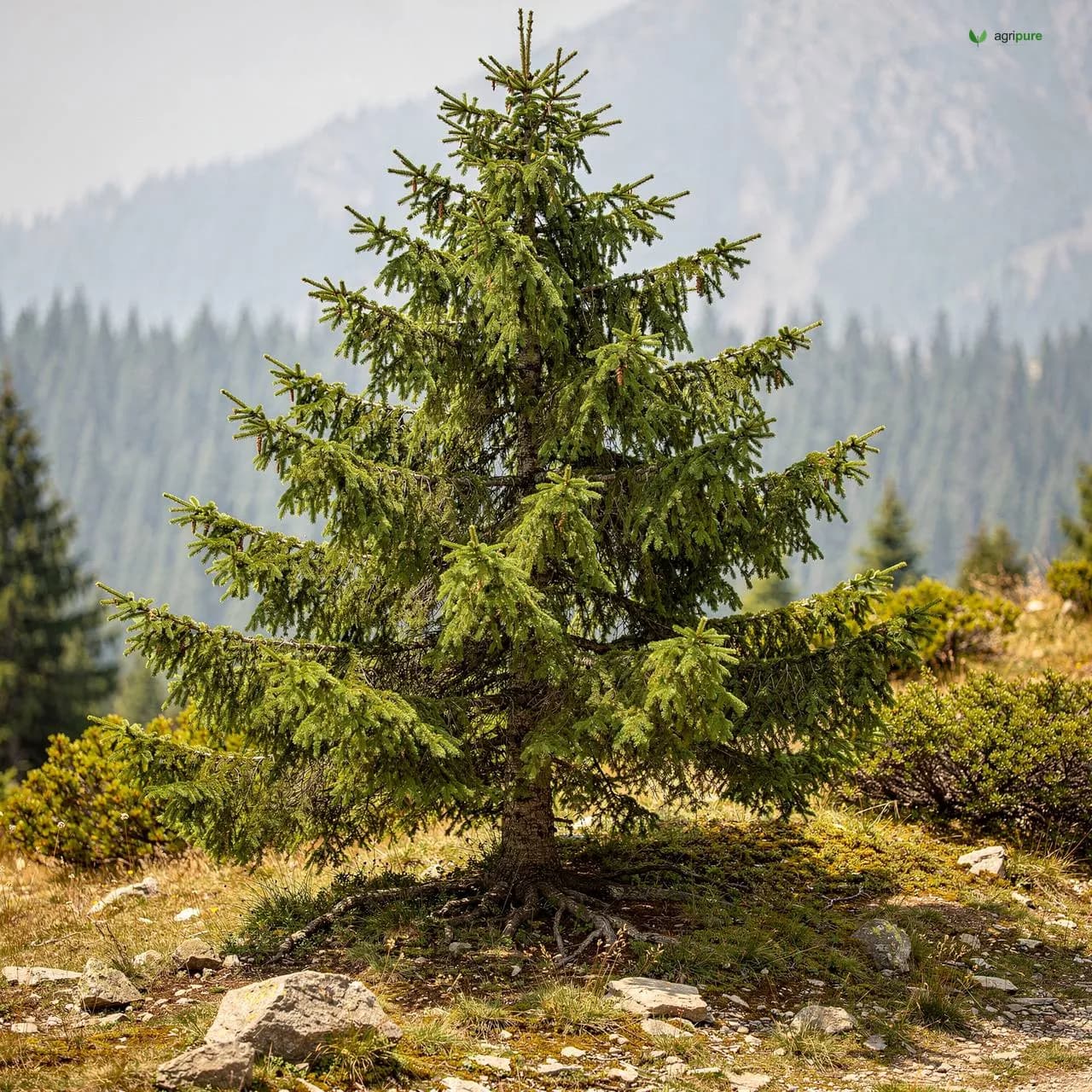
Morinda spruce (Picea smithiana), also known as the West Himalayan spruce, is a very large, long-lived evergreen conifer native to the western Himalaya and adjacent ranges, from northeast Afghanistan and northern Pakistan through India to central Nepal. It is grown chiefly as an ornamental specimen tree and for timber rather than as a food or medicinal plant, and reputable references do not record any established human edibility or medicinal use for the species. For the homesteader with space and a cool, moist site, its appeal is straightforward: it is a striking, hardy, slow-but-permanent shade and shelter tree, and one of the most graceful conifers you can plant where the climate suits it.
The most reliable way to recognise Morinda spruce is the combination of unusually long needles and strongly drooping branchlets on a tall, conical tree. The needles are needle-shaped, mid-green, about 3 to 5 cm long and roughly 1.8 mm broad — the longest of any spruce — rhombic in cross-section with inconspicuous stomatal lines, and the long, pendulous branchlets give the foliage a sparse, weeping look. Mature trees typically reach 40 to 55 m tall, exceptionally to 60 m, with a trunk 1 to 2 m in diameter and a conical crown of more or less level main branches. The bark is pale brown, breaking into irregular platelets with age, and the young shoots are pale buff-brown and hairless. Cones are broadly cylindric-conic, 9 to 16 cm long and about 3 cm broad, green when young and ripening to buff-brown or purple-brown; they open to about 5 to 6 cm wide some five to seven months after pollination, and their scales are stiff and smoothly rounded.
Growing Morinda spruce
Morinda spruce is a tree for a cool, moist temperate climate. In its native habitat it grows in coniferous forest at 2,400 to 3,600 m, often mixed with deodar cedar (Cedrus deodara), blue pine (Pinus wallichiana), and pindrow fir (*Abies pindrow*). The Royal Horticultural Society rates it as hardiness H5, meaning it is hardy through most of the UK and tolerates roughly −15 to −10°C. Primary botanical sources describe its mountain climate rather than assigning USDA zones, so it is best matched to a site by its cold-hardiness and its clear preference for moisture rather than by a precise zone figure.
Give it full sun; full sun to light shade is acceptable. It does best in deep, moist but well-drained soil that is neutral to acidic, and it is described as preferring moist conditions rather than dry — it is not characterised in reputable references as drought-tolerant, so it is not a tree for parched ground. Because it is naturally a forest tree of well-watered mountain slopes, reliable soil moisture combined with good drainage is the key to establishing it.
This is a slow, long-horizon planting. In garden conditions the RHS gives an ultimate height of more than 12 m and an ultimate spread of more than 8 m, reached over 20 to 50 years; in forest or over the very long term the same tree can climb to its full 40-to-55 m stature. Given a mature spread on the order of 7 to 8 m or more, a single specimen needs generous room, and several trees should be set well apart so each can develop a full crown. Detailed propagation timings, sowing temperatures, and exact planting distances are not consistently documented in the general sources here, so they are left out rather than stated with false precision; in practice, treat it as a permanent canopy tree, plant it where it has decades of space, and do not expect quick returns.
Harvest and uses
Morinda spruce is grown for its form and its wood, not for a crop. As an ornamental, it is valued in large gardens and estates precisely for that distinctive silhouette of very long needles and weeping branchlets on a tall conical frame. As a timber tree it yields the tall, straight-boled softwood typical of the spruces where it grows well. There is no documented culinary or medicinal harvest from this species in the reputable sources consulted; its return to the homestead is a permanent evergreen presence that provides shade, shelter, and structure over the long life of the tree rather than an annual yield.
How to identify it
Morinda spruce can be told from other spruces by a small set of features taken together:1
- Habit: a tall, conical evergreen conifer, mature at 40 to 55 m (rarely to 60 m), with level main branches and conspicuously pendulous, drooping branchlets.
- Needles: mid-green, 3 to 5 cm long — the longest of any spruce — rhombic in cross-section, giving a sparse, weeping look to the shoots.
- Bark and shoots: pale brown bark breaking into irregular platelets with age; young shoots pale buff-brown and hairless.
- Cones: broadly cylindric-conic, 9 to 16 cm long, green ripening to buff- or purple-brown, with stiff, smoothly rounded scales.
Sources
- Picea smithiana — Wikipedia
- Picea smithiana (Morinda spruce) — Royal Horticultural Society
- Plant of the Week: Picea smithiana — David Marsh, Landscape Architecture
Sourcing notes
Raise from seed collected in the moist-temperate KPK forests; nursery stock comes through provincial forest departments. Protect slow-growing seedlings from browsing and plant only on cool, moist upper slopes.