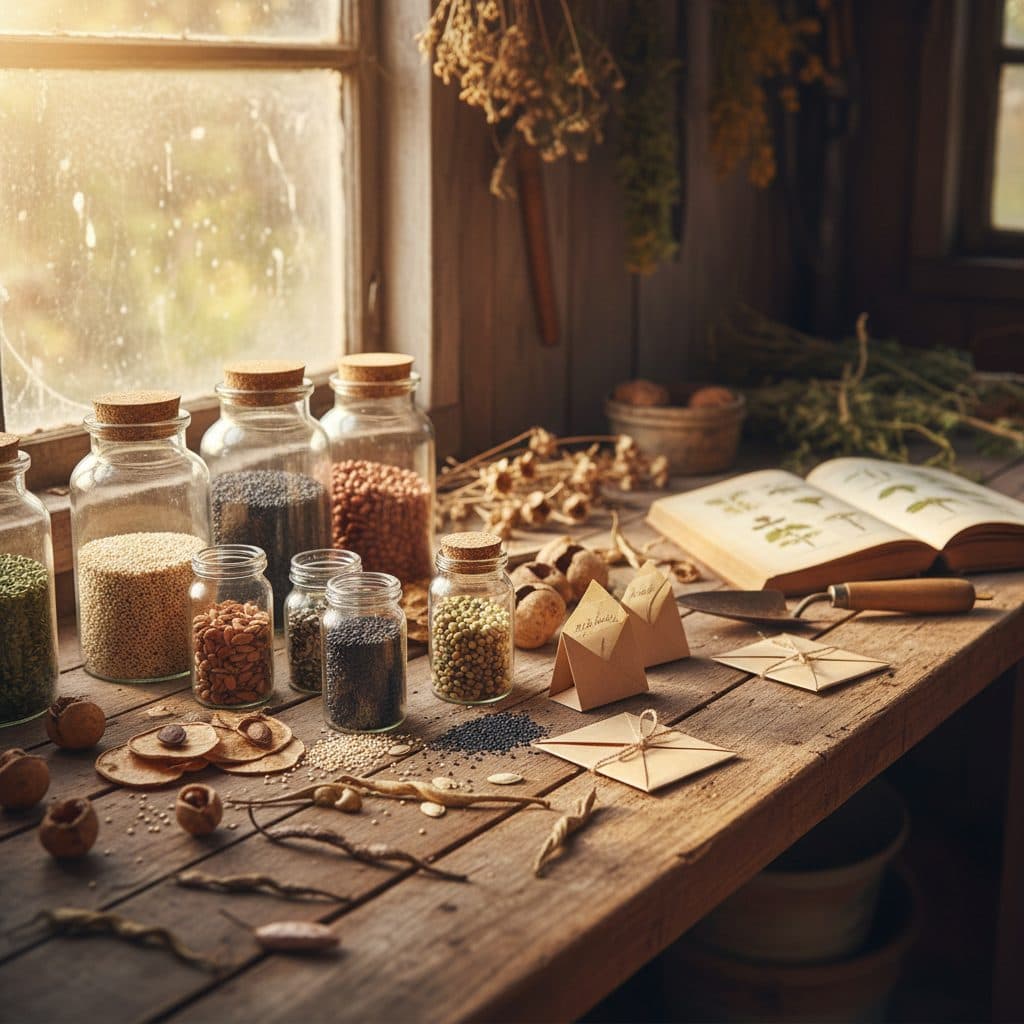
Key takeaways
- Proper drying to 6-8% moisture content is critical for long-term seed viability, especially for beans and peas.
- Storing seeds in cool, dark, and dry conditions—ideally below 40°F with 30% relative humidity—can extend their lifespan by several years.
- Integrating seed saving with crop rotation helps prevent disease buildup and maintains soil health over a three-to-five-year cycle.
- Succession planting with saved seeds allows for continuous harvests, such as planting radishes every two weeks in USDA zone 7.
- Understanding your specific USDA zone is essential for timing seed collection and planting, maximizing the success of saved varieties.
- Regular germination testing, even every two to three years, confirms seed viability, helping avoid planting failures.
Quick answer: To ensure high seed viability, properly dry seeds to 6-8% moisture, store them in cool (below 40°F), dark, and dry (30% RH) conditions, and conduct regular germination tests.
For growers in the Midwest, particularly across USDA zones 4 through 6 to ensure a reliable seed supply is a foundational practice for a productive garden. When you save seeds from your most successful plants, you also adapt it to your specific local conditions over multiple seasons. This practice can significantly reduce annual seed costs, potentially saving hundreds of dollars for a one-acre market garden each year, while also building resilience into your planting strategy.
The goal is to collect seeds and store them effectively so they remain viable for the next growing season, or even for several years beyond. From the dry seeds of beans and corn to the wet seeds of tomatoes and cucumbers, each type requires specific handling to maintain its genetic potential. This article will guide you through the practical steps of collecting, processing, and storing seeds, integrating these practices with effective crop rotation and succession planting strategies tailored to various US regions.
The foundation: selecting and collecting seeds
Successful seed saving begins with careful selection of parent plants. In a typical 100-square-foot garden plot, you might select the five strongest tomato plants for seed collection to ensure they are free from disease and exhibit desirable traits like early fruiting or pest resistance. For open-pollinated varieties, isolation is key to maintaining genetic purity; for example, corn varieties should be isolated by at least 250 feet, or planted at different times to prevent cross-pollination. This careful selection ensures that the genetic material passed on is strong and well-suited to your specific growing conditions, such as the hot, humid summers common in USDA zone 7.
understanding seed types and collection methods
Seeds fall into two main categories: dry-fruited and wet-fruited. Dry-fruited seeds, like those from beans, peas, and grains, are typically left to dry on the plant until they are hard and brittle, often with a moisture content below 10%. For example, bean pods should be completely dry and rattling before harvest, which might occur in late August in USDA zone 6. Wet-fruited seeds, such as those from tomatoes, cucumbers, and melons, require fermentation to remove the gelatinous coating that inhibits germination and protects against seed-borne diseases. This process usually involves soaking the seeds in water for three to five days at room temperature, around 70°F, until a thin layer of mold forms on the surface. After fermentation, the seeds are rinsed thoroughly and spread out to dry completely.
- Select healthy, vigorous parent plants free from disease.
- Ensure proper isolation distances for open-pollinated varieties to prevent cross-pollination.
- Harvest dry-fruited seeds when fully mature and brittle on the plant.
- Ferment wet-fruited seeds for three to five days to remove germination inhibitors.
- Clean seeds thoroughly to remove all pulp and debris before drying.
Drying and preparing seeds for storage
After collection, proper drying is the single most important step to ensure long-term viability. Seeds must be dried to a very low moisture content, typically between 6% and 8%, to prevent mold growth and maintain their ability to germinate later. For example, bean seeds with a moisture content above 12% are highly susceptible to fungal infections during storage. Spreading seeds in a single layer on screens or paper plates in a well-ventilated area, away from direct sunlight, is effective. An indoor space with a consistent temperature of 68-75°F and relative humidity below 50% for one to three weeks works well for most varieties. In humid climates, like Florida’s USDA zone 9, using a dehumidifier or even a food dehydrator on its lowest setting (below 95°F) for a few hours can significantly speed up this process and prevent spoilage.
testing seed viability before long-term storage
Before committing a batch of seeds to long-term storage, it’s prudent to perform a simple germination test. This helps you understand the percentage of seeds that are still alive and capable of growing. To conduct a test, count out 10 seeds from your batch and place them on a damp paper towel. Roll up the towel, place it in a plastic bag to maintain humidity, and keep it at room temperature, typically 70°F. Check the seeds every two to three days for up to two weeks, or until germination ceases. If eight out of 10 seeds sprout, you have an 80% germination rate, which is generally acceptable for planting. Seeds with a rate below 50% might require planting more densely or discarding. This simple test, which takes only a few minutes, can save you significant time and effort during planting season, especially for older seed lots from previous years. Radish seeds, for example, often maintain 90% viability for three to five years when stored correctly.
- Dry seeds thoroughly to 6-8% moisture content to prevent mold.
- Use screens or paper plates in a well-ventilated area for drying.
- Consider a dehumidifier in high-humidity regions like the Gulf Coast.
- Perform a germination test on 10 seeds to determine viability percentage.
- Aim for at least a 70% germination rate for reliable planting.
Optimal storage conditions for long-term viability
Once thoroughly dried, seeds need specific conditions to maintain their viability for extended periods. The general rule of thumb is that for every 10°F decrease in temperature and every 1% decrease in relative humidity, the lifespan of seeds can double. Ideal storage conditions involve a cool, dark, and dry environment. Temperatures between 32°F and 40°F are excellent for most common garden seeds, and relative humidity should be kept below 30%. For instance, tomato seeds stored at 70°F and 50% humidity might last three to four years, but at 40°F and 30% humidity, they could remain viable for eight to ten years. Glass jars with airtight lids, vacuum-sealed bags, or even sealed Mylar bags with desiccant packets (like silica gel) are effective containers for preventing moisture reabsorption. Beet seeds, for example, can maintain good viability for up to five years under these conditions [6].
understanding seed longevity by species
Different seed species naturally have varying lifespans, even under ideal storage conditions. Onion seeds, for example, are notoriously short-lived, often only viable for one to two years, while cucurbit seeds (squash, cucumbers, melons) can remain viable for five to six years. Legumes like beans and peas typically last three to five years, and brassicas such as cabbage and broccoli often maintain good viability for four to seven years. Knowing these general guidelines helps prioritize which seeds to plant first from your stored collection. Researchers have shown that low-cost seed storage technologies, such as hermetic containers, can significantly improve seed longevity for small-scale growers, especially in regions with fluctuating climates [2]. In a study, seeds stored in hermetic bags maintained 85% viability after 18 months, compared to 60% in traditional paper bags [2].
- Store seeds in cool temperatures, ideally 32-40°F.
- Maintain low relative humidity, preferably below 30%.
- Use airtight containers like glass jars or vacuum-sealed bags.
- Add desiccant packets to absorb any residual moisture.
- Label all containers clearly with seed type, variety, and date of collection.
Integrating saved seeds with crop rotation and succession planting
Saved seeds are an asset in a well-planned garden, especially when combined with strategic crop rotation and succession planting. Crop rotation, typically on a three-to-five-year cycle, involves moving different plant families to new beds each season to break pest and disease cycles and improve soil fertility. For example, following a heavy feeding crop like corn with a nitrogen-fixing legume like beans (from your saved seed stock) can reduce the need for synthetic fertilizers by up to 20%. This practice is particularly beneficial in preventing soil-borne pathogens that can devastate specific crops, such as early blight on tomatoes or clubroot on brassicas. In USDA zone 6, a four-year rotation might involve brassicas, then legumes, then root crops, and finally fruiting crops, using your saved seeds for each category. Cover crops, used in rotation, also significantly contribute to soil health.
maximizing harvests with succession planting
Succession planting involves making multiple plantings of the same crop, or different crops, in the same space over the growing season to ensure a continuous harvest. With a good supply of saved seeds, this becomes even more efficient. For fast-growing crops like radishes or lettuce, you can sow a small batch every two to three weeks from early spring until late summer. In USDA zone 7, you might plant a 10-foot row of radishes in early March, another in late March, and a third in mid-April. As one crop finishes, another is ready to be harvested, maximizing the yield from your garden space. This strategy is also excellent for extending the harvest of crops like bush beans or cilantro. For example, planting a 20-foot row of bush beans every three weeks from May to July can provide a steady supply throughout the summer. This approach not only increases productivity but also spreads out the workload and reduces the risk of a single crop failure impacting your entire harvest.
- Plan a three-to-five-year crop rotation to improve soil health and reduce disease.
- Follow heavy feeders with nitrogen-fixing legumes from your saved seeds.
- Sow fast-growing crops every two to three weeks for continuous harvests.
- Utilize saved seeds for multiple plantings of bush beans or lettuce.
- Adjust planting schedules based on your specific USDA zone and local climate.
Building a USDA zone planting calendar with saved seeds
A planting calendar tailored to your specific USDA hardiness zone is indispensable for maximizing the success of your saved seeds. These zones, ranging from 1 (coldest) to 13 (warmest), indicate the average annual extreme minimum winter temperature, which dictates when you can safely plant outdoors. For instance, in USDA zone 6, the last spring frost typically occurs around April 15, allowing for direct sowing of peas and radishes from saved stock shortly after. Conversely, in USDA zone 8, you might be able to start cool-season crops as early as February. By knowing your zone’s frost dates, you can accurately plan when to start seeds indoors, when to transplant seedlings, and when to direct sow. This precision minimizes the risk of losing young plants to unexpected cold snaps or heat waves, which protects your investment in saved seeds and time.
planning for fall and winter harvests
The utility of saved seeds extends beyond the spring and summer. Many cool-season crops can be succession planted for a fall harvest, and some can even be overwintered in milder zones. For example, spinach and lettuce seeds saved from spring plantings can be sown in late August or early September in USDA zone 7 for a harvest extending into late fall. With protection like row covers or cold frames, these crops can often continue producing into early winter, providing fresh greens when other parts of the garden are dormant. In regions like the Pacific Northwest (USDA zones 8-9), carrots and parsnips can be left in the ground and harvested as needed throughout the winter. Planning for these extended harvests requires careful timing and selection of appropriate varieties from your saved seed collection, so you have enough viable seeds for multiple planting windows across the 12-month calendar.
- Identify your specific USDA hardiness zone to determine frost dates.
- Plan indoor seed starting and outdoor sowing based on your zone’s calendar.
- Utilize saved seeds for multiple plantings of cool-season crops in fall.
- Consider overwintering hardy vegetables in milder zones (e.g., USDA zone 8).
- Consult local extension resources for precise planting dates in your area.
Comparative seed storage methods
Method | Temperature | Humidity | Lifespan (Average) | Cost |
|---|---|---|---|---|
Airtight Jar (Pantry) | 50-70°F | 40-60% | 1-3 years | Low ($5-10) |
Airtight Jar (Refrigerator) | 35-40°F | 20-30% | 3-7 years | Medium ($10-20) |
Vacuum-Sealed Bag (Freezer) | 0-10°F | <10% | 5-10+ years | High ($30-100) |
Mylar Bag w/ Desiccant | 40-60°F | <20% | 4-8 years | Medium ($15-30) |
Seed Viability Rule: For every 10°F drop in temperature and 1% drop in humidity, seed lifespan can double, significantly extending viability from three to six years for many varieties.
Moisture Content: Drying seeds to a moisture content of 6-8% is essential; exceeding 10% moisture can reduce germination rates by 30% within a year.
Frequently asked questions
How long do saved seeds typically remain viable?
The viability of saved seeds varies significantly by species and storage conditions. Onion seeds may only last one to two years, while properly stored tomato or squash seeds can remain viable for five to eight years at 40°F and 30% humidity.
What is the ideal temperature and humidity for seed storage?
For optimal long-term storage, seeds should be kept in a cool, dark, and dry environment. The ideal temperature range is between 32°F and 40°F, with relative humidity maintained below 30% to prevent degradation and mold growth.
Can I save seeds from hybrid plants?
While you can save seeds from hybrid (F1) plants, they generally will not grow true to type. The resulting plants, known as F2 generation, will exhibit a mix of traits from the parent plants, often with reduced vigor or different characteristics than the original hybrid. It’s best to save seeds from open-pollinated or heirloom varieties for consistent results.
How do I know if my saved seeds are still good?
The best way to check if your saved seeds are still viable is to perform a germination test. Place 10 seeds on a damp paper towel, roll it up, and keep it warm. If 7 out of 10 seeds sprout within two weeks, you have a 70% germination rate, which is generally acceptable for planting.
What’s the difference between wet and dry seed processing?
Wet processing is used for seeds encased in a fleshy fruit, like tomatoes or cucumbers, requiring fermentation for three to five days to remove germination inhibitors. Dry processing is for seeds that mature in dry pods or heads, such as beans or lettuce, which are simply dried on the plant until brittle.
How does crop rotation benefit saved seeds?
Crop rotation, typically on a three-to-five-year cycle, benefits saved seeds by minimizing the buildup of soil-borne diseases and pests that can affect specific plant families. This practice ensures a healthier environment for your saved varieties to thrive in subsequent seasons, potentially increasing yields by 15-20%.
References
- Inaugural editorial for Energy Storage and Saving (2022). Inaugural editorial for Energy Storage and Saving.
- Low-cost seed storage technologies for development impact of small-scale seed saving entities in tropical climates (2021). Low-cost seed storage technologies for development impact of small-scale seed saving entities in tropical climates.
- Seed-Saving Legacies (2017). Seed-Saving Legacies.
- Energy storage and saving technologies: a review on SDEWES 2023 special issue (2026). Energy storage and saving technologies: a review on SDEWES 2023 special issue.
- Kentucky’s Seed-Saving Pioneers (2017). Kentucky’s Seed-Saving Pioneers.
- The commercial storage of fruits, vegetables, and florist and nursery stocks (1986). The commercial storage of fruits, vegetables, and florist and nursery stocks.