secondary
Anise
anisoon
Pimpinella anisum
Also known as Aniseed (UK & Ireland, Australia).
- punjab plains
- pothohar
International hardiness
- USDA 10-11
- RHS H2
- AU: Mediterranean, Warm temperate, Subtropical, Arid / semi-arid
Where it grows — regional guide
| Zones / rating | Regional notes |
|---|---|
USDA 10-11 | Grown as a warm-season, frost-tender annual for its licorice-scented seeds; avoid concentrated medicinal doses during pregnancy and breastfeeding. |
| Zones / rating | Regional notes |
|---|---|
H2 (1 to 5C) | Hardy at RHS H2 and grown as a warm-season annual in full sun; it is safe for culinary use, but avoid medicinal extracts during pregnancy. |
| Zones / rating | Regional notes |
|---|---|
Mediterranean, Warm temperate, Subtropical, Arid / semi-arid | Grown as a warm-season annual across Mediterranean and warm-temperate zones; enjoy the culinary seeds, but avoid medicinal doses while pregnant. |
| Zones / rating | Regional notes |
|---|---|
USDA 10-11 (USDA scale) Canada uses its own zone system; Canadian zones run roughly one lower than USDA. | No region-specific data yet |
| Zones / rating | Regional notes |
|---|---|
Punjab plains, Pothohar | Pakistan:Cultivated in well-drained sunny loams of Punjab and Pothohar; aromatic seeds are prized in cooking, but avoid high medicinal doses in pregnancy. |
Grows alongside
Species that appear with Anise in 3 of our published guides — a starting list for a guild, not a planting plan.
Anise (Pimpinella anisum) is an aromatic annual herb in the parsley family (Apiaceae), grown for its sweet, licorice-scented seeds and its tender leaves. It is native to the eastern Mediterranean region and Southwest Asia, with some horticultural sources also listing Egypt among its origin areas. For a homesteader, anise earns its place as a dual-purpose kitchen herb: one warm-season planting gives salad greens early and a crop of flavoring seed by season’s end, from a compact plant that asks for little more than sun and well-drained ground.
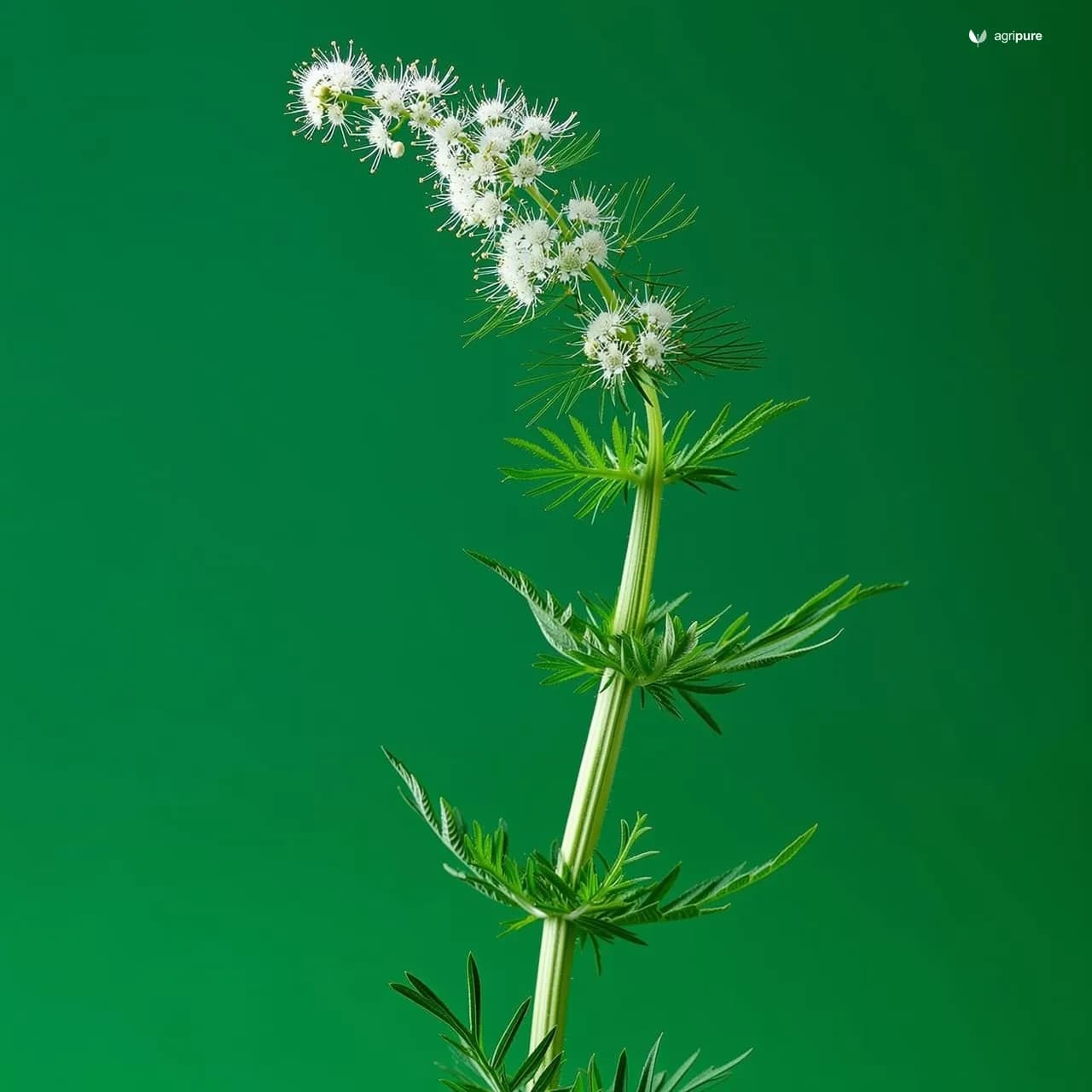
Anise is a dainty, slender annual that typically reaches about 1.5 to 3 feet tall. Its foliage is finely cut and lobed, with the lower leaves carried on longer stalks and the upper leaves more deeply divided. Small white flowers are borne in flat-topped clusters, in the characteristic umbel arrangement of the carrot family, and these ripen into oval seeds (botanically, dry fruits) that turn from yellowish-gray to yellowish-brown as they mature. One identification point worth fixing in mind: this is true anise and is not the same plant as star anise, an unrelated species whose seed pods share only the name and a similar aroma.
Growing anise
Anise is grown from seed and germinates readily, so it is best handled by direct sowing in place once the danger of frost has passed. It is a warm-season annual and is sensitive to cold; sources are explicit that it should be planted after frost danger has passed and protected from frost. No reliable USDA hardiness zone is documented in the sources here, so no zone is assigned — treat it simply as a frost-tender annual sown each spring.
- Sun: Give anise a warm, open position in full sun, consistent with its description as a warm-season annual.
- Soil and water: Sow into light, free-draining ground; the plant is poorly suited to heavy, wet soils, and the practical aim is evenly moist soil rather than waterlogged conditions.
- Spacing: Thin seedlings to about 6 to 8 inches apart, in rows spaced roughly 2 feet apart.
Because anise is slender and finely leaved, it competes poorly with weeds early on, so keeping the bed clean while seedlings establish pays off. Exact sowing temperatures and planting dates are not consistently documented in these sources, so the practical rule is simple: sow into a warm, sunny, free-draining bed after the last frost, keep it evenly moist, and let the plant run its single annual cycle.
Harvest and uses
Anise gives two harvests from one planting. The green leaves can be cut for the kitchen once the plants are large enough, while the seeds — the primary crop — are gathered later, about one month after flowering, when the plant and its stems are drying down. Cutting the seed heads as they dry, rather than waiting for them to shatter, keeps the crop on the plant rather than on the ground. The seeds are the main flavoring product and store well once dried.
In the kitchen, the tender leaves go into salads, garnishes, soups, sauces, and dressings, while the seeds flavor cakes, cookies, pastries, fruit dishes, cheeses, bread, and beverages. Anise is also widely used as a general food flavoring and in candies and alcoholic drinks. Beyond food, the plant’s essential oil is used in perfumes and soaps.
The small white umbels are typical insect-attracting flowers of the carrot family, and anise’s aromatic extracts and essential oil have drawn research interest, including for insecticidal activity. Beyond that, the sources here do not document specific intercropping, pollinator, or agroforestry functions, so none are claimed.
Traditional and studied uses
Anise seed has a long record of traditional use, reported as a carminative (to ease digestive gas), a digestive aid, a disinfectant, and a galactagogue (to support milk flow), among other folk indications. Modern review literature also reports studied activities for the plant and its constituents, including antimicrobial, antifungal, antiviral, antioxidant, analgesic, anticonvulsant, muscle-relaxant, and gastrointestinal effects. These are research findings and traditional uses, not proven treatments, and this profile makes no claim that anise treats or cures any condition.
Safety and cautions
The seeds and leaves of anise are edible and are used as food flavorings; the sources here treat Pimpinella anisum as a culinary herb rather than a poisonous plant, and no poisonous part is identified in them. The main practical caution is one of identity: anise is not the same plant as star anise, an unrelated species, and confusion between the two by name is a known kitchen pitfall.
For any medicinal use, caution applies. The sources here discuss anise’s traditional uses and pharmacology but give no robust clinical safety guidance, drug-interaction lists, or contraindication details specific to this species, and document no established dosage. Anyone considering anise beyond ordinary culinary amounts — especially people who are pregnant or breastfeeding, or those on medication — should seek qualified medical advice first. Enjoy it freely as a flavoring; treat concentrated or medicinal use with respect.
Sources
- Pimpinella anisum — GBIF (Global Biodiversity Information Facility)
- Pimpinella anisum (Anise, Aniseed) — NC State Extension
- Anise — University of Maryland Extension
- Anise — McCormick Science Institute
- Review of Pharmacological Properties and Chemical Constituents of Pimpinella anisum — PMC (National Library of Medicine)
- Anise — Wikipedia