Key takeaways
- Many common vegetables and herbs, such as celery, lettuce, and basil, can be regrown from their discarded bases or cuttings.
- The primary methods involve placing the plant base in shallow water or directly planting cuttings in moist soil.
- Regrowing scraps can significantly reduce household food waste, potentially by 30% or more, and provide a continuous supply of fresh produce.
- Proper light, consistent water changes, and timely transplanting to soil matter for successful growth.
- While regrown plants may not always yield full-sized produce, they offer fresh greens and herbs for culinary use.
- Consider succession planting and pest management to maintain a productive and healthy regrowing system.
Quick answer: You can regrow common vegetables and herbs like celery, lettuce, and basil from kitchen scraps by placing their bases or cuttings in shallow water or moist soil. This practice helps reduce food waste and provides a continuous supply of fresh produce.
In the United States, an estimated 30% to 40% of the food supply is wasted each year, amounting to significant economic and environmental costs. For many home gardeners across USDA zones 3-10, a simple and effective way to reduce personal food waste and enjoy fresh produce is by regrowing vegetables and herbs from kitchen scraps. This practice, often overlooked, allows you to extend the life of produce you’ve already purchased, turning what would be compost or trash into new growth for your kitchen.
This guide provides practical, step-by-step instructions for regrowing common items like celery, lettuce, and various herbs. You don’t need extensive gardening experience or a large plot of land; a sunny windowsill and a few basic supplies are often enough to get started. Many leafy greens, for example, contain beneficial carotenoids, with bioavailability varying from 5% to 60% depending on preparation, making fresh consumption a valuable addition to your diet [1].
Getting started: what you can regrow and basic supplies
Before diving into specific plants, it’s helpful to understand which vegetables and herbs are good candidates for regrowing. Generally, plants that grow from a central base or have easily rooted stems are ideal. Common choices include romaine lettuce, celery, green onions, and several popular herbs like basil and mint. You’ll need only a few basic supplies to begin this process, most of which you likely already have in your kitchen or garden shed. A clear glass or small bowl, clean water, and a sunny spot are the primary requirements for water propagation.
Essential tools and conditions for success
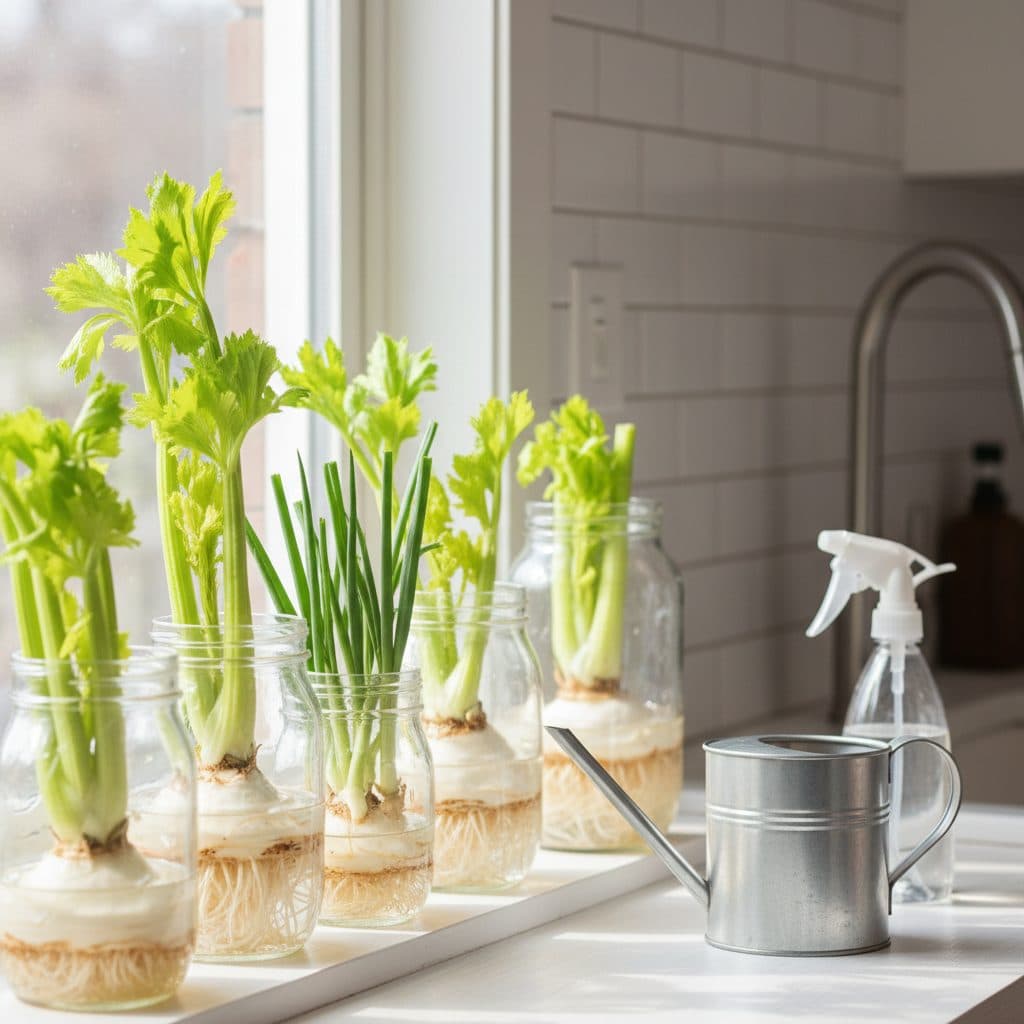
For successful regrowing, ensure you have a sharp knife for clean cuts, small containers or jars, and a spray bottle for misting. A south-facing window that receives at least six hours of direct sunlight daily is optimal for most plants, especially during the shorter days of winter in USDA zones 5-7. If natural light is insufficient, a simple grow light can provide the necessary 12-14 hours of light exposure. Remember to change the water every one to two days to prevent mold and bacterial growth, which can quickly rot your plant bases. Many herbs and vegetables thrive in temperatures between 65°F and 75°F.
- Clear containers: Glass jars or small bowls allow you to monitor root development.
- Fresh water: Tap water is generally fine, but filtered water can be used.
- Sunny location: A windowsill receiving 6-8 hours of sunlight is ideal.
- Sharp knife: For making clean cuts on vegetable bases or herb stems.
- Small pots and potting mix: For eventual transplanting to soil, typically 4-6 inch pots.
Regrowing vegetables: celery, lettuce, and green onions
These three vegetables are among the easiest and most rewarding to regrow from kitchen scraps. Celery, for instance, can produce a new stalk from its base within a few weeks, offering fresh, crisp additions to your meals. For best results, choose organic produce if possible, as some conventional vegetables may be treated with growth inhibitors. The process for each varies slightly but consistently yields usable greens.
Step-by-step for common vegetables
To regrow celery, cut off the base of the stalk, about 1-2 inches from the bottom. Place this base in a shallow bowl with about 0.5 inches of water, with the cut side facing up. Within 5-7 days, you should observe small leaves emerging from the center and tiny roots forming at the base. For romaine lettuce, the process is similar; cut the base about 1 inch from the bottom and place it in shallow water. New leaves typically appear within 3-5 days. Green onions are even simpler: cut the white ends with about 1 inch of green still attached, place them root-side down in a glass of water, and they will regrow rapidly, often providing new shoots within 24-48 hours. Once roots are 1-2 inches long, you can transplant them to soil in a 6-inch pot.
- Celery: Cut 1-2 inches from the base, place in 0.5 inches of water.
- Romaine lettuce: Cut 1 inch from the base, place in shallow water.
- Green onions: Cut white ends with 1 inch green, place root-side down in water.
- Bok choy: Similar to lettuce, cut the base and place in shallow water.
- Cabbage: The core can be regrown by placing it in a shallow dish of water.
Propagating herbs: basil, mint, and cilantro
Herbs are particularly rewarding to regrow, offering fragrant leaves for cooking and a pleasant aroma indoors. Many herbs, including basil, mint, and cilantro, can be propagated from stem cuttings, providing a continuous supply without needing to purchase new plants. This method is cost-effective and allows you to experiment with different varieties. Some herbs also contain natural antimicrobial compounds, adding another layer of benefit [3].
Cuttings for continuous herb supply
For basil, select a healthy stem about 4-6 inches long that has at least two sets of leaves. Snip the stem just below a leaf node, remove the bottom leaves, and place the cutting in a glass of water. Roots typically form within 7-14 days. Mint is similarly easy; take a 4-inch cutting, remove lower leaves, and place it in water. Mint often roots even faster, sometimes within 3-5 days. Cilantro can be regrown by placing the bottom 2-3 inches of the stems, including any roots, in water. Once roots are 1-2 inches long, these cuttings can be transplanted into a 4-inch pot with well-draining soil. Consider using a 24-Cell Seedling Propagation Tray for starting multiple cuttings efficiently.
- Basil: 4-6 inch stem cutting, remove lower leaves, place in water.
- Mint: 4-inch stem cutting, remove lower leaves, place in water.
- Cilantro: Bottom 2-3 inches of stems with roots, place in water.
- Rosemary: 4-6 inch semi-hardwood cutting, remove lower leaves, can root in water or soil.
- Thyme: 3-4 inch stem cutting, remove lower leaves, roots well in water.
Care, transplanting, and maximizing your harvest
Once your scraps have developed a strong root system, typically 1-3 inches long, it’s time to transplant them into soil. This transition is critical for long-term growth and larger yields. A good quality potting mix that drains well is essential. For most regrown vegetables and herbs, a mix containing peat moss, perlite, and compost works effectively, providing both aeration and nutrients. Ensure your chosen pots have drainage holes to prevent waterlogging, which can lead to root rot.
From water to soil: nurturing new growth
When transplanting, gently place the rooted scrap into a pre-moistened 4-6 inch pot, covering the roots and base with soil, leaving the new green growth exposed. Water thoroughly after transplanting, and keep the soil consistently moist but not soggy for the first 7-10 days. Most regrown plants will thrive with at least six hours of direct sunlight daily, or under a grow light for 12-14 hours. Fertilize sparingly with a balanced liquid fertilizer, diluted to half strength, every 2-4 weeks during the growing season. For ongoing harvests, practice succession planting by starting new scraps every 2-3 weeks, especially for fast-growing items like green onions. Learn more about growing celery from scratch for a full harvest.
- Transplant timing: Move to soil when roots are 1-3 inches long.
- Potting mix: Use a well-draining mix, ideally with compost.
- Watering: Keep soil consistently moist, especially after transplanting.
- Light: Provide 6+ hours of direct sun or 12-14 hours under a grow light.
- Fertilization: Use diluted liquid fertilizer every 2-4 weeks during active growth.
Beyond the basics: advanced tips and troubleshooting
While regrowing scraps is generally straightforward, a few advanced techniques and troubleshooting tips can improve your results. Understanding the limitations of regrown plants is also important; they often provide smaller yields than plants grown from seed or nursery starts, but they offer a continuous supply of fresh greens. For instance, a regrown lettuce head might only reach 4-6 inches in diameter, compared to a 10-12 inch head from a seed-started plant.
Troubleshooting common issues and maximizing yield
One common issue is rot, usually caused by infrequent water changes or insufficient light. If you notice sliminess or a foul odor, discard the scrap and start fresh. Yellowing leaves often indicate a lack of nutrients or light; consider a balanced liquid fertilizer and ensure adequate light exposure. Pests like aphids can also be a problem, especially indoors. A simple solution is to spray plants with a mild insecticidal soap solution (1 teaspoon soap per 1 quart of water) every 5-7 days. To maximize yield, harvest outer leaves or stems, allowing the inner core to continue producing. For herbs, regular pinching encourages bushier growth and prevents flowering, which can diminish leaf flavor. You can also explore seed saving from mature plants to start new generations.
- Prevent rot: Change water every 1-2 days and ensure good air circulation.
- Address yellowing: Provide more light and consider a diluted liquid fertilizer.
- Pest control: Use insecticidal soap (1 tsp per 1 quart water) for common pests like aphids.
- Harvesting: Harvest outer leaves or stems to encourage continuous growth.
- Succession planting: Start new scraps every 2-3 weeks for a steady supply.
Comparison of popular regrowable vegetables and herbs
Plant | Method | Time to new growth | Typical yield |
|---|---|---|---|
Celery | Base in water | 5-7 days | Small stalks, inner leaves |
Romaine Lettuce | Base in water | 3-5 days | Small head, outer leaves |
Green Onions | Root end in water | 1-2 days | Continuous green shoots |
Basil | Stem cutting in water | 7-14 days | Continuous leaves from new plant |
Mint | Stem cutting in water | 3-5 days | Continuous leaves from new plant |
Cilantro | Stems with roots in water | 5-10 days | Limited new leaves |
Water changes matter: Changing the water for your regrowing scraps every 1-2 days prevents bacterial growth and rot, giving a 90% chance of healthy root development.
Sunlight is key: Most regrown plants, especially herbs, require at least 6 hours of direct sunlight daily to thrive, with optimal growth occurring at 65-75°F.
Frequently asked questions
What vegetables are easiest to regrow from scraps?
Green onions, romaine lettuce, and celery are among the easiest vegetables to regrow from their bases. Green onions can show new growth within 24-48 hours, while lettuce and celery bases typically sprout new leaves within 3-7 days when placed in shallow water.
How often should I change the water for regrowing scraps?
Change the water every 1-2 days to prevent the growth of mold and bacteria. Stagnant water can lead to rot, significantly reducing the chances of successful regrowth for your plant bases.
Can I regrow herbs like basil and mint from cuttings?
Yes, basil and mint are excellent candidates for propagation from stem cuttings. Take a 4-6 inch cutting, remove the lower leaves, and place the stem in water. Roots typically form within 3-14 days, after which they can be transplanted to soil.
What kind of light do regrowing plants need?
Most regrowing vegetables and herbs require at least 6 hours of direct sunlight daily. A sunny south-facing windowsill is often sufficient, especially in USDA zones 7-9. If natural light is limited, a simple LED grow light can provide the necessary 12-14 hours of light.
Will regrown vegetables produce a full-sized harvest?
While regrown vegetables may not always yield full-sized produce comparable to those grown from seed, they will provide smaller, fresh greens and leaves for culinary use. For example, a regrown lettuce head might be 4-6 inches in diameter, perfect for a fresh salad.
When should I move my regrown scraps from water to soil?
You should transplant your regrown scraps to soil once their roots are 1-3 inches long. This typically occurs within 1-3 weeks of starting them in water. Use a well-draining potting mix in a 4-6 inch pot with drainage holes for best results.
References
- Bioavailability of Carotenoids from Vegetables versus Supplements (2000). Bioavailability of Carotenoids from Vegetables versus Supplements.
- Fruits, vegetables, and herbs (2016). Fruits, vegetables, and herbs.
- Antimicrobials from herbs, spices, and plants (2016). Antimicrobials from herbs, spices, and plants.
- The kitchen gardener’s instructor, containing a catalogue of garden and herb seed, with practical directions under each head for the cultivation of culinary veg (1860). The kitchen gardener’s instructor, containing a catalogue of garden and herb seed, with practical directions under each head for the cultivation of culinary veg.
- Water-Wise Landscaping (1995). Water-Wise Landscaping.