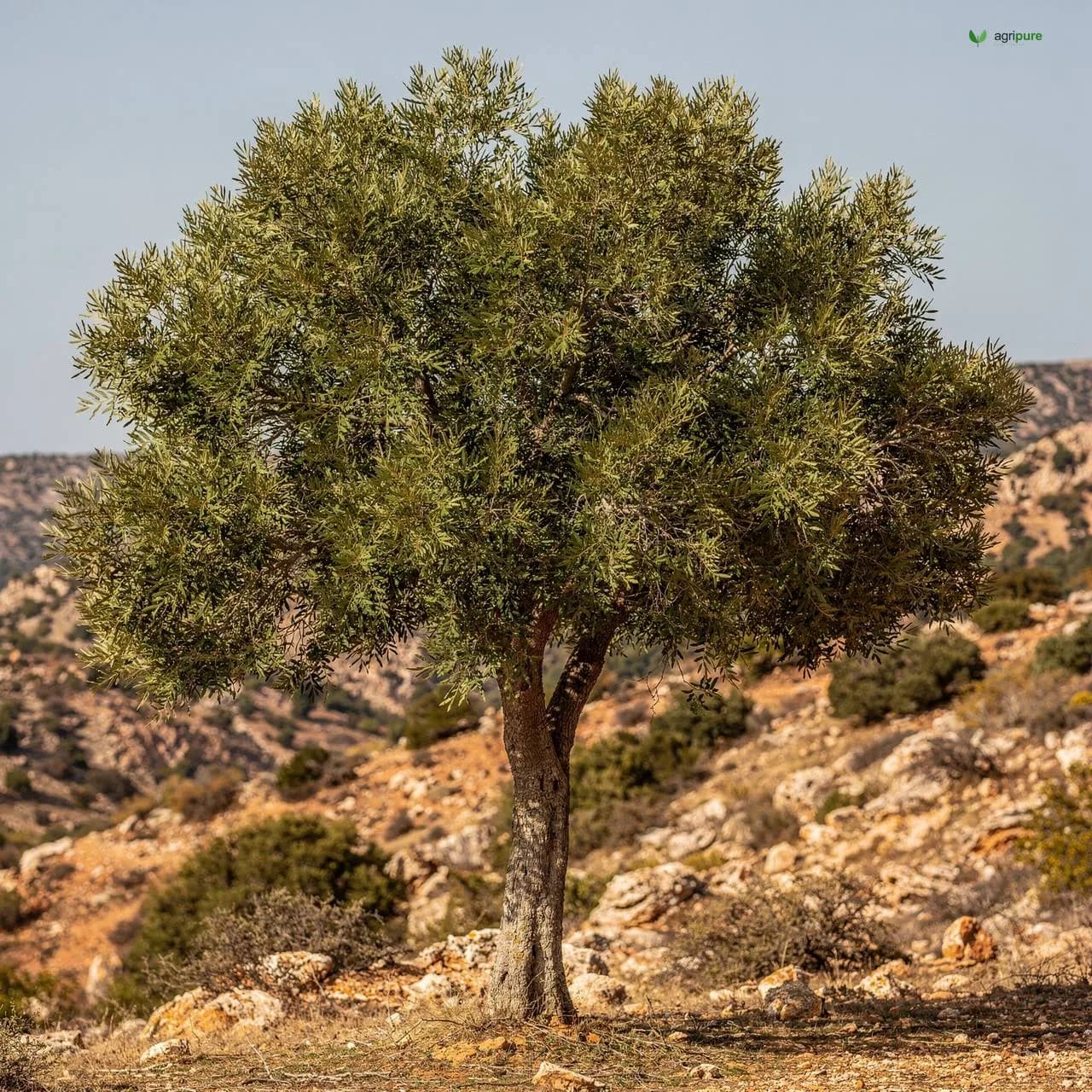
climax
Wild Pistachio (Mt. Atlas Mastic)
shne / gwan
Pistacia atlantica
- balochistan highlands
- kpk hills
International hardiness
- USDA 7-9
- RHS H4
- AU: Arid / semi-arid, Mediterranean, Warm temperate
Where it grows — regional guide
| Zones / rating | Regional notes |
|---|---|
USDA 7-9 | No region-specific data yet |
| Zones / rating | Regional notes |
|---|---|
H4 (-10 to -5C) | No region-specific data yet |
| Zones / rating | Regional notes |
|---|---|
Arid / semi-arid, Mediterranean, Warm temperate | No region-specific data yet |
| Zones / rating | Regional notes |
|---|---|
USDA 7-9 (USDA scale) Canada uses its own zone system; Canadian zones run roughly one lower than USDA. | No region-specific data yet |
| Zones / rating | Regional notes |
|---|---|
Balochistan highlands, KPK hills | Pakistan:A slow-growing, drought-tolerant deciduous tree of the dry Balochistan highlands; deep roots stabilize rocky slopes. |
Wild pistachio (Pistacia atlantica, locally shne or gwan) is the long-lived companion of the juniper forests of the Balochistan highlands, reaching into the dry KPK hills. It shares the Ziarat juniper tracts with more than 50 other plant species, and like the junipers it grows slowly and lives for a very long time. On a syntropic site it is a climax tree, not a quick return: you set it for the generation that follows, and what it gives in the meantime is shelter on exposed slopes, browse for livestock, and edible nutlets and a useful resin.
Where it thrives
Wild pistachio is built for cold, dry uplands. Its native range spans North Africa, the Middle East, the Iranian plateau, and parts of Central Asia, and it is commonly found at elevations up to about 2,000 m. In Pakistan it grows in the semi-arid Balochistan highlands around Ziarat, where the climate is temperate and the average annual rainfall is only about 269 mm, much of it falling on slopes that already carry juniper between 2,000 and 3,000 m. It is drought-hardy and frost-tolerant, holding dry, stony ground where the growing season is short and water is scarce.
Role in the system
Treat wild pistachio as a climax canopy for the cold drylands, planted to inherit the top stratum over a long horizon. It is slow and very long-lived, so its job is to hold the site together once faster pioneers have come and gone, anchoring soil and moisture on steep, exposed ground. Its crown breaks the wind and shades the layers below it, and its fruit feeds wildlife and stock, tying the planting into the wider system. Because it grows alongside juniper in the wild, it pairs naturally with the other hardy, slow trees of the highland forest rather than with quick lowland species. In the wider region it forms part of an oak-pistachio belt on dry mountain slopes, so on a planting it suits the same role: a scattered, deep-rooted standard over a sparse understorey, not a dense plantation.
Uses
The tree produces small drupes that ripen from red to blue and hold an edible nutlet, less sweet than the commercial pistachio but eaten across its range, and the seed yields an edible oil used for cooking and soap. It is also tapped for a fragrant resin, known as saqez in the wider region, used as a chewing gum and in traditional medicine. The foliage is browsed by livestock, and the wood is used for fuel and small timber. The largest return, though, is the standing tree: a windbreak and a permanent feature of the highland forest that shelters everything below it.
Cautions
This is a slow tree for a hard climate, and the nuts, resin, and timber are a long-term return measured in decades. The Ziarat stands it belongs to are under heavy pressure from cutting and grazing, so plantings should protect young trees from browsing and stand alongside conservation of the remaining wild trees rather than draw on them.
Sources
- Wikipedia contributors. “Ziarat Juniper Forest.” Wikipedia.
- Wikipedia contributors. “Pistacia atlantica.” Wikipedia.
Sourcing notes
Propagate from seed collected off wild highland trees; germination is slow and erratic, so sow fresh and be patient. Seed and seedlings are scarce in the trade, so collection from the Ziarat region must be done sparingly and never at the cost of the remaining wild stands.