climax
Crab’s-Claw Pistachio (Zebrawood)
kakar singhi
Pistacia integerrima
Also known as Kakar Singhi (Pakistan, India).
- kpk hills
- pothohar
International hardiness
- USDA 8-10
- RHS H3
- AU: Warm temperate, Subtropical
Where it grows — regional guide
| Zones / rating | Regional notes |
|---|---|
USDA 8-10 | No region-specific data yet |
| Zones / rating | Regional notes |
|---|---|
H3 (-5 to 1C) | No region-specific data yet |
| Zones / rating | Regional notes |
|---|---|
Warm temperate, Subtropical | No region-specific data yet |
| Zones / rating | Regional notes |
|---|---|
USDA 8-10 (USDA scale) Canada uses its own zone system; Canadian zones run roughly one lower than USDA. | No region-specific data yet |
| Zones / rating | Regional notes |
|---|---|
KPK hills, Pothohar | Pakistan:A native deciduous hill tree of the Pothohar plateau and KPK hills; roots anchor ridges, and horn-shaped galls are gathered for medicine. India:Native across the subtropical northwest and west Himalaya; stabilizes steep stony slopes and produces prized medicinal galls. |
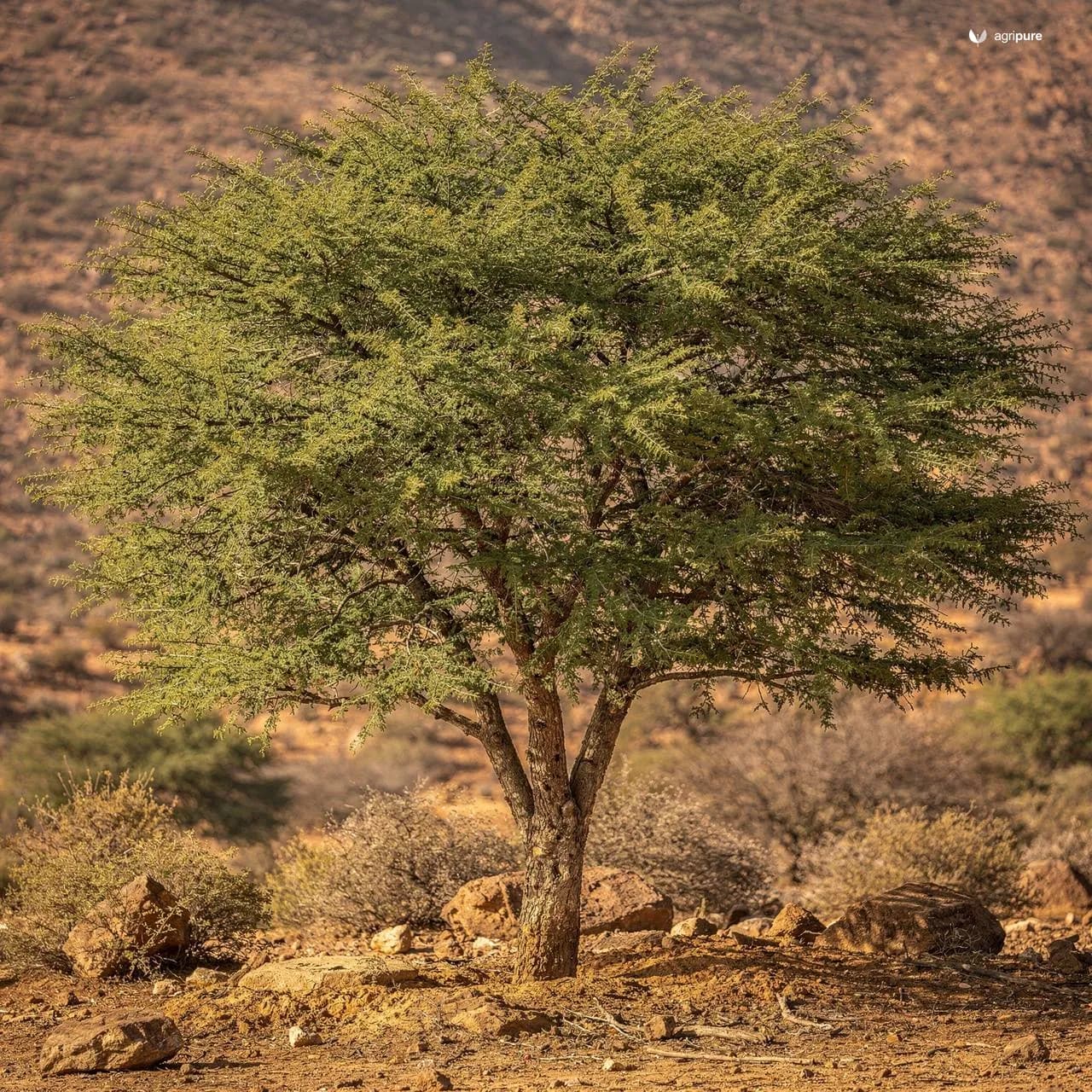
Crab’s-claw pistachio (Pistacia integerrima, locally kakar singhi, and also called zebrawood) is the medium-sized tree of the sub-Himalayan KPK hills and the Pothohar plateau whose horn-shaped galls are one of the classic cough remedies of the region. On a syntropic site it is a climax tree, slow and long-lived, planted for the top of the canopy rather than an early harvest. Its standout return is medicinal, the galls, with durable timber and good fuelwood alongside.
Where it thrives
Kakar singhi is a tree of the dry to moist sub-Himalayan hills. Its range runs through Pakistan, Afghanistan, Nepal, China, and the northwest and west Himalaya, and it is found at altitudes of roughly 600 to 2,500 m above sea level. In Pakistan that places it across the KPK hills and the higher, broken ground of the Pothohar plateau. It is a broad-leaved, deciduous tree of medium size, dropping its leaves through the cold season, so it lets winter light onto the slope before leafing out again in spring. It tolerates dry, stony sites and is hardy on the hill slopes where it grows, which is why it persists on ground too poor for orchard trees.
Role in the system
Treat kakar singhi as a climax tree set to inherit the canopy over a long horizon. It is slow and long-lived, so its role is to hold the site and anchor soil on hill slopes once the faster pioneers and secondary trees have done their early work. It is closely related to the commercial pistachio and is in fact used as a rootstock for grafting Pistacia vera, which makes it a useful long-term backbone for a nut-growing guild as well as a tree in its own right. Its crown shades and shelters the layers below it as it matures.
Uses
The galls are the prize. They are formed when an aphid feeds on the leaves and the tree responds with a hollow, horn-shaped growth, and these galls, sold as kakar singhi, are used to treat cough, asthma, dysentery, and liver complaints across the region. The plant carries alkaloids, flavonoids, tannins, and saponins through its leaf, bark, gall, and fruit, the chemistry behind that long medicinal use. The wood is used for timber and burns well as fuel, the foliage is browsed, and the tree yields a dye, so the same planting gives a cash medicine, durable wood, and fuelwood over its life.
Cautions
This is a slow climax tree, so the timber and a steady gall harvest are a return measured in years, not seasons. The galls depend on the aphid that forms them, so yields vary with the insect from one year to the next and cannot be forced. The medicinal reputation is more than folklore, with laboratory work confirming anti-inflammatory activity in gall extracts, but that is a reason to harvest carefully rather than to strip a young tree. Plant it for the long structure of the system and take the galls as a bonus crop.
Sources
- Wikipedia contributors. “Pistacia integerrima.” Wikipedia.
- HealthBenefitsTimes. “Pistacia integerrima facts and health benefits.”
Sourcing notes
Raise from seed off healthy hill trees, or graft onto its own seedlings as a rootstock; nursery stock turns up through KPK forest and horticulture channels. It is also the standard rootstock for cultivated pistachio, so propagation know-how exists in the nut-growing trade.