pioneer
Coffee Senna
kasondi
Senna occidentalis
Also known as Kasondi (Pakistan).
- punjab plains
- sindh coast
International hardiness
- USDA 9-11
- RHS H1c
- AU: Tropical, Subtropical
Where it grows — regional guide
| Zones / rating | Regional notes |
|---|---|
USDA 9-11 | Grown as a fast warm-season biomass shrub in USDA zones 9 to 11; chop before seed set to prevent weedy spread, and never feed to livestock due to toxicity. |
| Zones / rating | Regional notes |
|---|---|
H1c (5 to 10C) | No region-specific data yet |
| Zones / rating | Regional notes |
|---|---|
Tropical, Subtropical | Naturalized in tropical and subtropical northern pastures; manage strictly as temporary mulch, as it self-seeds aggressively as a weed and is toxic to livestock. |
| Zones / rating | Regional notes |
|---|---|
USDA 9-11 (USDA scale) Canada uses its own zone system; Canadian zones run roughly one lower than USDA. | No region-specific data yet |
| Zones / rating | Regional notes |
|---|---|
Punjab plains, Sindh coast | Pakistan:A fast summer pioneer shrub of Punjab and Sindh plains, grown for living mulch; chop before pods ripen to stop weed spread, and keep away from livestock as it is toxic. India:A pantropical pioneer shrub naturalized across disturbed soils in India; useful for chop-and-drop green mulch, but it self-seeds weedily and is toxic to livestock. |
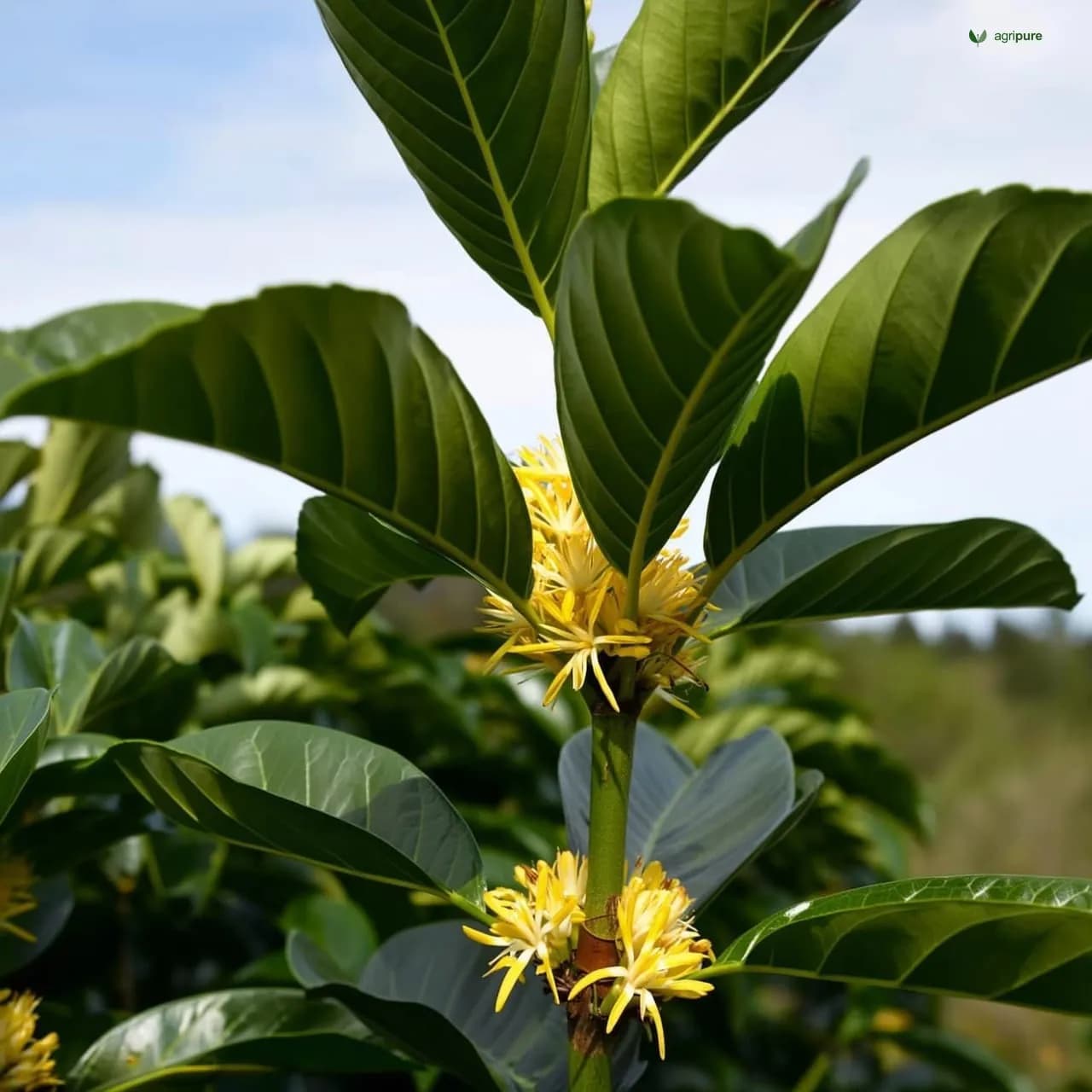
Coffee senna (Senna occidentalis), called kasondi in much of Pakistan, is a fast, short-lived Fabaceae shrub that a grower plants for one honest reason: it covers bare, disturbed ground in a single season, throwing up two metres of leafy biomass you can cut and drop while slower trees find their feet. It is not a crop you sell; it is a working plant that buys time and shade in a young system.
Where it thrives
The species is native to tropical and subtropical America and now grows pantropically, settling readily into the seasonally dry tropical conditions of the Punjab plains and the Sindh coast. It is an annual-to-short-lived shrub of 0.5 to 2.5 metres that colonises roadsides, waste ground, pasture and crop edges, which tells you exactly what it wants: open, disturbed, warm sites with enough summer moisture to push quick growth. It handles poor soils and heat well but is a creature of the warm season, not of frost or deep drought.
Role in the system
Coffee senna is a true pioneer in the shrub layer. Its job is to occupy a freshly cleared or planted bed fast, shade out weeds, and generate a standing stock of leaf and stem you manage by chop-and-drop. Treat it as a biomass and living-mulch plant in the early, pioneer stratum of a guild, not as a permanent fixture. One honest caution: although it is a legume, the Senna/Cassia group generally does not form root nodules, so do not count on it to fix nitrogen the way a true N-fixing support legume would. Plant it for ground cover, mulch and quick succession, and put a confirmed nodulating legume alongside if fertility is the goal. Because it self-seeds freely and behaves as a weed of disturbed land, cut it before the pods mature if you want to keep it from spreading beyond its bed.
Growing it
The decisions that decide success are timing and containment. Sow seed at the start of the warm, wet season so the plant gets its full growth window; germination is reliable from scarified seed. Space plants close where you want a quick weed-suppressing thicket, wider where you want individual bushes for repeated cutting. The single most important management choice is when to chop: cut for mulch while it is still leafy and, crucially, before seed set, because mature pods will reseed the whole area. Coppice it once or twice across the season, drop the cut material as a mulch blanket over the understory, and pull volunteers you do not want.
What you get
The payoff is not a harvest but a service: rapid soil cover, weed suppression and a steady supply of mulch in the first year or two of a system. The leaves, roots and seeds also carry a long ethnomedicinal record and documented bioactivity, including antioxidant, antidiabetic and antimicrobial effects under study.34 Note that the plant is toxic to livestock if grazed in quantity, so keep cut material as mulch, not fodder.
Sourcing notes
Collect seed from local wild stands; it is abundant and needs only scarification. Pair it with deeper-rooted pioneer trees it can nurse, and with groundcovers that take over once the senna is chopped out. Manage it as a temporary nurse plant and remove it as the canopy closes.
Sources
- Royal Botanic Gardens, Kew (2024). “Senna occidentalis (L.) Link.” Plants of the World Online.
- Alshehri, M.M. et al. (2022). “A Review of Recent Studies on the Antioxidant and Anti-Infectious Properties of Senna Plants.” Oxidative Medicine and Cellular Longevity.
- Nde, A.L. et al. (2022). “Ethnobotanical, phytochemical, toxicology and anti-diabetic potential of Senna occidentalis (L.) Link; A review.” Journal of Ethnopharmacology.
- Issa, T.O. et al. (2020). “Physiochemical, Insecticidal, and Antidiabetic Activities of Senna occidentalis Linn Root.” Biochemistry Research International.