Key takeaways
- Succession planting maximizes garden space, allowing multiple harvests from a single bed throughout the growing season.
- Combine succession planting with crop rotation to improve soil health, reduce pest pressure, and optimize nutrient cycling.
- Plan your planting calendar based on your USDA hardiness zone, frost dates, and crop days to maturity for effective staggering.
- Utilize fast-growing crops like radishes and lettuce for quick turnarounds, enabling three to four cycles in many zones.
- Interplanting and intensive spacing can further increase yields, especially in smaller garden plots like a 4 ft by 8 ft raised bed.
- Regular soil amendments and monitoring matter for sustaining high productivity across multiple crop cycles.
Quick answer: Succession planting allows continuous harvests by staggering crop plantings and promptly replacing harvested crops. This strategy maximizes garden space and extends the availability of fresh produce throughout the growing season.
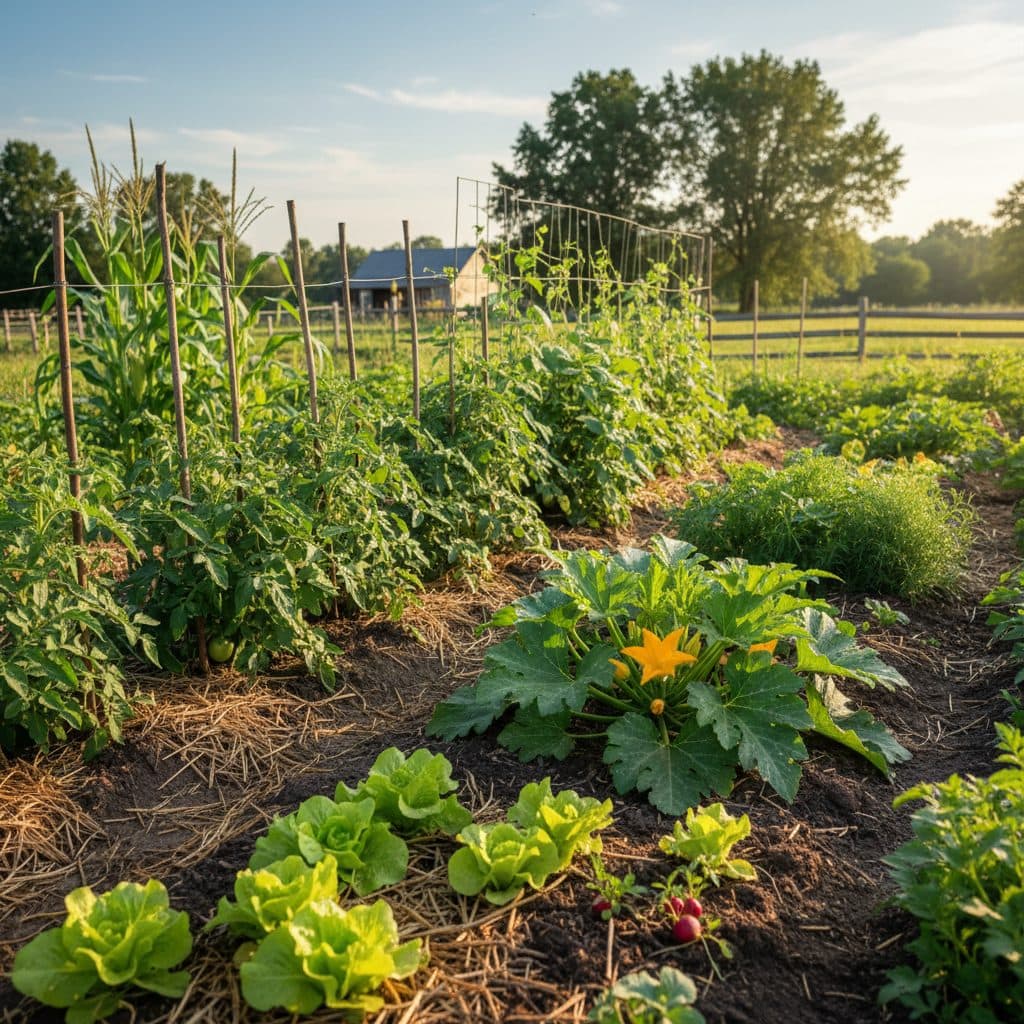
In the rich agricultural lands of the Midwest, a productive garden can yield hundreds of pounds of produce from a relatively small area. For growers in places like Ohio or Iowa, making the most of every square foot of soil is not just a hobby, it is a practical approach to food security and self-sufficiency. This continuous bounty often comes from a technique called succession planting, a method that keeps garden beds from sitting idle and always contributing to your table.
This strategy, which involves staggering plantings and replacing harvested crops promptly, transforms a single garden bed into a dynamic, multi-season production unit. From the early spring greens in USDA zone 5 to the late fall root vegetables in zone 8, succession planting allows you to extend your harvest window significantly, often by several months. It is about careful planning, understanding crop cycles, and making intelligent choices to keep your garden working hard for you, even when other beds might be winding down.
Understanding succession planting for continuous harvest
These takeaways points carry into this section, too.
Succession planting is a gardening strategy where you plant crops in a staggered sequence to ensure a continuous harvest rather than a single large yield. This approach maximizes the use of garden space and extends the availability of fresh produce over a longer period. For instance, a single 10-foot row of bush beans can produce 20 pounds of beans over a season if planted once, but with succession planting, that same row could yield 40 pounds or more by staggering plantings every two to three weeks. This method differs from natural plant succession, which describes the ecological development of vegetation over time, a concept analyzed since at least 1916 [6].
The core idea is to replace harvested crops with new plantings, keeping the soil productive. This can involve planting the same crop multiple times, such as lettuce every 14 days, or following an early crop with a different, later-season crop. For example, after harvesting early peas in June in USDA zone 6, you could immediately plant bush beans or carrots in the same spot. This continuous cycle can extend your harvest by 8 to 10 weeks compared to single plantings, especially for quick-maturing vegetables. Early botanical texts from 1829 discussed methods for securing a regular succession of plants and showing this practice’s long history [4].
types of succession planting
- Staggered planting: Planting small batches of the same crop every 10 to 21 days.
- Relay planting: Planting a new crop right after harvesting the previous one from the same space.
- Interplanting: Growing fast-maturing crops between slower-growing ones.
- Underplanting: Growing shade-tolerant crops beneath taller plants.
- Cut-and-come-again: Harvesting outer leaves of greens, allowing the plant to continue producing.
Crop rotation: the companion strategy for soil health
That work on understanding succession planting sets up what follows here.
While succession planting focuses on continuous harvest from a single bed, crop rotation is its essential companion, addressing long-term soil health and pest management. Crop rotation involves changing the type of crop grown in a specific bed each season, typically over a three to four-year cycle. This practice significantly reduces the buildup of specific soil-borne diseases and pest populations by 30% to 50%, as pathogens and insects that target one crop group cannot survive on the next [2]. For example, growing tomatoes in the same spot for several years can lead to fusarium wilt, but rotating them with corn or beans breaks the disease cycle.
Beyond pest control, crop rotation also optimizes nutrient use and improves soil structure. Leguminous crops, like peas or beans, fix atmospheric nitrogen into the soil, potentially adding 50 to 150 pounds of nitrogen per acre, which benefits subsequent heavy feeders like corn or squash. This reduces the need for synthetic fertilizers by 20% to 40% over time. Integrating cover crops, particularly legumes, into your rotation can further improve soil organic matter by 0.5% to 1% annually, improving water retention and microbial activity. Learn more about selecting the best cover crops for your region at living mulch cover crop legumes by zone.
key crop rotation groups
- Legumes: Beans, peas, and clover fix nitrogen in the soil.
- Root crops: Carrots, potatoes, and beets break up soil and absorb nutrients from deeper layers.
- Leafy greens: Lettuce, spinach, and kale are moderate feeders, often harvested quickly.
- Fruiting crops: Tomatoes, peppers, and squash are heavy feeders that benefit from nitrogen-rich predecessors.
- Brassicas: Cabbage, broccoli, and radishes often deter specific pests when rotated.
Planning your succession calendar by USDA zone
Effective succession planting starts with a well-defined calendar tailored to your specific USDA hardiness zone. Knowing your average last and first frost dates matters; for example, gardeners in USDA zone 7 typically have a growing season of 200 to 220 days, allowing for multiple successions. In contrast, zone 4 might have only 120 frost-free days, necessitating faster-maturing crops and tighter scheduling. Begin by mapping out your garden beds and determining which crops will occupy each space for their initial planting, considering their days to maturity and light requirements. A 4 ft by 8 ft raised bed can often support 16 to 32 plants in a single cycle, depending on spacing.
Prioritize fast-growing crops for quick turnarounds. Radishes, for instance, can go from seed to harvest in as little as 21 to 30 days, making them ideal for filling gaps between slower crops or for frequent staggered plantings. You can learn more about growing these speedy vegetables at how to grow radishes. Peas, another excellent early-season crop, can be harvested in 60 to 70 days, allowing for a second planting of a different crop in the same bed by mid-summer. For fall harvests, plan to sow cool-season crops like spinach or kale 6 to 8 weeks before your first anticipated fall frost, which might be around October 15 in USDA zone 6.
key planning considerations
- Know your frost dates: Determine your average last spring and first fall frost dates for your specific USDA zone.
- Crop days to maturity: Select varieties with known maturity periods, from 21 days for radishes to 90 days for corn.
- Space requirements: Account for the mature size of each plant to ensure adequate spacing, often 6 to 12 inches per plant.
- Soil fertility: Plan for regular amendments to maintain nutrient levels through multiple harvests, adding 1 to 2 inches of compost after each major crop.
- Sunlight exposure: Match crops to the light conditions of each bed, with most vegetables needing 6 to 8 hours of direct sun daily.
Putting it into practice: examples by zone
This builds directly on planning succession calendar.
Implementing succession planting effectively requires specific crop choices and timing for your region. In USDA zone 5, for instance, you can often get two full crops of lettuce and a fall crop of spinach from the same bed. Start lettuce seeds indoors around March 1, transplant in April, harvest through June, then plant a heat-tolerant variety or bush beans for summer. By late August, sow spinach for a fall harvest that can last until temperatures drop below 20°F. For heavier feeders like corn, which requires 90 to 100 days to mature, consider block planting to ensure good pollination, as detailed at how to grow corn.
For warmer climates, such as USDA zone 8 in the Pacific Northwest or parts of the Southeast, the extended growing season offers even more opportunities. You might start with early potatoes in February, harvest in June, then follow with heat-loving peppers or okra. As temperatures cool in September, transition to another round of cool-season greens or root crops like beets, which can mature in 50 to 60 days. Intensive planting methods, where plants are spaced closer than traditional rows, can dramatically increase yields. A 4 ft by 8 ft bed, for example, can support 32 lettuce plants or 16 kale plants at 6-inch spacing, allowing for more frequent successions within a smaller footprint.
example crop sequences
- Zone 5 (4×8 bed): Early spring lettuce (April-June) → Bush beans (June-August) → Fall spinach (August-October).
- Zone 6 (4×8 bed): Spring radishes (April-May) → Carrots (May-July) → Fall kale (July-November).
- Zone 7 (10 ft row): Early peas (March-June) → Sweet potatoes (June-October) → Winter rye cover crop.
- Zone 8 (10 ft row): Garlic (October-June) → Tomatoes (June-October) → Fall broccoli (October-February).
- Zone 9 (4×4 bed): Year-round greens with staggered plantings every 3 weeks, yielding 50+ pounds annually.
Comparison: Single Planting vs. Succession Planting (Per 100 sq ft Garden)
Characteristic | Single Planting | Succession Planting |
|---|---|---|
Yield (lbs/season) | 30-50 lbs | 80-150 lbs |
Harvest Window | 4-6 weeks | 16-24 weeks |
Soil Health Impact | Moderate depletion | Improved with rotation |
Pest Pressure | Higher risk | Lower with diversity |
Garden Use Efficiency | 50% idle time | 90% active time |
High Yield Potential: A well-managed 4 ft by 8 ft raised bed can yield over 100 pounds of produce annually with careful succession planning.
Extended Season: In USDA zone 6, gardeners can often achieve three to four distinct crop cycles in a single growing season, extending harvests by months.
Frequently asked questions
What is the main benefit of succession planting?
The primary benefit of succession planting is maximizing garden productivity by ensuring continuous harvests from the same space. This approach can increase your annual yield by 50% to 100% compared to single plantings, keeping fresh produce on your table for a longer period.
How often should I replant for succession?
The frequency of replanting depends on the crop and your climate. For fast-growing greens like lettuce or radishes, replanting every 2 to 3 weeks is common. For crops with longer maturity periods, you might replant every 4 to 6 weeks, or simply plant a new, different crop after the initial harvest.
Can I succession plant in a small garden?
Yes, succession planting is particularly effective for small gardens, including raised beds or containers. By intensively planting and quickly replacing harvested crops, a 4 ft by 8 ft raised bed can produce over 100 pounds of vegetables annually, far more than with single plantings.
What crops are best for succession planting?
Excellent crops for succession planting include leafy greens (lettuce, spinach, kale), root vegetables (radishes, carrots, beets), and bush beans. These crops generally have relatively short days to maturity, ranging from 21 days for radishes to 60-70 days for bush beans, allowing for multiple cycles.
Does succession planting require more water?
Succession planting can require more consistent watering, especially during the establishment phase of new seedlings, as the soil is continuously supporting active growth. However, efficient watering techniques like drip irrigation can minimize water usage, often using 30% less water than overhead sprinklers.
References
- SUCCESSION PLANTING (2023). SUCCESSION PLANTING.
- Planting seeds of succession (2014). Planting seeds of succession.
- Nematode assemblages indicate soil restoration on colliery spoils afforested by planting different tree species and by natural succession (2008). Nematode assemblages indicate soil restoration on colliery spoils afforested by planting different tree species and by natural succession.
- Flora historica : or, The three seasons of the British parterre historically and botanically treated : with observations on planting, to secure a regular succes (1829). Flora historica : or, The three seasons of the British parterre historically and botanically treated : with observations on planting, to secure a regular succes.
- A Comparison of Planting and Natural Succession After a Forest Fire in the Northern Sierra Nevada (1978). A Comparison of Planting and Natural Succession After a Forest Fire in the Northern Sierra Nevada.
- Plant succession; an analysis of the development of vegetation, (1916). Plant succession; an analysis of the development of vegetation,.