support
Shrubby Pencil Flower (Wild Stylo)
Stylosanthes fruticosa
Also known as African Stylo (Australia).
- punjab plains
- sindh coast
International hardiness
- USDA 9-11
- RHS H2
- AU: Tropical, Subtropical, Arid / semi-arid, Warm temperate
Where it grows — regional guide
| Zones / rating | Regional notes |
|---|---|
USDA 9-11 | No region-specific data yet |
| Zones / rating | Regional notes |
|---|---|
H2 (1 to 5C) | No region-specific data yet |
| Zones / rating | Regional notes |
|---|---|
Tropical, Subtropical, Arid / semi-arid, Warm temperate | Suited to tropical, subtropical, and arid dryland grazing as a persistent legume; self-seeds readily into pasture to fix nitrogen on low-fertility soils. |
| Zones / rating | Regional notes |
|---|---|
USDA 9-11 (USDA scale) Canada uses its own zone system; Canadian zones run roughly one lower than USDA. | No region-specific data yet |
| Zones / rating | Regional notes |
|---|---|
Punjab plains, Sindh coast | Pakistan:A low nitrogen-fixing perennial legume suited to dry rangelands across the Punjab plains and Sindh coast; establishes as self-seeding pasture on low-rainfall ground. India:A drought-tolerant native pasture legume that fixes nitrogen on low-fertility soils; useful as self-seeding groundcover and protein-rich grazing in dry zones. |
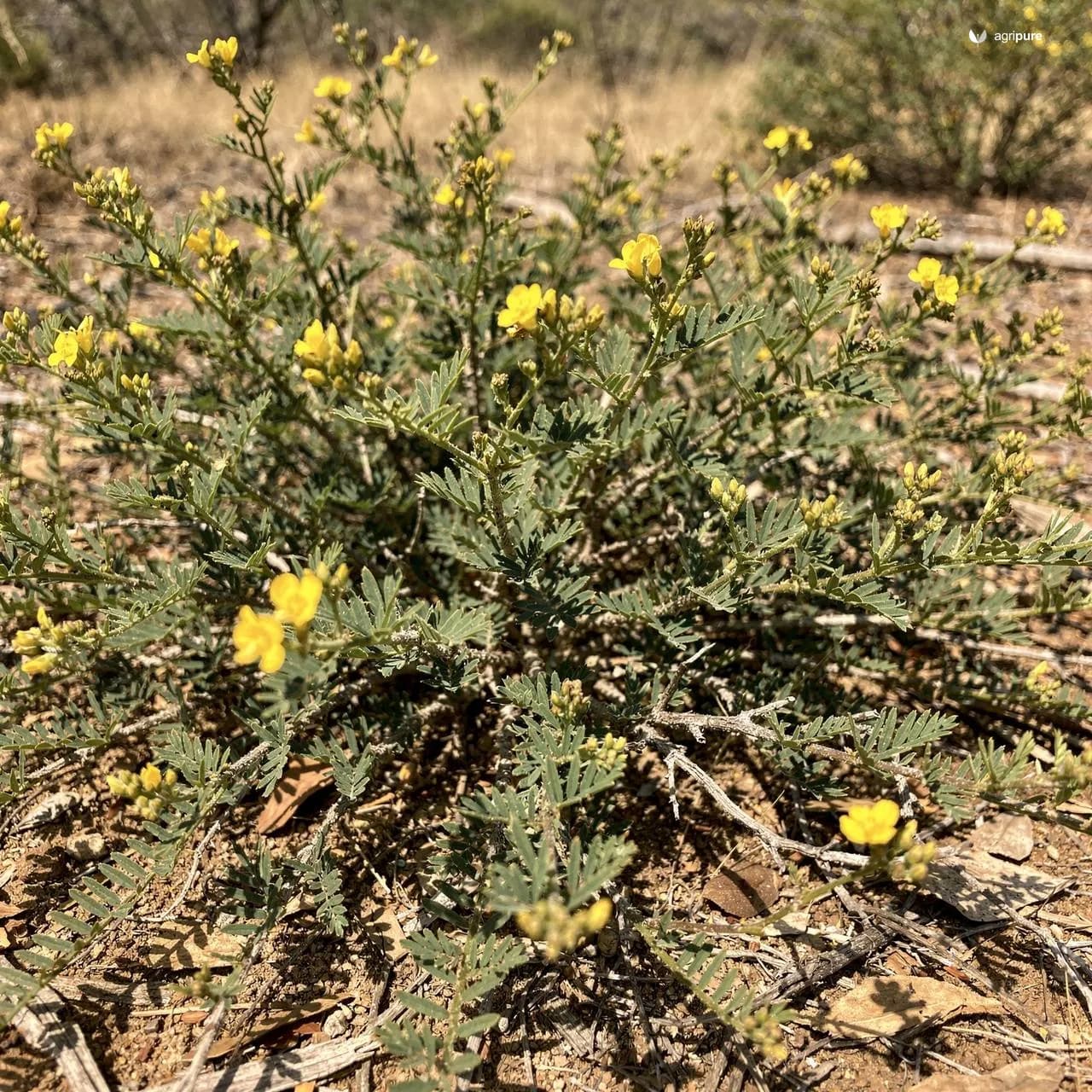
Shrubby pencil flower (Stylosanthes fruticosa, also called wild or African stylo) is a low nitrogen-fixing legume of dry grassland, and it earns a place as a self-seeding cover and a protein-rich pasture component on hard, low-rainfall ground in the the Punjab plains and along the coastal Sindh. It is woody at the base but stays close to the ground, so it works less as a crop you harvest and more as a living layer that feeds the soil and the stock at the same time. Its native range runs from southern and eastern Africa across the Arabian Peninsula to Pakistan, India, and Sri Lanka, so it is at home in the dry tropics rather than an exotic experiment.
Where it thrives
This is a plant for the dry end of the range. It is a woody perennial herb reaching 0.5 to 1 m, and in harsh, low-rainfall sites it behaves as an annual instead. It carries through rainfall as low as about 300 mm a year with dry seasons up to six months, helped by a deep, strong taproot, and it tolerates drought well while standing up to grazing. It favours sandy, well-drained soils and copes across a wide pH band, roughly 4 to 8, including acid and low-phosphorus ground that defeats more demanding legumes. That profile fits the hot plains and the coastal dry belt, where the limiting factor is water and fertility, not heat.
Role in the system
Treat wild stylo as a support and soil-building groundcover in the lowest layer of a planting. As a legume it fixes atmospheric nitrogen in root nodules and lifts soil fertility through leaf drop, work that shows most in fallows and on degraded ground where the soil has little to start with. It is grown in mixed pasture with perennial grasses and intercropped with millet in dry areas, and its ground coverage helps stabilise loose, eroding soil on degraded and coastal land. The standing growth, cut or trampled, returns as mulch that shades the soil and feeds soil life as it breaks down. Because it self-seeds, a stand re-establishes itself each season once it is set, so it fills the role a cover crop plays without the yearly resowing a cover crop needs — sow it once, let a few plants seed, and the legume layer carries itself forward.
What you get
The return is fodder and fertility rather than a cash harvest. Crude protein runs from about 7 to 17% of dry matter with dry-matter digestibility near 66%, so it is a genuine protein component in a grass pasture rather than bulk filler. In trials, cattle grazing legume-grass pasture that included stylo gained 161 kg per head a year against 118 kg on grass alone — a measure of what the legume adds. For a dry plains or coastal site that needs cheap protein and slow fertility-building under grazing, it is a strong fit.
Sources
- Plants of the World Online. “Stylosanthes fruticosa (Retz.) Alston.” Royal Botanic Gardens, Kew (native range, nitrogen fixation).
- Heuzé, V., et al. (Feedipedia). “African stylo (Stylosanthes fruticosa).” INRAE, CIRAD, AFZ & FAO (height, rainfall, soils, protein, liveweight gains).
Sourcing notes
Self-seeding legume best sown as scarified seed into a prepared dry-season pasture; let a few plants seed before the first hard graze to build the soil bank.