pioneer
Fenugreek
methi
Trigonella foenum-graecum
Also known as Methi (Pakistan, India).
- punjab plains
- sindh coast
- pothohar
International hardiness
- USDA 6-10
- RHS H4
- AU: Warm temperate, Mediterranean, Subtropical, Arid / semi-arid
Where it grows — regional guide
| Zones / rating | Regional notes |
|---|---|
USDA 6-10 | Grown as a fast cool-season annual sown in spring or autumn, producing culinary greens and soil-improving legume nodules. |
| Zones / rating | Regional notes |
|---|---|
H4 (-10 to -5C) | Sown outdoors in late spring for quick summer cuts of aromatic greens, or grown in containers for kitchen use. |
| Zones / rating | Regional notes |
|---|---|
Warm temperate, Mediterranean, Subtropical, Arid / semi-arid | Cultivated during the cooler autumn and winter months in warm districts to harvest tender foliage before heat triggers flowering. |
| Zones / rating | Regional notes |
|---|---|
USDA 6-10 (USDA scale) Canada uses its own zone system; Canadian zones run roughly one lower than USDA. | A fast-maturing cool-season green direct-sown in late spring once heavy freezes pass, harvested young before summer heat. |
| Zones / rating | Regional notes |
|---|---|
Punjab plains, Sindh coast, Pothohar | Pakistan:A staple winter vegetable sown across irrigated plains in autumn, harvested repeatedly for tender leafy greens and spring seeds. India:An essential rabi crop sown across the plains in autumn for leafy greens, nitrogen fixation, and aromatic mature seed. |
Grows alongside
Species that appear with Fenugreek in 13 of our published guides — a starting list for a guild, not a planting plan.
Fenugreek (Trigonella foenum-graecum) is a small annual legume in the bean family (Fabaceae), grown the world over as a cool-season, semi-arid crop.34 It is an Old World plant: sources place its origins around the Mediterranean, Europe, and Asia, with the McCormick Science Institute pointing specifically to India and northern Africa as where it began before spreading across the Mediterranean, the Middle East, India, and China.25 For a homesteader, fenugreek earns its bed twice over from a single sowing: the young foliage is eaten as a leafy vegetable, and the dried golden seeds are a kitchen spice. It asks little, growing happily through cool, dry weather where summer vegetables would sulk.34
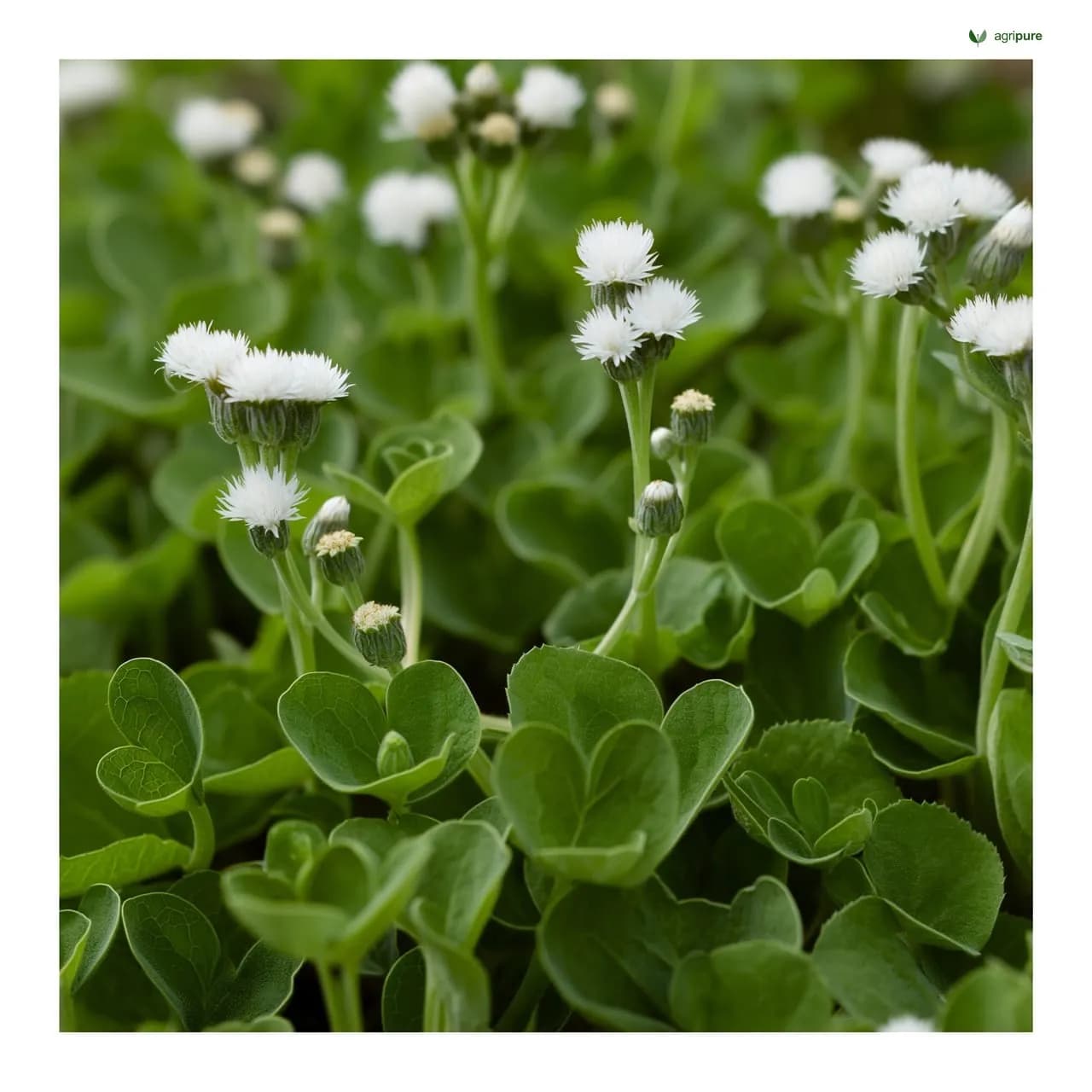
It is a low, erect, aromatic herb, typically 0.3 to 0.8 m (1 to 2 ft) tall, with leaves divided into three small obovate-to-oblong leaflets in the classic clover-like, trifoliate pattern.136 The flowers are small and triangular, white to yellow — it is these three-angled blooms that give the genus its name, Trigonella meaning “three-angled.”2 The flowers give way to long, thin, hoop-like pods holding yellow-to-golden seeds.2 Each seed is solid, light-brown to yellowish-brown, roughly 5 mm long and 2 mm thick, with a flavour at once sweetish and bitter that is variously described as earthy, green, maple-like, musty, or like burnt sugar.12 The maple note is no accident: eating the seeds can lend a maple-like odour to sweat, urine, and breast milk.35 Taken together, the trifoliate leaves, three-angled flowers, and slim curved pods set fenugreek apart from the pasture clovers and other small legumes it can resemble at a glance.
Growing fenugreek
Fenugreek is raised as an annual from seed only — there is no other practical way to start it.4 It is sown directly, and line sowing is the recommended method.4 To improve germination, give the seed a simple pre-treatment: soak it in water for 6 to 8 hours, then shade-dry it before planting.4 Space plants about 8 to 10 cm apart along the row.4
It is genuinely a cool-weather plant. Fenugreek is grown as a winter crop that needs cooler temperatures for its best growth, shows a good level of frost tolerance, and wants full sunlight to develop well.4 For soil it prefers a well-drained ground of moderate texture, also doing well in heavy black cotton soils, and it tolerates a broad pH range from about 5.3 to 8.2.4 Although it is grown as a semi-arid crop, it is not a fend-for-itself plant: it needs adequate irrigation during dry spells, generally around 4 to 6 irrigations over the season depending on soil and weather, and a pre-sowing irrigation is sometimes advised to guarantee enough moisture at planting.4 Plan on two passes of weeding while the crop is young — a first weeding at about 20 to 25 days after sowing and a second at about 45 to 50 days.4
Major botanical and horticultural references describe fenugreek as a cool-season, frost-tolerant annual but do not assign it a specific USDA hardiness zone, so none is stated here rather than invented.345 In practice, treat it like other cool-season annual legumes: sow into cool, well-drained ground in full sun, keep moisture steady but never waterlogged, and grow it through the cooler part of the year.
Harvest and uses
Grown for seed, fenugreek is ready to harvest roughly 120 to 150 days after sowing.4 Timing matters at the end: if you leave the crop standing too long the pods burst and seed is lost, so it pays to cut as the pods mature rather than chancing a few more days.4 The crop yields two distinct products. The tender young foliage is used as a leafy vegetable, while the dried seeds serve as a culinary spice with their characteristic bitter, maple-and-burnt-sugar flavour — the same seeds that scent everything from spice blends to, eventually, the cook’s own breath.123 Beyond the kitchen, concentrated preparations of the seed have a long history of medicinal use, but that use comes with real cautions, covered below.35
Safety and cautions
Both the leaves and seeds of fenugreek are edible and have a long record as ordinary food, eaten as a vegetable and used as a spice.35 The cautions attach to concentrated medicinal use, not to normal culinary amounts. Sources are explicit that more concentrated use carries important safety considerations, especially in pregnancy, in hormone-sensitive conditions, in diabetes, and for people taking anticoagulant (blood-thinning) medication.35 This profile describes fenugreek’s traditional and culinary uses only; it makes no medical claims, recommends no doses, and is not a substitute for professional advice. Anyone who is pregnant or breastfeeding, manages a hormone-sensitive condition or diabetes, or takes prescription medication should consult a qualified clinician before using fenugreek in any concentrated or supplemental form. A harmless but worth-knowing effect of eating the seed is the maple-like odour it can impart to sweat, urine, and breast milk.35