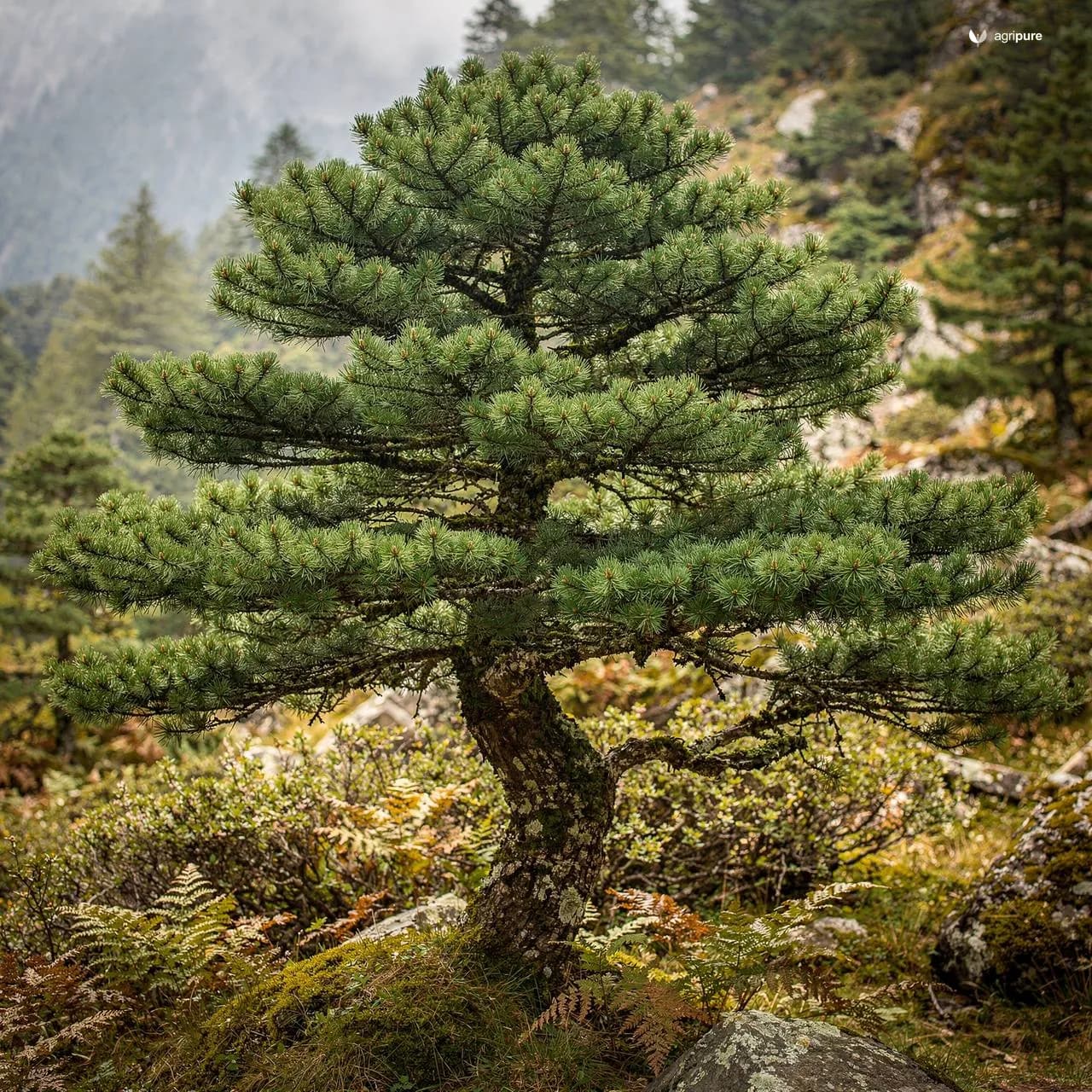
climax
Himalayan Yew
thuner
Taxus wallichiana
Also known as Thuner (Pakistan).
- kpk hills
International hardiness
- USDA 7-9
- RHS H5
- AU: Cool temperate, Warm temperate
Where it grows — regional guide
| Zones / rating | Regional notes |
|---|---|
USDA 7-9 | No region-specific data yet |
| Zones / rating | Regional notes |
|---|---|
H5 (-15 to -10C) | Hardy to RHS H5 as a rare specimen conifer for moist, shaded sites; plant strictly as an ornamental tree, as every part is dangerously toxic if swallowed. |
| Zones / rating | Regional notes |
|---|---|
Cool temperate, Warm temperate | No region-specific data yet |
| Zones / rating | Regional notes |
|---|---|
USDA 7-9 (USDA scale) Canada uses its own zone system; Canadian zones run roughly one lower than USDA. | No region-specific data yet |
| Zones / rating | Regional notes |
|---|---|
KPK hills | Pakistan:An endangered native evergreen conifer of the moist KPK hills; treat solely as conservation planting, as every part is dangerously toxic to people and stock. India:A threatened Himalayan forest conifer cultivated for slow forest restoration; every part of the plant is lethal to livestock and people if ingested. |
Himalayan yew (Taxus wallichiana, thuner) is a slow-growing, shade-loving conifer of the moist-temperate forests of the KPK hills. It runs from the understory up into the canopy and anchors mature forest structure, a true climax species. It also carries a heavy burden: its bark, needles, and seed contain taxol, the cancer drug, and that value has driven it toward extinction in the wild. On a syntropic site, then, this is a tree for restoration and protection, not for harvest.
Where it thrives
In Pakistan, thuner grows in the moist-temperate forests of Swat, Murree, the Galliat, Hazara, Kaghan, Kurram, Chitral, and Kashmir. It keeps to a narrow altitude band, roughly 2,000 to 3,100 m, often on steep slopes, in areas with high summer rainfall and on moist, well-drained, acid to neutral soils. This is a specialist of cool, damp, shaded mountain ground, not a tree for open or dry sites, and its restriction to that narrow band is part of why it is so easily lost when those forests are disturbed. Across its Pakistani range it is typically scattered as individuals or small groups within the broadleaf and conifer forest rather than forming stands of its own, which makes each tree count.
Role in the system
Yew is the deep-shade climax tree, the species that grows in the dim layer beneath an established canopy where almost nothing else will, then persists as part of the mature structure. On a syntropic site that makes it a late, shade-tolerant filler for the lower and middle strata under a closed forest, not a tree you start in the open and not one you plant early. It is slow and patient, and its place is in a system that is already mature enough to give it the shade and humidity it wants. Reading it correctly matters here: try to use it as a pioneer or in full sun and it simply will not take.
Cautions
Thuner is endangered. Over the last quarter century it has declined sharply from illegal cutting for taxol, and it regenerates poorly because it sets little seed and that seed can take 18 months to 2 years to germinate. The honest framing is conservation, not extraction: plant it to rebuild what has been stripped out, source material legally from nurseries or cuttings, and do not treat the bark as a crop, because bark stripping kills the tree. Every part of the plant is also toxic to people and livestock, so site it away from grazing animals and keep that in mind around children.
What you get
The standing value is ecological and medicinal, a rare climax conifer whose taxol underpins breast and ovarian cancer treatment, which is exactly why wild stands need protecting rather than cutting and why sustainable, cultivated supply matters. The fine, hard, close-grained wood has long been used for small timber and turnery, but on a restoration planting the point is the living tree and the forest it helps complete, not the log.
Sources
- Poudel, R. C., et al. (2020). “Assessment of risk, extinction, and threats to Himalayan yew in Pakistan.” Saudi Journal of Biological Sciences.
- Royal Botanic Garden Edinburgh. “Taxus wallichiana.” Threatened Conifers of the World.
Sourcing notes
Yew is endangered and slow from seed, which can take up to 2 years to germinate; propagate from legally sourced cuttings or nursery stock rather than wild-collected bark or plants. Treat any planting as restoration, not harvest.