secondary
Himalayan Thyme
tumuro
Thymus linearis
Also known as Tumuro (Pakistan).
- kpk hills
- balochistan highlands
International hardiness
- USDA 5-9
- RHS H6
- AU: Cool temperate, Warm temperate, Mediterranean
Where it grows — regional guide
| Zones / rating | Regional notes |
|---|---|
USDA 5-9 | No region-specific data yet |
| Zones / rating | Regional notes |
|---|---|
H6 (-20 to -15C) | Hardy to RHS H6 as an alpine rockery subshrub on gritty, free-draining ground; use culinary leaves sparingly and avoid concentrated thymol oils while pregnant. |
| Zones / rating | Regional notes |
|---|---|
Cool temperate, Warm temperate, Mediterranean | No region-specific data yet |
| Zones / rating | Regional notes |
|---|---|
USDA 5-9 (USDA scale) Canada uses its own zone system; Canadian zones run roughly one lower than USDA. | No region-specific data yet |
| Zones / rating | Regional notes |
|---|---|
KPK hills, Balochistan highlands | Pakistan:A dwarf aromatic groundcover of the KPK hills and Balochistan highlands; leaves make a prized herbal tea, but avoid using concentrated essential oils neat or in pregnancy. India:A creeping high-altitude perennial herb native to western Himalayan dry slopes; use leaves as a kitchen seasoning, but avoid undiluted essential oils while pregnant. |
Himalayan thyme (Thymus linearis) is a small, intensely aromatic perennial thyme in the mint family (Lamiaceae), native to the high, dry, open slopes of the western and central Himalaya. Like the common culinary thymes it is related to, it is a low, fragrant herb valued both as a seasoning and as a source of essential oil, and it has more recently been brought into cultivation specifically for that oil and its medicinal value. For a homesteader, its appeal is straightforward: it is a tough, sun-loving, drought-adapted herb from cold, stony, high-elevation ground, the kind of plant that earns its keep on a thin-soiled, well-drained bank where richer crops sulk.
Description and identification
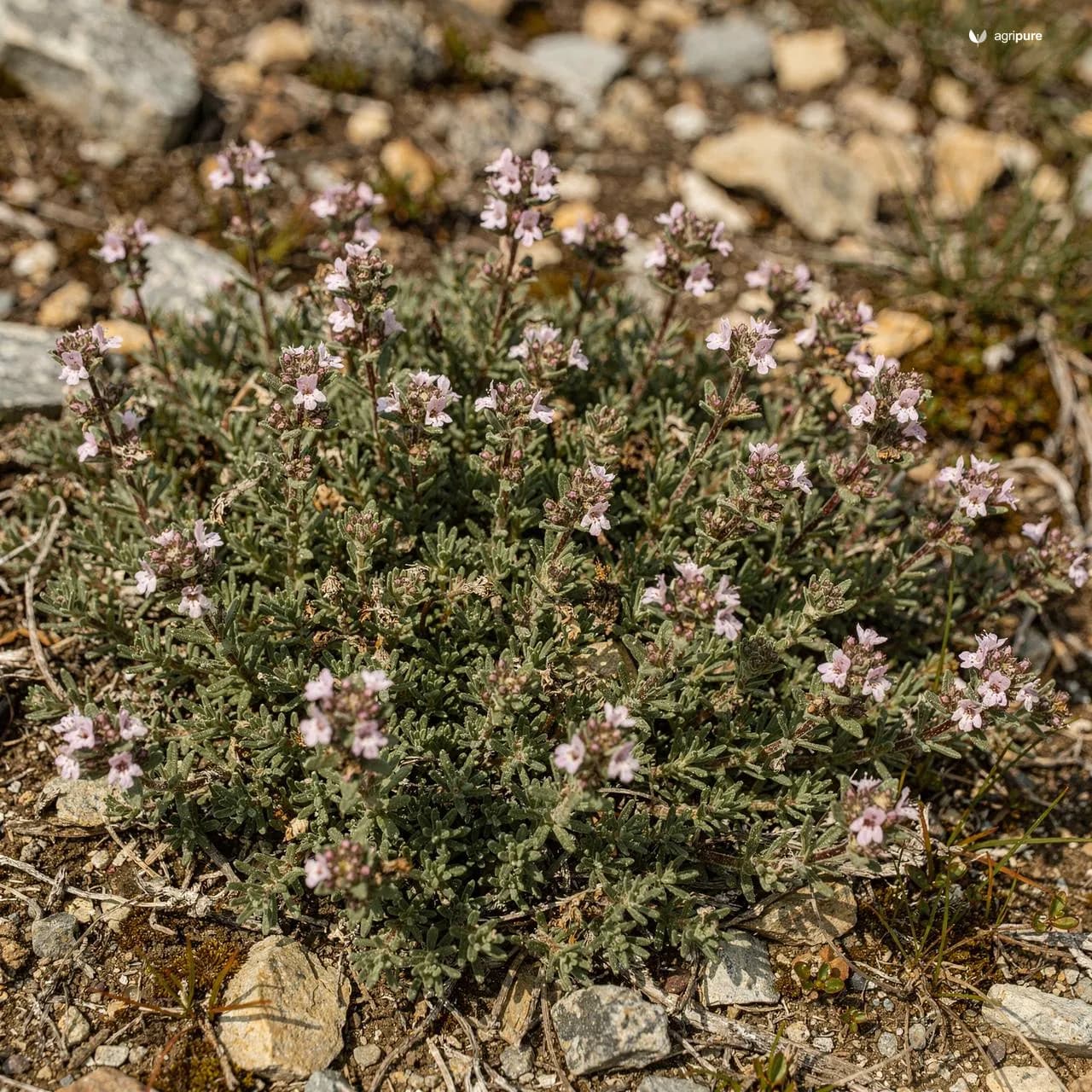
Himalayan thyme is a small aromatic perennial herb that carries the unmistakable thyme scent in its foliage. Being a member of the mint family, it shows that family’s hallmark traits: square stems and paired, opposite leaves, which is a reliable first check when you are sorting it from look-alikes in the field. The leaves are small, and the plant flowers in pink to purplish-pink blooms gathered toward the stem tips. Crushing a leaf is the surest test: the foliage releases a strong, characteristic thyme fragrance, a reflection of its essential oil, which is rich in thymol along with *p*\-cymene and γ-terpinene.
The species sits squarely within the genus Thymus in the Lamiaceae, recorded as Thymus linearis Benth. In its home range it is documented across the Himalayan regions of northern India, including Uttarakhand and the well-known Valley of Flowers, where it grows naturally on exposed mountain slopes.
Growing Himalayan thyme
This is a plant of cool, dry, high-elevation country. In the wild it favours open slopes at roughly 1,500 to 3,300 m elevation, and eFlora of India records it in the Valley of Flowers at about 3,350 to 3,650 m (11,000 to 12,000 ft). Those altitudes mean wild stands routinely sit through cold winters with frost and snow and cool to mild summers — in other words, a temperate to subalpine climate rather than a hot lowland one.
- Sun: Give it full sun. It is a plant of open, exposed slopes, not shade.
- Soil and drainage: Suit it to lean, sharply drained ground. Its natural home on rocky high-mountain slopes points to a strong preference for free-draining sites rather than heavy, wet soil.
- Climate: It is naturally adapted to cool, dry, high-elevation conditions with winter freezing. Encouragingly for growers outside the mountains, a cultivation study reported successfully domesticating Thymus linearis to the warmer, lower-lying subtropical region of north India when it was managed for essential-oil production, which suggests some flexibility beyond its native altitude band.
Honest gaps are worth flagging. The accessible literature on this exact species does not lay out step-by-step propagation, sowing dates, plant spacing, or a firm time-to-maturity. Thymes as a group are typically raised from seed, cuttings, or division, but because no source documents those methods specifically for T. linearis, this profile does not state them as fact rather than guess. In practice, treat it as you would other dryland thymes: a warm, gritty, free-draining bed, full sun, and restraint with water once it is established.
Harvest and uses
Himalayan thyme is grown chiefly for its aromatic foliage and the essential oil within it. The oil is rich in thymol, the same pungent phenolic compound that gives common thyme much of its punch, alongside *p*\-cymene and γ-terpinene. That chemistry is what underpins both its kitchen value as a strongly scented seasoning and the interest in it as a medicinal and essential-oil crop. A dedicated trial assessed its productivity and essential-oil quality under cultivation, treating it as a deliberate essential-oil crop rather than just a foraged wild herb.
Specific harvest cues, dried-leaf yields, and oil yields for T. linearis are not consistently reported in the general sources available here, so this profile does not put a number on them. What the sources do support is a clear picture of the plant’s role: a fragrant, thymol-bearing herb whose value lies in its leaf and oil, suited to small-scale cultivation on the kind of dry, stony ground where it naturally thrives.
Safety and cautions
Himalayan thyme’s character comes from a thymol-rich essential oil, and concentrated essential oils are potent substances that deserve respect. The leaf used as a culinary herb is mild, but distilled or concentrated oil is not, and such oils are generally used sparingly and well diluted rather than taken neat. While the plant has a place in traditional regional use and is studied for its medicinal value, this profile makes no medical claims and offers no dosages; anyone considering medicinal use, particularly those who are pregnant, breastfeeding, or taking medication, should seek qualified guidance first.
Sources
- Thymus linearis — eFlora of India
- Phytochemistry and essential oil of Thymus linearis — Journal of Pharmacognosy and Phytochemistry
- Thymus linearis Benth. — India Biodiversity Portal
- Thymus linearis Benth. — International Plant Names Index (IPNI)
- Assessing productivity and essential oil quality of Himalayan thyme (Thymus linearis Benth.) — Industrial Crops and Products (ScienceDirect)
Sourcing notes
Lift small rooted divisions or wild-collect seed from established hill pastures in KPK or Balochistan; it is not widely sold as nursery stock, so vegetative pieces from a known stand are the surest start.