Key takeaways
- Chill hours are accumulated cold temperatures (typically 32°F to 45°F) that fruit trees need for proper dormancy and bud break.
- Insufficient chill can lead to delayed or uneven bud break, reduced fruit set, and poor crop quality, particularly in warmer USDA zones.
- Different chill models exist, like the Chilling Hours Model and Dynamic Model, with the Dynamic Model often providing better accuracy in regions with fluctuating winter temperatures.
- Stone fruits (peaches, cherries) and pome fruits (apples, pears) have specific chill hour requirements, ranging from below 200 to over 1,200 hours.
- Selecting fruit varieties suited to your local USDA zone and average chill accumulation is the most critical step for a thriving home orchard.
- Grafting can allow for experimentation with different varieties on established rootstock, potentially extending your orchard’s productivity.
Quick answer: Chill hours are the cumulative cold temperatures (typically 32°F to 45°F) fruit trees need during dormancy for proper bud break and fruit set. Insufficient chill can lead to poor yields and tree health. Variety selection matters for success in a home orchard.
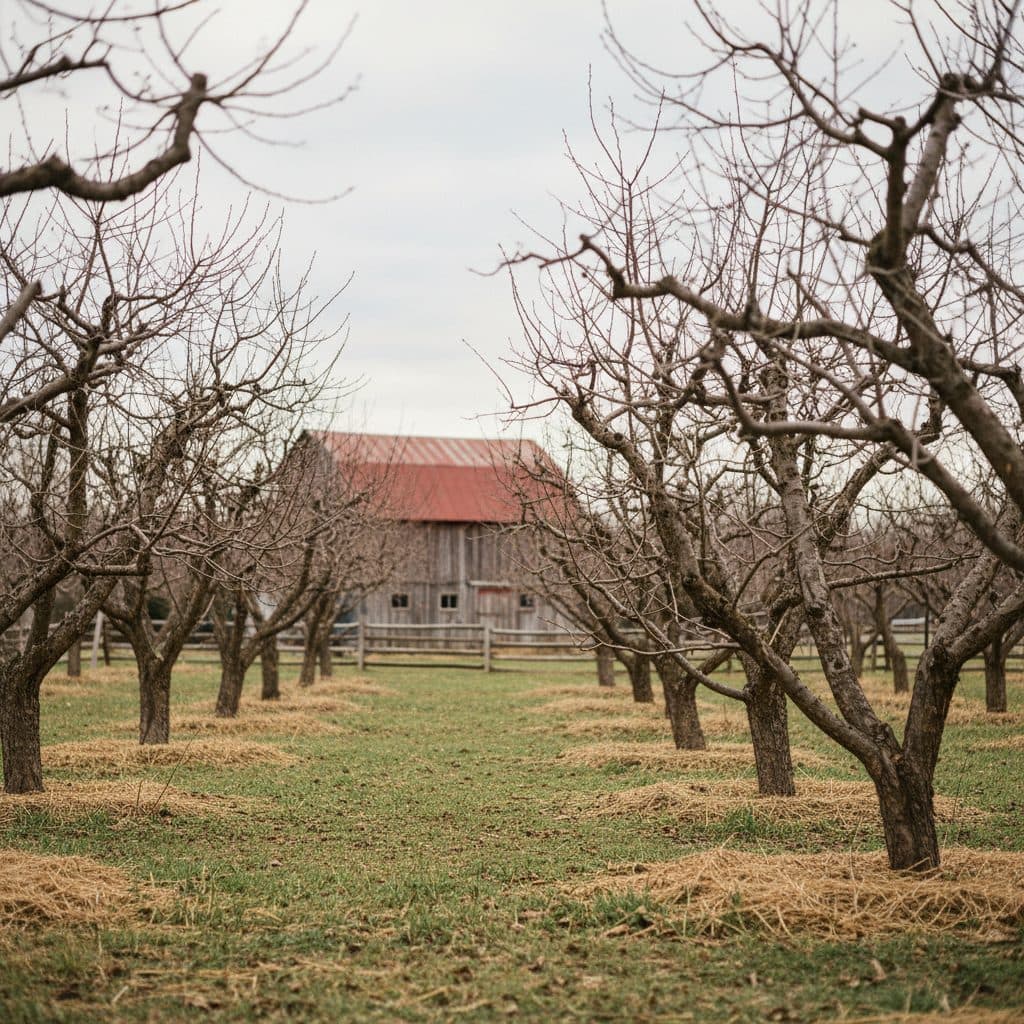
In the expansive agricultural landscape of the United States, from the apple orchards of Washington State to the peach groves of Georgia, every home grower faces a common challenge: understanding the specific needs of their fruit trees. One of the most fundamental requirements for stone and pome fruits — apples, pears, peaches, and cherries — is a period of winter dormancy, triggered by what we call “chill hours.” Without enough of this essential cold, your trees may struggle to produce a consistent, quality harvest.
For instance, growers in USDA zone 8 in South Carolina have observed significant changes in winter temperatures, which affected the accumulation of these hours [1]. This article will explain what chill hours are, why they matter, how to measure them, and most importantly, how to select fruit tree varieties that will thrive in your specific USDA zone for a fruitful yield year after year.
What are chill hours and why do they matter?
Chill hours represent the cumulative amount of cold temperature a fruit tree experiences during its dormant period, typically in the fall and winter months. These cold temperatures, generally between 32°F and 45°F, are essential for breaking dormancy and allowing the tree to flower and set fruit properly in the spring. Without adequate chill, a tree’s internal clock gets confused, leading to various problems that can severely impact your harvest.
the biological imperative of dormancy
Imagine a peach tree in USDA zone 7 that requires 800 chill hours. If it only receives 600 hours due to a mild winter, its buds might not open uniformly, or some might not open at all. This phenomenon, known as delayed foliation or uneven bud break, can result in a significantly reduced crop. In subtropical regions, like parts of Florida or Southern California, insufficient chill can even cause peach defoliation and poor flowering [2]. For home growers, this means fewer fruits, smaller sizes, and sometimes, no harvest at all. Understanding your local chill hour accumulation is as important as knowing your USDA hardiness zone for long-term orchard success.
- Proper bud development: Ensures flower and leaf buds mature correctly.
- Uniform bud break: All buds open around the same time, leading to a concentrated bloom.
- Strong fruit set: More flowers develop into viable fruit.
- Reduced stress: Trees are healthier when their dormancy cycle is met.
- Consistent yields: Predictable harvests year after year.
Measuring chill: models and methods for home growers
Accurately measuring chill hours is not as simple as checking a thermometer once a day. Various models have been developed to quantify the chilling requirement, each with its own methodology. The most common models include the Chilling Hours Model, the Utah Model, and the Dynamic Model. For home growers, understanding these models can help in selecting the most appropriate varieties for your specific microclimate, especially if you live in a region with fluctuating winter temperatures, such as parts of USDA zone 7.
selecting the right chill model
The Chilling Hours Model is the simplest: it counts all hours between 32°F and 45°F as one chill hour. While straightforward, it doesn’t account for temperatures above 60°F that can negate previously accumulated chill. The Utah Model refines this by assigning different chill effectiveness to various temperature ranges and subtracting chill during warm periods. However, for many regions, especially those with warmer winters like USDA zone 9 in California, the Dynamic Model is often considered more accurate [6]. This model calculates “chill portions” and accounts for both positive and negative chill accumulation and offers a more reliable estimate for complex winter weather patterns. Many university extension services and online tools, such as web-based chill hours apps, provide local chill data using these models [2, 4].
- Chilling Hours Model: Simplest, counts hours between 32°F and 45°F.
- Utah Model: Accounts for varying effectiveness of temperatures and chill negation.
- Dynamic Model: Most complex, calculates “chill portions,” better for fluctuating temperatures.
- Local Extension Services: Often provide county-specific data, like in South Carolina [5].
- Online Chill Calculators: Many websites offer tools to track local chill accumulation.
Matching stone fruit varieties to your USDA zone
Stone fruits — peaches, nectarines, plums, apricots, and cherries — are beloved for their juicy, flavorful harvests. However, their chill hour requirements vary significantly, making careful selection paramount for growers in different USDA zones. For instance, a peach variety requiring 900 chill hours will likely fail in a USDA zone 9 climate that only averages 400 hours, leading to poor fruit set and sparse foliage.
peaches, plums, and cherries by zone
For growers in colder regions, like USDA zone 4 or 5, varieties needing high chill hours are typically a good fit. For example, a ‘Montmorency’ tart cherry thrives with 800 to 1,200 chill hours, making it suitable for states like Michigan or Wisconsin. In contrast, growers in warmer USDA zones, such as 8 or 9 in the southern US, need to seek out low-chill varieties. A ‘Florida Prince’ peach, requiring only 150 to 250 chill hours, is a popular choice for Florida and parts of Texas. Plums also show a wide range; ‘Santa Rosa’ plums need around 400 chill hours, while ‘Ozark Premier’ may need 800 hours or more. Always check the specific chill requirement for each cultivar, as even within a species, the needs can vary by hundreds of hours. For more options in colder climates, explore cold-hardy fruit and nut trees for zones 4-6.
- Peaches: ‘Reliance’ (800-1,000 hours, zone 4-8), ‘Florida Prince’ (150-250 hours, zone 8-10).
- Nectarines: ‘Fantasia’ (600-800 hours, zone 5-9), ‘Desert Delight’ (250-300 hours, zone 8-10).
- Plums: ‘Santa Rosa’ (400 hours, zone 5-9), ‘Superior’ (700-800 hours, zone 4-8).
- Cherries: ‘Bing’ (700-800 hours, zone 5-8), ‘Stella’ (400-500 hours, zone 5-8).
- Apricots: ‘Tilton’ (700-800 hours, zone 4-7), ‘Goldrich’ (800-900 hours, zone 4-8).
Matching pome fruit varieties to your USDA zone
Pome fruits, including apples, pears, and quinces, are staples in many home orchards across the US. Like their stone fruit counterparts, they have specific chill hour requirements that dictate their suitability for different climates. An apple variety needing 1,000 chill hours will simply not produce well in a warm winter climate like central Florida, which may only accumulate 150 to 200 hours.
apples, pears, and quinces by zone
For growers in the northern states, such as USDA zone 5 in New York or zone 6 in Pennsylvania, many classic apple varieties thrive with 800 to 1,200 chill hours. ‘Honeycrisp’ apples, for example, require about 800 to 1,000 hours, while ‘Granny Smith’ needs around 400 hours, making it more adaptable to slightly warmer regions. Pears, particularly European varieties like ‘Bartlett’ or ‘Bosc’, generally need 600 to 800 chill hours, making them suitable for a wide range of temperate zones from 4 to 8. Asian pears, such as ‘Hosui’, often have lower requirements, sometimes as low as 300 to 400 hours, which extends their range into warmer USDA zone 9 areas. Always consult nursery catalogs or university extension resources for the precise chill needs of a specific cultivar to ensure optimal fruit production in your backyard orchard. Proper pruning techniques are also vital for pome fruit health and yield.
- Apples: ‘Honeycrisp’ (800-1,000 hours, zone 4-7), ‘Dorsett Golden’ (100-200 hours, zone 9-10).
- Pears (European): ‘Bartlett’ (600-800 hours, zone 4-8), ‘Comice’ (600-700 hours, zone 5-9).
- Pears (Asian): ‘Hosui’ (300-400 hours, zone 5-9), ‘Shinseiki’ (300-400 hours, zone 5-9).
- Quinces: ‘Pineapple’ (300-400 hours, zone 5-9), ‘Smyrna’ (400-500 hours, zone 5-9).
- Jujubes: ‘Li’ (150-200 hours, zone 6-10), ‘Lang’ (150-200 hours, zone 6-10).
Orchard care and grafting for success
Beyond selecting the right varieties, effective orchard care keeps your fruit trees productive, especially as climate patterns shift. Even with the perfect chill hour match, factors like soil health, water availability, and proper tree maintenance can impact overall tree vigor and fruit quality. For example, maintaining good soil structure and nutrient levels can help trees better withstand environmental stresses, potentially improving their resilience to less-than-ideal chill conditions.
grafting and microclimate considerations
One powerful technique for home growers is grafting. If you have an established fruit tree that isn’t performing well due to insufficient chill, or if you want to experiment with a new variety without planting a whole new tree, grafting allows you to introduce a scion (a shoot of the desired variety) onto an existing rootstock or tree. This can be particularly useful in areas like USDA zone 7, where a mild winter might reduce chill hours below a variety’s requirement. You could graft a lower-chill variety onto an existing higher-chill rootstock, effectively diversifying your orchard’s output. Strategic planting also matters; planting on the north side of a building or fence can sometimes provide a few extra chill hours by delaying warming, especially in marginal zones. Consider nitrogen-fixing trees as companions to improve soil fertility and support healthy root systems.
- Soil Health: Maintain organic matter and proper pH for robust root development.
- Water Management: Ensure consistent moisture, especially during dry spells, to reduce tree stress.
- Pruning: Regular pruning promotes air circulation and fruit production, removing up to 20% of canopy annually.
- Pest and Disease Monitoring: Early detection and treatment prevent significant crop loss.
- Grafting: Introduce new varieties or adapt existing trees to changing chill conditions.
Chill Hour Requirements for Popular Fruit Varieties
Fruit Type | Variety | Chill Hours (approx.) | Suitable USDA Zones |
|---|---|---|---|
Apple | Honeycrisp | 800-1,000 | 4-7 |
Apple | Anna | 100-200 | 9-10 |
Peach | Reliance | 800-1,000 | 4-8 |
Peach | Florida Prince | 150-250 | 8-10 |
Cherry (Tart) | Montmorency | 800-1,200 | 4-8 |
Cherry (Sweet) | Stella | 400-500 | 5-8 |
Pear (European) | Bartlett | 600-800 | 4-8 |
Pear (Asian) | Hosui | 300-400 | 5-9 |
Chill Hour Range: Most fruit trees require between 100 and 1,200 chill hours for optimal bud break and fruit production.
Temperature Window: Effective chill accumulation typically occurs when temperatures are between 32°F and 45°F, with some models adjusting for warmer periods.
South Carolina Trend: Some regions in South Carolina have seen a reduction of up to 15% in chill hours over the last decade, impacting fruit tree selection [1].
Frequently asked questions
What happens if a fruit tree doesn’t get enough chill hours?
If a fruit tree does not receive its required chill hours, it can experience delayed or uneven bud break, poor flowering, and a significantly reduced fruit set. For example, a peach tree needing 800 hours but only getting 500 might produce 50% less fruit or none at all.
How can I find out the chill hours for my location?
You can find local chill hour data through several resources. Many university extension services, like those in South Carolina, provide county-specific accumulation data [5]. There are also web-based chill hours apps and online calculators that use local weather station data to estimate chill accumulation for your specific USDA zone [3].
Can I grow a high-chill fruit tree in a low-chill area?
Generally, it is not recommended to grow high-chill varieties in low-chill areas, as they will consistently underperform or fail to fruit. However, some growers in marginal USDA zones might try to create microclimates or use specific cultural practices, but success is often limited, with yields reduced by over 70%.
What is the difference between the Chilling Hours Model and the Dynamic Model?
The Chilling Hours Model simply counts all hours between 32°F and 45°F as one chill hour. The Dynamic Model, considered more accurate in regions with fluctuating temperatures, calculates “chill portions” and accounts for the negation of chill by warm temperatures above 60°F, providing a more nuanced estimate [6].
Does pruning affect chill hour requirements?
Pruning itself does not directly change a tree’s chill hour requirement, which is genetically determined. However, proper pruning improves tree health and vigor, which can help a tree better utilize the chill it does receive, potentially leading to a more robust bloom and fruit set, increasing yield by up to 20%.
Are all fruit trees affected by chill hours?
While stone and pome fruits are highly dependent on chill hours, not all fruit trees are. Tropical and subtropical fruits like citrus, avocados, and many berries have very low or no chill requirements. For example, a lemon tree in USDA zone 10 needs virtually zero chill hours.
References
- Temperature Trends and Accumulation of Chill Hours, Chill Units, and Chill Portions in South Carolina (2024). Temperature Trends and Accumulation of Chill Hours, Chill Units, and Chill Portions in South Carolina.
- Subtropical Peach Defoliation and Chill Hours (2025). Subtropical Peach Defoliation and Chill Hours.
- A Web-Based Chill Hours App for Fruit Growers (2017). A Web-Based Chill Hours App for Fruit Growers.
- CE Test 2.6 Hours (2012). CE Test 2.6 Hours.
- County-Specific Chill Hours Accumulation in South Carolina (2021). County-Specific Chill Hours Accumulation in South Carolina.
- A global analysis of the comparability of winter chill models for fruit and nut trees (2010). A global analysis of the comparability of winter chill models for fruit and nut trees.