Key takeaways
- Container gardening allows tender rhizomes like ginger and turmeric to thrive in any US climate, even outside tropical zones.
- Select fresh, plump rhizomes with visible ‘eyes’ and use containers at least 10 inches deep and 10-15 gallons in volume.
- Provide well-draining, nutrient-rich soil, consistent moisture, and warm temperatures between 70-85°F for optimal growth.
- Ensure rhizomes receive 6-8 hours of indirect sunlight daily, or supplement with grow lights indoors during shorter days.
- Harvest ginger and turmeric rhizomes 8-10 months after planting, when foliage begins to yellow and die back.
- Overwinter tender rhizomes by bringing containers indoors or storing dormant rhizomes in a cool, dark place below 60°F.
Quick answer: You can grow ginger and turmeric in containers in any US zone by providing warm temperatures (70-85°F), consistent moisture, 6-8 hours of indirect sunlight, and using containers at least 10 inches deep. Harvest rhizomes 8-10 months after planting.
From the humid Gulf Coast of USDA zone 9 in Florida to the cooler, drier climates of USDA zone 5 in the Midwest, growing tender rhizomes like ginger and turmeric might seem like a challenge. These plants, botanically known as Zingiber officinale and Curcuma longa, are typically found in tropical and subtropical regions, thriving in consistent warmth and moisture. However, with the right approach to container gardening, you can cultivate a successful harvest of these flavorful and beneficial rhizomes right in your backyard, on a balcony, or even indoors, regardless of your specific US climate zone.
Container gardening offers a significant advantage by allowing you to control the growing environment, providing the specific conditions these plants need to flourish. This method is particularly effective for gardeners in USDA zones 7 and below, where outdoor temperatures drop significantly in winter, but it also benefits those in warmer zones by providing flexibility. By understanding the specific needs of ginger and turmeric—from soil composition and watering schedules to light requirements and harvesting techniques—you can enjoy fresh, homegrown rhizomes with a minimal investment of time and resources, typically yielding several pounds per plant.
Why container growing works for tender rhizomes
Tender rhizomes, which are underground stems that store nutrients, generally prefer warm, humid conditions that mimic their native tropical environments. In most of the continental US, particularly in USDA zones 7 and below, outdoor growing seasons are too short and temperatures too low for these plants to complete their full growth cycle. For instance, in USDA zone 6, the average last frost date can be as late as mid-May, and the first frost can arrive by early October, providing only about five months of frost-free weather. This is often insufficient for plants that need 8-10 months to mature. Container gardening solves this problem by giving you the ability to move plants indoors when temperatures drop below 50°F, extending their growing season significantly.
environmental control and mobility
The primary benefit of growing ginger and turmeric in containers is the precise control you gain over their environment. You can manage soil composition, moisture levels, and—most importantly—temperature. In regions like the Pacific Northwest (USDA zone 8), where summers are mild but winters are wet and cool, containers allow you to bring plants under cover to prevent waterlogging and frost damage. For gardeners in colder areas, a simple south-facing window or a grow tent can provide the necessary warmth and light. This mobility ensures that your plants are protected from adverse weather conditions, allowing them to thrive even when outdoor conditions are less than ideal for their 70-85°F preferred temperature range. An indoor grow tent, for example, can maintain a consistent temperature of 75°F and humidity levels around 60%, creating an ideal microclimate for these tropical species.
- Temperature regulation: Protect plants from frost below 50°F.
- Moisture control: Prevent waterlogging during heavy rains.
- Pest management: Easier to isolate and treat container plants.
- Space efficiency: Grow in small areas like balconies or patios.
- Extended season: Cultivate for 8-10 months, even in cold climates.
Choosing your rhizomes and containers
The success of your container-grown ginger or turmeric starts with selecting high-quality planting material. Look for fresh, plump rhizomes with several visible ‘eyes’ or growth buds, similar to seed potatoes. Avoid any pieces that are shriveled, moldy, or soft. You can often find these at local nurseries, specialty grocery stores, or online suppliers. For instance, many organic food stores in California (USDA zone 10) carry fresh ginger and turmeric that can be used for planting, provided it hasn’t been treated with growth inhibitors. Each piece should be about 1-2 inches long with at least one eye, which is enough to start a new plant.
container size and material considerations
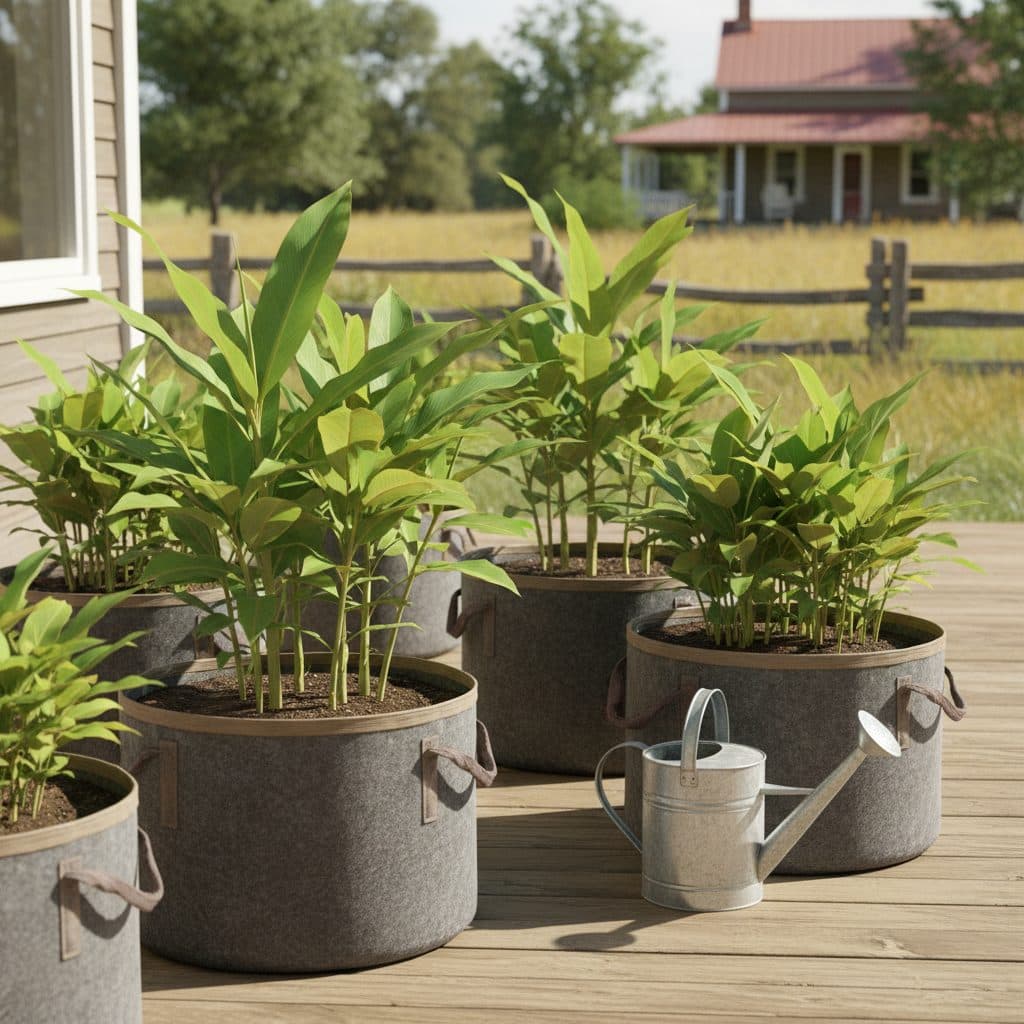
When it comes to containers, size matters significantly for a good yield. Ginger and turmeric rhizomes spread horizontally, so they need ample surface area. A container that is at least 10 inches deep and 10-15 gallons in volume is ideal for a single plant, allowing for several pounds of harvest. For example, a 15-gallon fabric grow bag, measuring approximately 18 inches in diameter, can comfortably accommodate one ginger plant and its spreading rhizomes. Materials like plastic, terracotta, or fabric grow bags all work well, but each has specific considerations. Fabric pots offer excellent drainage and aeration, preventing root rot, while terracotta pots can dry out faster, requiring more frequent watering—sometimes up to 20% more often in hot climates like Arizona (USDA zone 9). Ensure your chosen container has adequate drainage holes, typically 0.5-1 inch in diameter, to prevent water from pooling at the bottom and suffocating the roots.
- Rhizome quality: Select firm, fresh pieces with visible ‘eyes’.
- Container depth: Minimum 10 inches deep for root development.
- Container volume: 10-15 gallons per plant for optimal yield.
- Drainage: Essential to prevent waterlogged soil and root rot.
- Material choice: Consider fabric for aeration, plastic for moisture retention.
Getting the soil, water, and light right
The foundation of healthy rhizome growth is a well-draining, nutrient-rich soil mix. A good blend typically consists of 60% high-quality potting mix, 20% compost, and 20% perlite or coarse sand. This combination ensures excellent drainage while retaining sufficient moisture and providing essential nutrients. For instance, in a 10-gallon container, you would use about 6 gallons of potting mix, 2 gallons of compost, and 2 gallons of perlite. Avoid heavy garden soil, which can compact and lead to waterlogging, especially in containers. The pH level of the soil should ideally be between 6.0 and 7.0, which is slightly acidic to neutral, a range that supports optimal nutrient uptake for these plants.
consistent moisture and light requirements
Ginger and turmeric require consistent moisture, but they are highly susceptible to root rot if overwatered. The soil should be kept evenly moist, similar to a wrung-out sponge, but never soggy. In hot, dry climates like those in parts of Texas (USDA zone 8), you might need to water daily, while in more temperate zones, every two to three days could suffice. A soil moisture meter can help by indicating when the top 2-3 inches of soil are dry and ready for more water. As for light, these plants prefer partial shade to full sun, meaning 6-8 hours of indirect sunlight per day. Direct, intense afternoon sun, especially in southern states like Georgia (USDA zone 8), can scorch their leaves, so a location with morning sun and afternoon shade is often ideal. If growing indoors, a full-spectrum LED grow light set on a 12-hour timer can provide the necessary intensity and duration of light, typically positioned 18-24 inches above the foliage.
- Soil mix: 60% potting mix, 20% compost, 20% perlite.
- Moisture: Keep soil consistently moist, but not waterlogged.
- Watering frequency: Check top 2-3 inches of soil before watering.
- Light exposure: 6-8 hours of indirect sunlight daily.
- Indoor lighting: Use full-spectrum LED grow lights for 12 hours.
Planting, care, and harvesting techniques
Once you have your rhizomes and containers, planting is straightforward. Lay the rhizome pieces horizontally on the soil surface with the ‘eyes’ facing upwards, then cover them with 2-3 inches of soil. If planting multiple pieces in a large container, space them at least 6 inches apart to allow for lateral growth. For example, in a 15-gallon container, you might plant two pieces of ginger, giving each ample room. After planting, water thoroughly. Germination can take anywhere from a few weeks to several months, so patience is key. You’ll typically see shoots emerge within 4-6 weeks if temperatures are consistently above 70°F, but it can take up to 12 weeks in cooler conditions.
ongoing care and harvesting your crop
Throughout the growing season, consistent care is vital. Fertilize every 3-4 weeks with a balanced liquid fertilizer (e.g., 5-5-5 NPK) at half strength, especially during periods of active growth. As plants grow taller, up to 3-4 feet for ginger, you may need to add more soil to the container to cover any exposed rhizomes, which can turn green and bitter if exposed to light. The harvesting window for ginger and turmeric is typically 8-10 months after planting. You’ll know they’re ready when the foliage begins to yellow and die back, usually in late fall or early winter in cooler climates, or year-round in tropical USDA zones 10-11. Carefully tip the container and gently remove the entire plant, brushing off the soil to reveal the mature rhizomes. You can snap off what you need and replant smaller, healthy pieces for the next season for a continuous supply. For example, a single ginger plant can yield 2-5 pounds of fresh rhizomes, with turmeric often producing slightly less, around 1-3 pounds per plant.
- Planting depth: Cover rhizomes with 2-3 inches of soil.
- Spacing: At least 6 inches between rhizome pieces.
- Fertilization: Every 3-4 weeks with balanced liquid fertilizer.
- Harvest time: 8-10 months after planting, when foliage yellows.
- Replanting: Save smaller, healthy pieces for future crops.
Comparison of Ginger and Turmeric Growing Needs
Feature | Ginger (Zingiber officinale) | Turmeric (Curcuma longa) |
|---|---|---|
Ideal Temperature | 70-85°F (21-29°C) | 70-85°F (21-29°C) |
Light Preference | Partial shade (6-8 hours indirect sun) | Partial shade to full sun (6-8 hours indirect/direct sun) |
Soil pH | 6.0-7.0 | 6.0-7.0 |
Container Depth | Minimum 10 inches | Minimum 10 inches |
Harvest Time | 8-10 months | 8-10 months |
Rhizome Color | Pale yellow to brown skin, yellow flesh | Tan skin, vigorous orange flesh |
Temperature Range: Ginger and turmeric thrive in consistent temperatures between 70-85°F, making indoor cultivation or strategic container placement important for gardeners in USDA zones below 8.
Harvest Yield: A single healthy ginger plant grown in a 15-gallon container can yield 2-5 pounds of fresh rhizomes after an 8-10 month growing period.
Frequently asked questions
How long does it take for ginger and turmeric to grow?
Ginger and turmeric typically require an 8-10 month growing season to produce mature rhizomes. Shoots usually emerge within 4-6 weeks if temperatures are maintained above 70°F, but the underground rhizomes need several more months to bulk up for harvest.
Can I grow ginger and turmeric indoors year-round?
Yes, you can successfully grow ginger and turmeric indoors year-round, especially in colder USDA zones like 5 or 6. Provide them with a warm spot (70-85°F), 6-8 hours of bright indirect light or supplemental grow lights, and consistent moisture in their containers.
What size container is best for growing these rhizomes?
For optimal yield, use containers that are at least 10 inches deep and have a volume of 10-15 gallons per plant. This allows the rhizomes ample space to spread horizontally and develop fully, often yielding 2-5 pounds of fresh rhizomes.
What kind of soil do ginger and turmeric need?
They thrive in a well-draining, nutrient-rich soil mix, typically composed of 60% high-quality potting mix, 20% compost, and 20% perlite or coarse sand. This blend ensures good aeration and moisture retention, supporting healthy root development in temperatures above 70°F.
When should I harvest my ginger and turmeric?
Harvest your ginger and turmeric rhizomes 8-10 months after planting, or when the plant’s foliage begins to yellow and die back naturally. This usually occurs in late fall or early winter in temperate climates, after the plant has stored maximum energy in its rhizomes.
How do I overwinter ginger and turmeric in cold climates?
In USDA zones below 8, bring container-grown ginger and turmeric indoors before temperatures drop below 50°F. You can continue growing them in a warm, bright indoor spot, or allow them to go dormant by reducing water and storing the rhizomes in a cool, dark place (around 50-60°F) for up to 3-4 months.
References
- Antioxidant Activities and Chemical Composition of Essential Oil of Rhizomes of Zingiber officinale (Ginger) and Curcuma longa L.(Turmeric) (2022). Antioxidant Activities and Chemical Composition of Essential Oil of Rhizomes of Zingiber officinale (Ginger) and Curcuma longa L.(Turmeric).
- Enzyme-assisted turmeric oil extraction from turmeric rhizomes (2023). Enzyme-assisted turmeric oil extraction from turmeric rhizomes.
- Isolation and amplification of DNA from rhizomes of turmeric and ginger (2003). Isolation and amplification of DNA from rhizomes of turmeric and ginger.
- Phytochemical Screening Infusion of Turmeric (Curcuma domestica val) and Red Ginger (Zingiber Officinale var roscoe) Rhizomes (2022). Phytochemical Screening Infusion of Turmeric (Curcuma domestica val) and Red Ginger (Zingiber Officinale var roscoe) Rhizomes.
- Turmeric in Ayurveda (2019). Turmeric in Ayurveda.