climax
Walnut — Hartley
akhrot — Hartley (اخروٹ ہارٹلے)
Juglans regia cv. Hartley
Also known as Akhrot (Pakistan).
- kpk hills
- balochistan highlands
International hardiness
- USDA 5-9
- RHS H5
- AU: Cool temperate, Warm temperate, Mediterranean
Where it grows — regional guide
| Zones / rating | Regional notes |
|---|---|
USDA 5-9 | A classic commercial English walnut cultivar hardy across USDA zones 5 to 9; isolate from sensitive crops due to root juglone, and be aware of tree-nut allergies. |
| Zones / rating | Regional notes |
|---|---|
H5 (-15 to -10C) | Hardy to RHS H5, it requires deep, fertile soil and full sun; keep garden beds away from its root spread due to allelopathic juglone, and note tree-nut allergen cautions. |
| Zones / rating | Regional notes |
|---|---|
Cool temperate, Warm temperate, Mediterranean | Grown in cool-temperate and Mediterranean orchard zones with reliable winter chill; site well away from sensitive vegetables due to juglone, and note allergen risks. |
| Zones / rating | Regional notes |
|---|---|
USDA 5-9 (USDA scale) Canada uses its own zone system; Canadian zones run roughly one lower than USDA. | No region-specific data yet |
| Zones / rating | Regional notes |
|---|---|
KPK hills, Balochistan highlands | Pakistan:A grafted commercial walnut cultivar suited to the KPK hills and Balochistan; give ample space away from gardens due to root juglone toxicity, and note that the nuts are an allergen. |
The English walnut (Juglans regia) is a large, broadleaf deciduous tree in the walnut family (Juglandaceae), grown for its edible kernels and prized timber. ‘Hartley’ is one of many named commercial cultivars selected from this species for nut production, so it grows like any English walnut, with its distinctiveness showing in the nut rather than in how the tree is managed. The species is native to a broad arc from southern Europe through Western and Central Asia to the Himalayas and China, and is cultivated wherever summers are warm and winters bring real cold. For a grower it is a long-term investment supplying high-fat nuts, deep shade, and valuable hardwood — provided you have space for a tree of its eventual size.
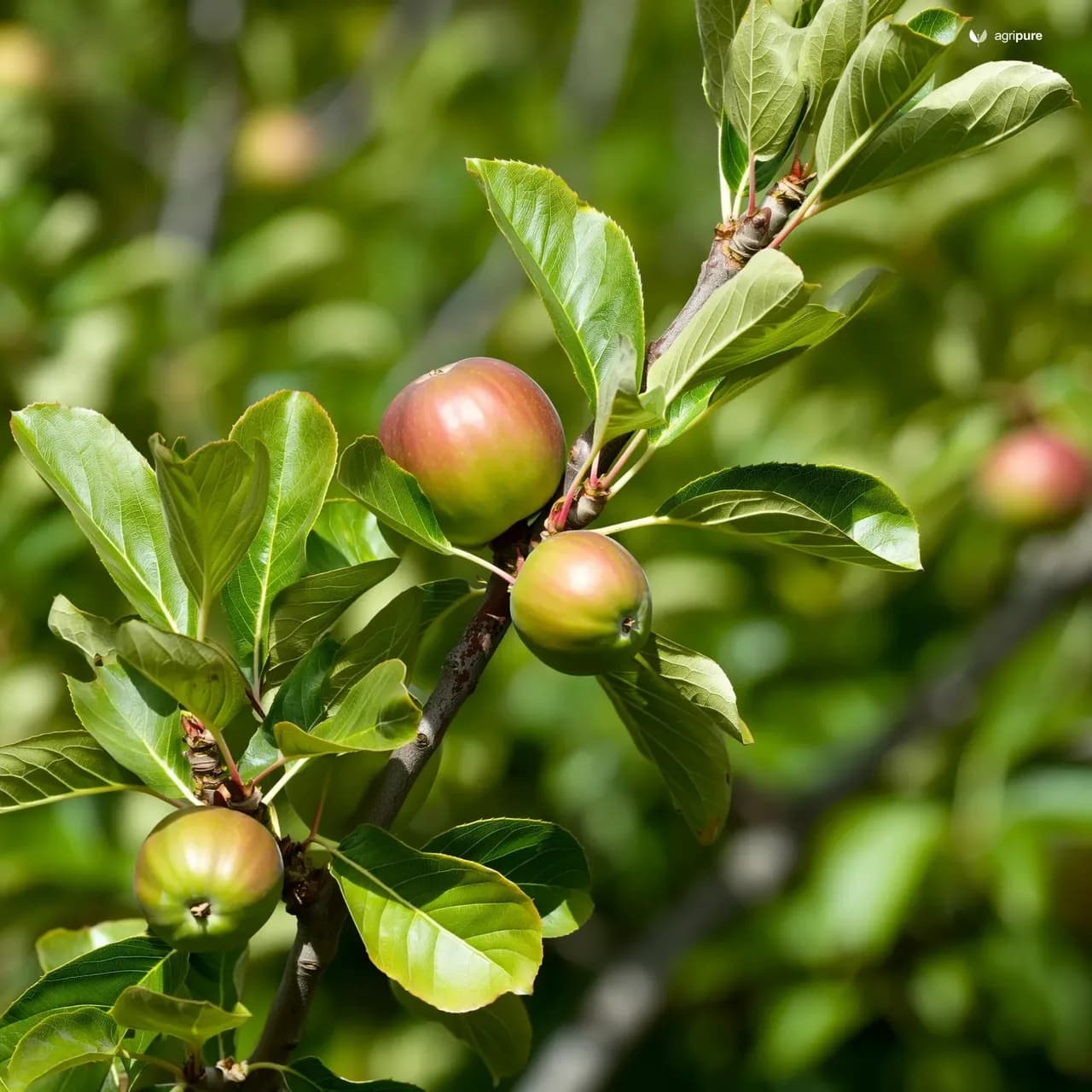
It is a rounded to spreading deciduous tree, typically 40 to 60 ft (about 12 to 18 m) tall, with gray bark that grows ridged and furrowed with age. The leaves are alternate and pinnately compound, made up of an odd number of oblong leaflets (usually 5 to 11, often 5 to 9), with the terminal leaflet the largest; crushed foliage gives off a distinctive citrus-like fragrance. The tree is monoecious: the male flowers hang in pendulous catkins (aments), while small female clusters sit on the new shoots, opening as yellow-greenish blooms in late spring, roughly May to June in temperate climates. The fruit is botanically a drupe: a smooth green husk wrapping the wrinkled shell, and the husk darkens and splits or rots away as the nuts ripen in autumn, leaving the edible kernel of commerce.
Growing English walnut ‘Hartley’
Commercial English walnuts, ‘Hartley’ included, are propagated vegetatively by grafting or budding onto seedling or clonal rootstocks — standard practice for any named cultivar, because a seed-grown tree will not come true to type and instead yields variable, unpredictable nuts. For ‘Hartley’ specifically, buy a grafted tree; seed only gives you a generic *Juglans regia*.
For climate, treat the species as the guide. English walnut is generally hardy to about USDA zone 6 and warmer, with some hardier selections rated to zone 5.2 It thrives in warm-summer temperate regions (roughly 99 percent of the U.S. crop is grown in California), and ‘Hartley’ sits within that same envelope. It also appears among the standard cultivars recommended for temperate nut production in Oregon and across Europe, so it suits any homestead with warm summers and a proper cold winter.
The sourced research gives no cultivar-specific figures for spacing, irrigation, or time to maturity, so those are left out rather than stated with false precision. Plan around the tree’s eventual size: a mature canopy 40 to 60 ft tall and wide needs room well away from buildings, gardens, and sensitive crops, and plant a grafted ‘Hartley’ on a named rootstock in full sun.
Harvest and uses
Walnuts are harvested in autumn, as the green husk turns brown or black and splits open to release the shell; husk-split is the practical cue that the kernels are mature. The kernel is a notably rich, oily nut: in a comparative study of four cultivars, ‘Hartley’ kernels measured about 58.3 percent fat, with a higher calculated carbohydrate content (around 19.4 percent of kernel weight) than some cultivars tested against it. A separate evaluation found a practical advantage for the home processor — ‘Hartley’ nuts release their kernel from the shell relatively easily, unlike thick-shelled cultivars such as ‘Franquette’, which helps when cracking by hand.
The uses follow from the species: the primary product is the kernel, eaten fresh or used in cooking, while the tree is also valued as a timber producer, its wood long sought for furniture and joinery. A homestead ‘Hartley’ thus earns its space first as a food crop and second as a hardwood asset.
Pollination and the juglone caution
The tree is monoecious and wind-pollinated, with male catkins and female flowers borne separately, so pollination is worth planning for. Growers commonly plant more than one compatible cultivar within wind range to ensure good nut set, and ‘Hartley’ is one of the standard cultivars used in such mixed plantings.
One trait every walnut grower should design around is allelopathy: walnut roots release compounds that can affect nearby plants, making a walnut a poor neighbour for a vegetable bed or a tightly planted guild. Keep sensitive crops out of the tree’s root zone and site the walnut where its eventual canopy and roots will not suppress the plantings you care about.
Safety and cautions
This is a food and timber tree, not a medicinal one, so the cautions are practical. The allelopathic chemistry of walnut roots can damage or stunt sensitive plants grown too close, so the main caution is horticultural — protect other crops by giving the walnut its own space. Separately, walnuts are a well-known tree-nut allergen, so anyone with a tree-nut allergy should treat the kernels accordingly. The research makes no medicinal claims for this plant, and none are made here.
Sources
- Juglans regia — North Carolina State Extension Gardener Plant Toolbox
- Juglans regia — Oregon State University Landscape Plants
- Juglans — Wikipedia
- Comparative study of walnut cultivar kernel composition — ScienceDirect (Journal of Food Composition and Analysis)
- Noce (Juglans regia) — Italian Ministry of Agriculture, Food and Forestry
- Evaluation of walnut cultivars — International Journal of Minor Fruits, Medicinal and Aromatic Plants