climax
Walnut — Pakistani local (Chakian)
akhrot (اخروٹ)
Juglans regia (Pakistani landrace)
Also known as Akhrot (Pakistan).
- kpk hills
- balochistan highlands
International hardiness
- USDA 5-9
- RHS H5
- AU: Cool temperate, Warm temperate, Mediterranean
Where it grows — regional guide
| Zones / rating | Regional notes |
|---|---|
USDA 5-9 | No region-specific data yet |
| Zones / rating | Regional notes |
|---|---|
H5 (-15 to -10C) | No region-specific data yet |
| Zones / rating | Regional notes |
|---|---|
Cool temperate, Warm temperate, Mediterranean | No region-specific data yet |
| Zones / rating | Regional notes |
|---|---|
USDA 5-9 (USDA scale) Canada uses its own zone system; Canadian zones run roughly one lower than USDA. | No region-specific data yet |
| Zones / rating | Regional notes |
|---|---|
KPK hills, Balochistan highlands | Pakistan:A traditional seedling landrace walnut grown across village orchards in the KPK hills and Balochistan; valued for its locally adapted cold tolerance and selections of thin-shelled nuts. |
The walnut (Juglans regia) is the deciduous nut tree usually sold as the Persian or English walnut, and names such as “Pakistani local” or “Chakian” refer to regional landraces of this one species rather than to a separate kind of tree. It belongs to a center of natural diversity that runs through Central Asia, the Iranian plateau, and the western Himalaya, the broad region where the species was domesticated and where wild and cultivated stands still grow side by side. For a homesteader, the appeal is straightforward: a single mature tree is a long-lived, large-canopy provider of nuts, shade, and eventually timber, and trees raised from locally adapted seedling stock tend to be well matched to their home valley’s winters and soils.
Across the western Himalaya the species occurs both wild and cultivated, typically between about 1,000 and 3,300 m in elevation, which places it in cool to cold temperate country with real winter cold and mild to warm summers. Botanical and horticultural references commonly treat J. regia as hardy in roughly **USDA zones 5 to 9**; this is a widely used horticultural characterization consistent with its high-elevation Himalayan range rather than a figure stated in the primary floristic sources, so treat it as guidance, not gospel.
How to identify it
This is a large deciduous tree reaching up to about 25 m tall, with young shoots that are tomentose (densely covered in fine hairs). Its leaves are the clearest field cue:
- Leaves: imparipinnate (odd-pinnate), 17–40 cm long, carrying 5–9 leaflets.
- Leaflets: 7–20 cm long and 3–8 cm broad, ovate to elliptic-ovate, tapering to an acute or drawn-out (acuminate) tip, becoming nearly hairless above but hairy along the veins beneath.
- Flowers: the tree is monoecious, bearing separate male and female flowers on the same plant. Male flowers hang in lateral catkins 6–12 cm long; female flowers come in ones to threes at the tips of short spikes. Flowering runs from February to April in the western Himalaya.
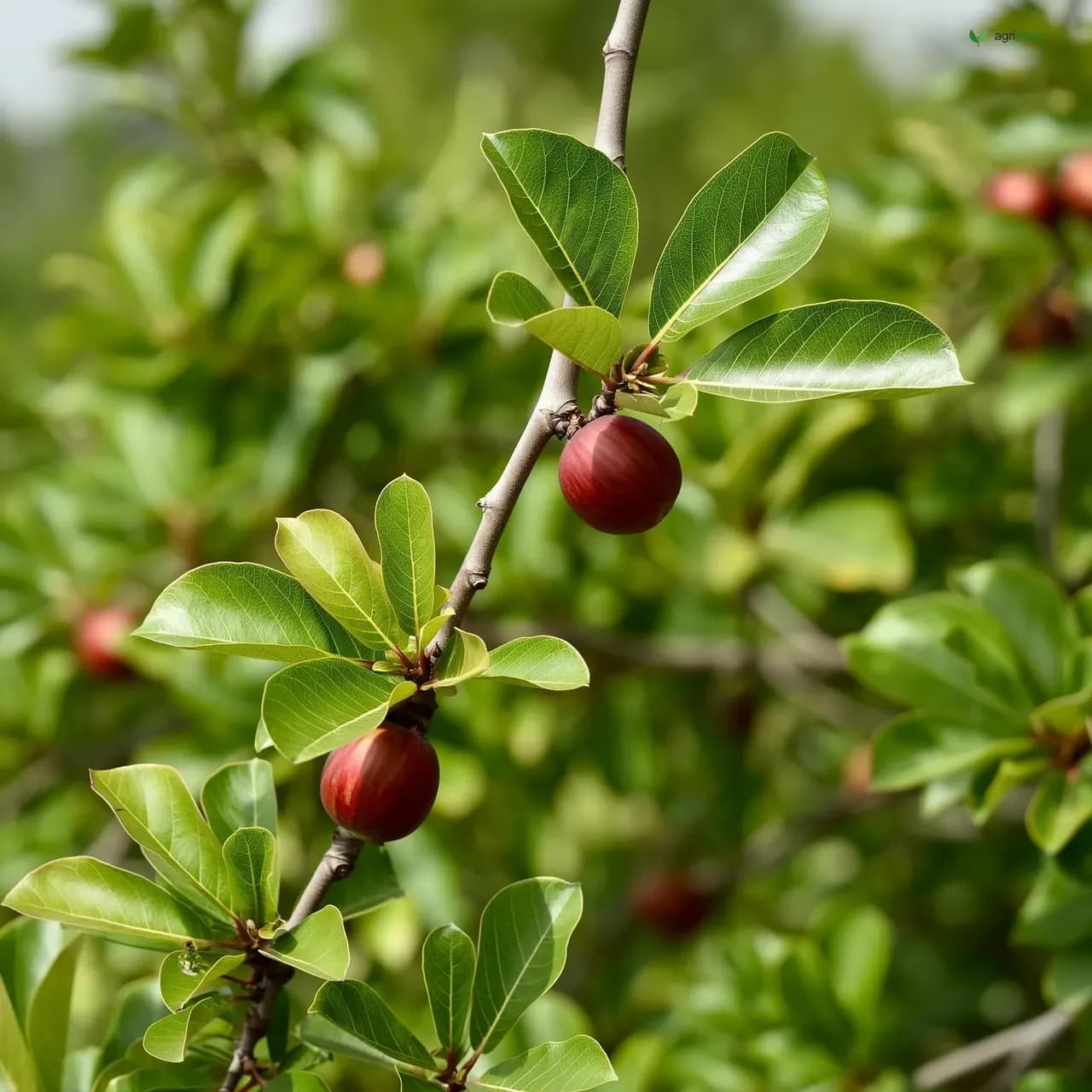
- Fruit: a drupe up to 5 cm long, ovoid to nearly round, with a green glandular outer layer (epicarp) over a hard, two-valved inner shell (endocarp). The familiar kernel inside is two- to four-lobed at the base.
Local growers distinguish forms by nut character — for example the thin-shelled “kaghzi” type — but the standard flora does not formally describe a separate “Chakian” botanical entity, so it is best understood as one of many seedling-derived local selections within the species.
Growing walnut
Across the western Himalaya and the wider region, most walnut trees have historically been seedling-origin populations — heterogeneous landraces grown from nuts rather than uniform grafted clones. This means seedlings vary tree to tree in nut size, shell thickness, and bearing, which is exactly why traditional and improvement-oriented practice has centered on selecting superior seedling trees from wild and semi-wild stands for nut quality and yield, then capturing those good genotypes by top-working or grafting them onto established trees or rootstocks. Modern orchard practice for Persian walnut likewise relies on grafted trees worked onto seedling or clonal rootstocks, while traditional homestead trees are often ungrafted seedlings.
For site and culture, the species is a light-demanding temperate tree normally grown in full sun, and it is generally characterized as preferring deep, well-drained ground. The research available here is largely genetic and morphological rather than a step-by-step orchard manual, so specifics such as exact planting spacing, irrigation schedules, and years-to-first-crop are not reliably documented and are left out rather than stated with false precision. The dependable, sourced takeaways: give it a sunny, open position; plant into deep, free-draining soil; and decide up front whether you want a seedling (adapted but variable) or a grafted tree (predictable nuts) — or a seedling you later top-work to a known-good selection.
Harvest and uses
The harvest is the nut. The tree’s fruit is a drupe up to about 5 cm long whose hard, two-valved shell encloses the edible kernel, and the species is grown across its range specifically for these nuts. Because most local trees are seedlings, nut quality varies from tree to tree, which is precisely why growers single out the best individuals for propagation and grafting; thin-shelled, well-filled selections are the prized outcome of that long selection process.
Beyond the kitchen, the genetic angle matters for any homesteader saving seed. Western-Himalayan walnut populations sit within a recognized center of diversity and domestication for the species, so locally grown seedling stock is both a food source and a reservoir of regional genetic variation. Sourcing nuts or seedlings from healthy, productive local mother trees keeps that diversity in play while giving you stock suited to your conditions.
Sources
- Juglans regia, Flora of Pakistan – eFloras.org (Missouri Botanical Garden / Harvard University Herbaria)
- Genomics of walnut domestication and diversity – PLOS Genetics
- [Diversity in Juglans regia populations of the western Himalaya – Pakistan Journal of Botany](https://www.pakbs.org/pjbot/PDFs/48\(2\)/31.pdf)
- Selection and propagation of superior Persian walnut genotypes – ScienceDirect