climax
Walnut — Chandler
akhrot — Chandler (اخروٹ چاندلر)
Juglans regia cv. Chandler
Also known as Akhrot (Pakistan).
- kpk hills
- balochistan highlands
International hardiness
- USDA 5-9
- RHS H5
- AU: Cool temperate, Warm temperate, Mediterranean
Where it grows — regional guide
| Zones / rating | Regional notes |
|---|---|
USDA 5-9 | A leading commercial English walnut variety hardy in USDA zones 5 to 9; requires deep, fertile, well-drained soil and adequate winter chill to break bud dormancy. |
| Zones / rating | Regional notes |
|---|---|
H5 (-15 to -10C) | Hardy to RHS H5, this late-leafing cultivar can be grown in warm, sheltered sites with deep soil; late budburst helps protect developing flowers from late spring frost. |
| Zones / rating | Regional notes |
|---|---|
Cool temperate, Warm temperate, Mediterranean | Cultivated in cool-temperate and Mediterranean orchard districts with sufficient winter chilling; yields high-quality, easily cracked nuts with light-coloured kernels. |
| Zones / rating | Regional notes |
|---|---|
USDA 5-9 (USDA scale) Canada uses its own zone system; Canadian zones run roughly one lower than USDA. | No region-specific data yet |
| Zones / rating | Regional notes |
|---|---|
KPK hills, Balochistan highlands | Pakistan:A high-yielding commercial walnut cultivar suited to cold winters in the KPK hills and Balochistan highlands; late leafing helps avoid spring frost injury to flowers. |
The Chandler walnut (Juglans regia cv. Chandler) is a named cultivar of the English or Persian walnut, a large deciduous nut tree. The species is native to a broad sweep of southeastern Europe through western and central Asia, while this particular selection was bred in California: it came out of the University of California walnut breeding program and was introduced in 1979, taking its name from the pomologist W. H. Chandler. Chandler went on to become one of the dominant commercial walnut cultivars worldwide, and for a homesteader the appeal is concrete — it is a heavy, early-cropping nut tree whose late leaf-out helps it sidestep the spring frosts that can wipe out an earlier-waking variety.
As a tree, Chandler is medium-growing and moderately vigorous, forming a rounded, robust crown and reaching roughly 10 to 20 m tall at maturity, though it is often kept shorter (around 9 to 10 m at full bearing) in managed orchards. Its defining horticultural trait is its bearing habit: where many older walnuts set fruit only at the tips of branches, Chandler sets nuts heavily on lateral buds along the branches as well as on terminal shoots, which is the main reason it crops so productively. The nuts themselves are large and oval with a notably thin, smooth shell that cracks cleanly, and the kernels are very light-colored with a high kernel-to-shell ratio and an oil content around half the kernel’s weight.
Growing Chandler walnut
Chandler is almost always grown as a grafted tree rather than from seed, typically worked onto *Juglans regia* seedling rootstocks — the form used in the documented orchard performance trials of the cultivar. Growing from a nut would not reliably reproduce the cultivar’s traits, so buying a named, grafted tree is the practical route.
It is a sun-loving, warm-temperate tree that wants full sun and performs best in deep, nutrient-rich ground; calcareous soils suit it well. Like walnuts generally, it needs free-draining soil and will not thrive in shallow or waterlogged sites. Because it is a true temperate tree, it carries a real winter-chill requirement (reported at roughly 700 hours below about 7.5 °C), so it crops poorly where winters are too mild to satisfy that dormancy need. It grows well at altitudes up to around 1,200 m, and in the breeders’ experience it is hardy, frost-resistant (with good resistance to late spring frosts thanks to its late bud break), and tolerant of both heat and drought once established.
One of Chandler’s quieter advantages is disease resistance: it was selected partly for resilience and is described as practically resistant to bacterial blight and to anthracnose under the breeding nursery’s conditions. Precise spacing, planting dates, and time-to-first-crop figures vary with rootstock, climate, and management and are not consistently documented in the sources here, so they are intentionally left out rather than stated with false precision. In practice, give a walnut plenty of room for its eventual broad crown, plant into deep well-drained soil, and confirm your winter chill before committing.
Pollination
Walnuts are wind-pollinated, and getting good nut set is the single most important design decision with this tree. Chandler is partly self-fertile, but it is routinely treated as needing a pollinizer for full yields: sources describe it as self-pollinating yet markedly more productive when planted with a compatible partner, with Franquette, Fernette, and Ronde named as suitable pollinators. For a homestead aiming at a real crop rather than a token few nuts, planting at least one compatible pollinizer within wind range is strongly advised.
Harvest and uses
Chandler is grown for its nuts. They are harvested in autumn, and the cultivar’s lateral-bearing habit translates into high yields of large, thin-shelled nuts — Chandler is reported to give among the highest kernel yields of any walnut variety, with very light, full-flavored kernels that shell out easily because of the thin, smooth shell. The high kernel percentage and roughly 50% oil content make it a strong choice for both eating fresh and pressing. Walnut kernels are a calorie- and oil-dense food crop that store well once dried, which makes a mature tree a substantial standing larder on a homestead, and the species also yields prized cabinet timber at the end of a tree’s long life.
How to identify it
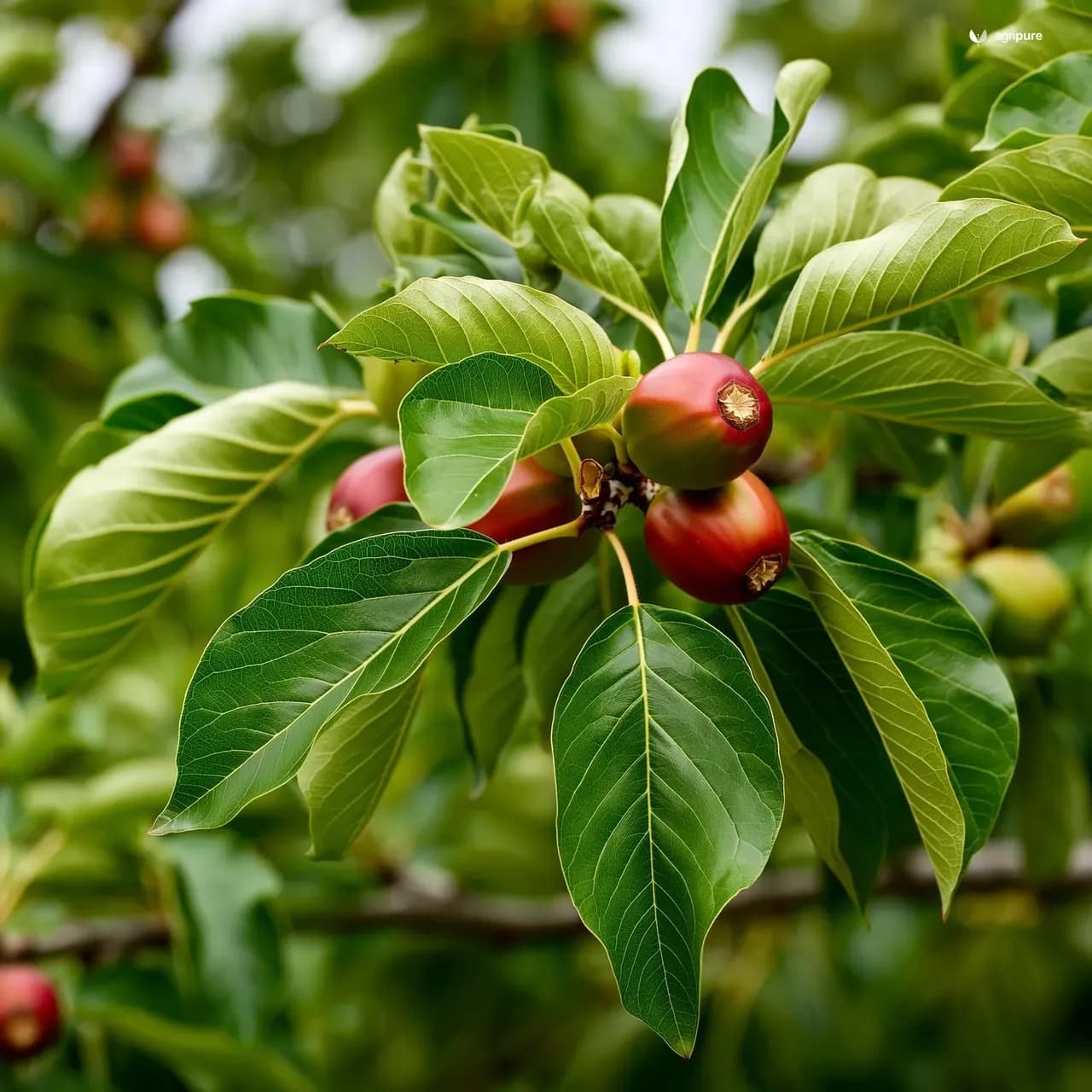
As an English walnut, Chandler shows the family’s pinnately compound leaves and produces its nut inside a green husk that splits at maturity. The cultivar-level cues that distinguish it are its large, oval, thin- and smooth-shelled nuts with very pale kernels, and its habit of bearing fruit along the lateral branches rather than only at the shoot tips. The crown is rounded and robust, the tree medium-sized and moderately vigorous, and leaf-out is conspicuously late in spring compared with many other walnuts — a useful field signal in a mixed planting.
Sources
- Walnut cultivar and breeding information — University of California, Davis (Wolfskill Experimental Orchard)
- Performance of ‘Chandler’ walnut on Juglans regia seedling rootstock — International Society for Horticultural Science (Acta Horticulturae)
- Juglans regia walnut kernel composition and characteristics — PMC (National Library of Medicine)