secondary
Beetroot
chukandar
Beta vulgaris
Also known as Chukandar (Pakistan).
- punjab plains
- pothohar
- kpk hills
International hardiness
- USDA 5-10
- RHS H5
- AU: Warm temperate, Cool temperate, Mediterranean
Where it grows — regional guide
| Zones / rating | Regional notes |
|---|---|
USDA 5-10 | Grown as a cool-season spring and autumn root crop, providing swollen roots and nutritious leafy tops. |
| Zones / rating | Regional notes |
|---|---|
H5 (-15 to -10C) | An allotment staple hardy under RHS H5: direct-sow in succession through spring for sweet globe roots and tender salad greens. |
| Zones / rating | Regional notes |
|---|---|
Warm temperate, Cool temperate, Mediterranean | Grown through cool spring and autumn temperatures, yielding earthy sweet roots and edible tops. |
| Zones / rating | Regional notes |
|---|---|
USDA 5-10 (USDA scale) Canada uses its own zone system; Canadian zones run roughly one lower than USDA. | Grown as a fast cool-season root vegetable; direct-sow in spring for swollen roots and cut greens. |
| Zones / rating | Regional notes |
|---|---|
Punjab plains, Pothohar, KPK hills | Pakistan:Sown as a cool-season root vegetable across the plains and northern hills, yielding sweet cooking roots. |
Grows alongside
Species that appear with Beetroot in 30 of our published guides — a starting list for a guild, not a planting plan.
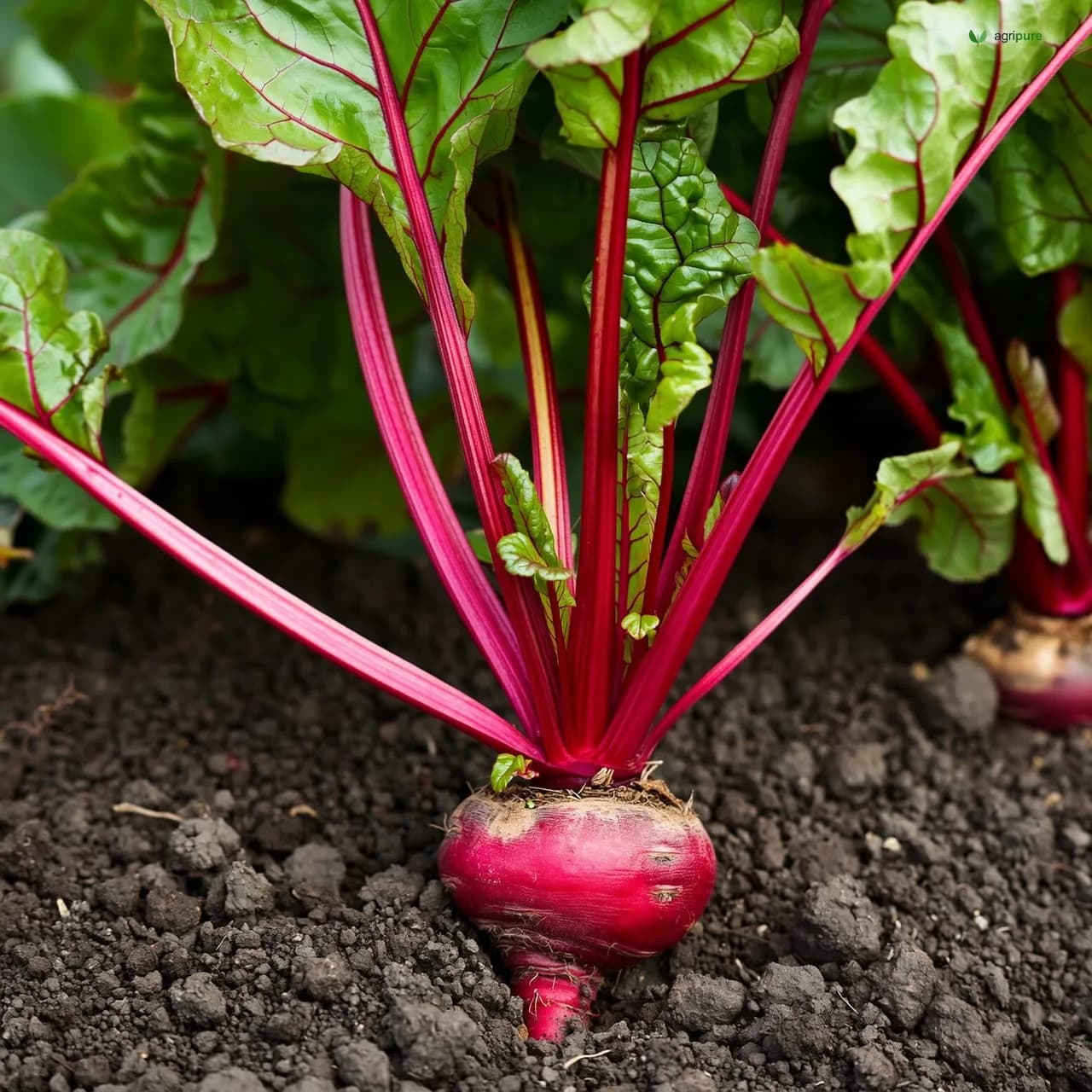
The beet, or beetroot (Beta vulgaris), is a herbaceous biennial usually grown as an annual, most familiar as the garden beet prized for its swollen, often deep purple-red taproot. Both the cultivated forms and their wild relatives belong to a single species complex centred on Beta vulgaris; the wild taxa in section Beta include the coastal sea beet, B. vulgaris subsp. maritima. The garden beet is native to Europe and the Mediterranean. For the home grower it is a compact, cool-season root that earns its bed twice over: the rounded root below ground and the edible leafy tops above it.
As a biennial run as an annual, beet forms a low rosette of leaves in its first season above the storing root, and only bolts to flower in a second year. The cultivated garden-beet form is grown chiefly for that swollen root, which in the familiar types is a glossy red, while the leaves and stalks above it are eaten as greens. Because beet is the same species as Swiss chard and sugar beet, the difference between them is one of breeding and selection rather than of species.
Growing beet
Beet is best sown by seed directly where it is to grow, because transplanting can disturb root development and spoil the shape of the root. Give it full sun for the best crop; it will tolerate light shade, but shade tends to slow the plant and delay maturity. Beet prefers cool spring and autumn temperatures, though it can tolerate some heat and humidity. Soil should be moist, fertile, organically rich, light to sandy, and well drained. Consistent moisture is the key to a clean, good-quality crop, so do not let the bed dry out as the roots swell.
Most beet seedlings need thinning, and growers are advised to thin plants to about 2 to 3 inches apart so each root has room to fill out. For a steady supply rather than one glut, sow successive small batches at roughly three-week intervals. Beet also takes well to containers: NC State Extension suggests a minimum of about 2 quarts of volume and 8 inches of depth for a container crop. From germination, roots are typically ready to lift about 50 to 80 days later, once they reach the size you want.
Harvest and uses
Harvest beets when the roots reach the size you are after, commonly about 1.5 to 3 inches in diameter. The provided research gives no dependable yield figure, so none is claimed here. The root is the main vegetable, eaten cooked, pickled, grated raw or juiced, and the leafy tops are edible as well, so a single planting yields both a root crop and a cut of greens.
Beyond the kitchen, beet is a notable source of betalain pigments — the red betacyanins — which are extracted and used as natural colorants in foods and related products. The crop is also discussed in the scientific literature for antioxidant and nitrate-related bioactive compounds, with various traditional and modern health uses reported around them. These reports describe food components and proposed benefits rather than proven medical treatments, so beetroot is best regarded as a nutritious food first.
Safety and cautions
In the sources used here, Beta vulgaris is treated throughout as an edible species, with both the root and the leafy tops described as food. No reliable source in this set states that any part of the plant is poisonous. The health literature on beetroot is largely about its food components and their proposed benefits rather than established clinical efficacy, so it should not be treated as a substitute for medical treatment, and no medicinal dosages are given because the reliable sources here do not supply them.
Sources
- “Beta vulgaris (Garden Beet).” – Missouri Botanical Garden Plant Finder
- “Beta vulgaris Garden Beet Group (Beet, Beetroot).” – North Carolina Extension Gardener Plant Toolbox
- “Beta vulgaris.” – PROTA (Plant Resources of Tropical Africa)
- “Beta vulgaris” topic overview – ScienceDirect
- “Betalains and bioactive compounds of beetroot (Beta vulgaris).” – IntechOpen