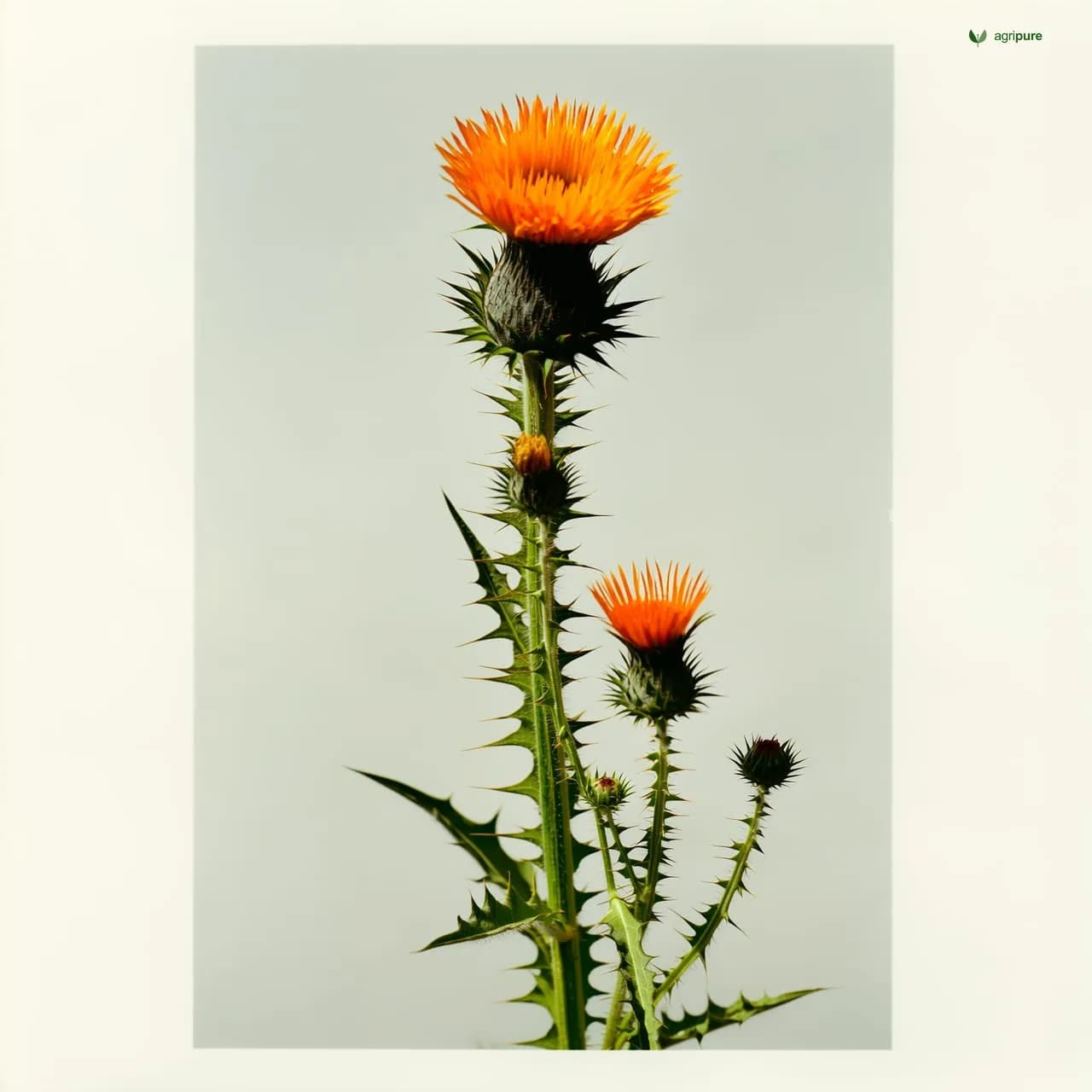
pioneer
Phog
phog
Calligonum polygonoides
- sindh coast
- balochistan highlands
- punjab plains
International hardiness
- USDA 9-11
- RHS H2
- AU: Arid / semi-arid
Where it grows — regional guide
| Zones / rating | Regional notes |
|---|---|
USDA 9-11 | No region-specific data yet |
| Zones / rating | Regional notes |
|---|---|
H2 (1 to 5C) | No region-specific data yet |
| Zones / rating | Regional notes |
|---|---|
Arid / semi-arid | No region-specific data yet |
| Zones / rating | Regional notes |
|---|---|
USDA 9-11 (USDA scale) Canada uses its own zone system; Canadian zones run roughly one lower than USDA. | No region-specific data yet |
| Zones / rating | Regional notes |
|---|---|
Sindh coast, Balochistan highlands, Punjab plains | Pakistan:A native shrub of shifting sand dunes across Cholistan, Thar and Balochistan, fixing dunes and providing browse under extreme heat. India:A dominant native desert shrub across Rajasthan and the Thar Desert, holding shifting sand dunes and yielding edible floral buds. |
Phog (Calligonum polygonoides) is a small, intensely drought-tolerant desert shrub in the knotweed family (Polygonaceae), the same family as buckwheat and dock. It grows naturally across a wide arid belt that runs from Iran, Iraq, Turkey, Syria, and Palestine through to Pakistan and northwest India, where it is a dominant shrub of the Thar Desert and its sand-dune country. For a homesteader working sun-baked, sandy, marginal ground, its appeal is straightforward: it is a tough, near-leafless pioneer that thrives where almost nothing else will, on shifting dunes and in heat and drought that defeat conventional crops.
Phog is a profusely branched, hairless perennial shrub that grows to roughly 1.5 m tall, with bark that ranges from whitish to pale brown. Like many true desert plants it carries very little foliage: its leaves are scanty, stalkless, linear, and quickly shed, measuring only about 7 to 15 mm long, with the sheathing stipules (ochreae) typical of the knotweed family reduced to about 1 mm. The overall effect is a dense, twiggy shrub that does most of its work through firm green stems rather than leaves. Its most distinctive feature is the fruit, which is a strong field cue for identifying the plant.
Growing Phog
Phog is best understood as a wild desert shrub rather than a domesticated crop, and the botanical literature reflects that: there is very little homestead-scale “how-to” detail available, and the cited sources do not describe seed germination conditions, cuttings, or nursery practice. Rather than invent figures, this profile leaves propagation timing, spacing, and time-to-maturity out where the sources are silent.
What the sources do establish clearly is the environment it wants. Phog is repeatedly described as a shrub of sand dunes and sand-dune ecosystems, so deep, free-draining sandy ground is its natural home. It is characterised as highly resistant to abiotic stress and able to thrive under extreme desert conditions of high temperature and drought, which makes it a candidate for the hottest, driest, most free-draining corners of a property — full exposure, minimal water, and soils too lean and sandy for thirstier plants. Primary sources do not assign USDA hardiness zones, and because its persistence through Thar Desert extremes (summer heat well above 45 °C together with cool to cold winters) only implies broad heat tolerance and some frost tolerance, no specific zone range can be stated from the literature here.
Harvest and uses
Documented human use of Phog centres on two things: the flowers and foliage as food and the wood as fuel, alongside its long-standing role as camel fodder in the desert. Ecologically, it is a key dune species, valued for the way it helps hold and stabilise shifting sand in arid and semi-arid country. There is growing research interest in its antioxidant-rich extracts, but that is a laboratory and phytochemistry interest rather than a homestead harvest, and the broader literature treats Phog as an under-utilised xeric shrub rather than a yield crop. Because the sources do not report cultivated yields, none are given here.
How to identify it
Phog can be recognised by the following combination of features, all drawn from floristic descriptions:12
- Habit: A hairless, profusely branched perennial shrub up to about 1.5 m tall, forming a dense twiggy mound on sandy ground.
- Bark: Whitish to pale brown.
- Leaves: Very scanty, stalkless, linear, about 7 to 15 mm long, and quickly deciduous, so the plant often appears nearly leafless.
- Flowers: Stalked on pedicels 3 to 8 mm long; tepals white, 3 to 4 mm long and 2 to 3 mm broad, broadly oblong and reflexed in fruit, with stamens shorter than or equal to the tepals. Flowering is reported around February to May in Rajasthan and April to June in another floristic source.
- Fruit: Distinctive and densely bristly, 1.2 to 1.7 cm long and 1.0 to 1.4 cm broad, with setae branched two to three times and arising from four pairs of longitudinal wings; the nut inside is oblong and slightly coiled, with wings 1 to 2 mm broad.
- Habitat cue: A characteristic shrub of sand dunes in desert and dry-shrubland country.
The bristly, winged fruit is the most reliable identifier in the field, since the near-absent foliage makes leaf characters of little help.
Sources
- Phog (Calligonum polygonoides) — Flowers of India
- Calligonum polygonoides — Plants of Rajasthan
- Calligonum polygonoides L. as a novel source of bioactive compounds in hot arid regions — PMC (National Library of Medicine)
- Calligonum polygonoides L. — GBIF (Global Biodiversity Information Facility)
- Calligonum polygonoides as a xeric under-utilized shrub — Asian Journal of Biology