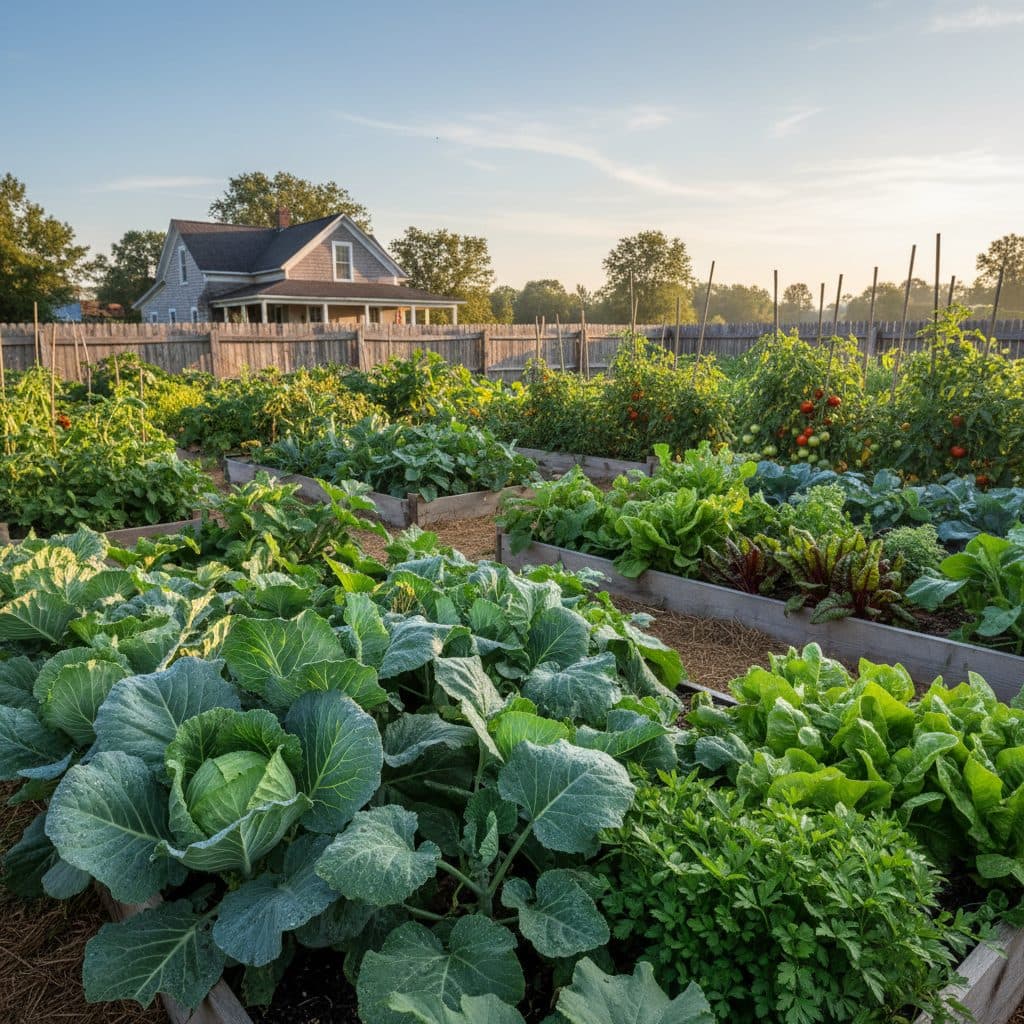
Key takeaways
- Physical barriers like copper tape or diatomaceous earth deter slugs and snails effectively, reducing damage by up to 80%.
- Hand-picking slugs and snails at night can reduce populations by 50% in small gardens, especially after a rain.
- Ants are often attracted to honeydew from other pests like aphids; addressing the primary pest first can reduce ant numbers by 75%.
- Beer traps can capture dozens of slugs in a 24-hour period, particularly when placed near vulnerable plants.
- Beneficial nematodes offer a biological control option for slugs, reducing damage by up to 70% in moist soil conditions.
- Proper garden sanitation, including removing debris and keeping beds tidy, reduces pest hiding spots by 30-40%.
Quick answer: Managing slugs, snails, and ants without chemicals in USDA Zone 6 involves integrated pest management (IPM) principles, utilizing physical barriers, traps, cultural practices, and biological controls. Key methods include copper tape, diatomaceous earth, beer traps, hand-picking, and addressing primary pests like aphids.
In many parts of the United States, from the damp Pacific Northwest to the humid Southeast, crawling pests like slugs, snails, and ants can cause significant damage to garden crops. For instance, in a typical Oregon vegetable patch, slugs alone can destroy 20% of a lettuce crop in a single season, while ants can farm aphids that devastate 30% of a tomato plant’s yield. Relying solely on chemical pesticides often leads to unintended consequences, harming beneficial insects and potentially impacting soil health over time.
This article explores effective, chemical-free strategies for managing these common garden invaders. We look at methods that prioritize the health of your garden ecosystem, from physical barriers and traps to cultural practices and biological controls. Our approach focuses on integrated pest management (IPM) principles, aiming to reduce pest populations to tolerable levels without resorting to harsh synthetic compounds, so your garden stays productive for years to come.
Understanding slugs and snails: identifying the damage
Slugs and snails are mollusks, and they are among the most common garden pests across the US, particularly in regions with consistent moisture, such as USDA zones 7-9 along the coasts. These creatures can consume up to 40% of their body weight in plant material daily, leaving behind characteristic irregular holes in leaves and fruit, often accompanied by a silvery slime trail. A typical garden slug, like the gray garden slug (Deroceras reticulatum), can grow up to 2 inches long and live for one to two years, laying hundreds of eggs in moist soil or under debris.
Life cycle and preferred conditions
The life cycle of slugs and snails involves eggs laid in clusters of 10 to 50, typically in damp, sheltered locations. These eggs hatch in two to four weeks, depending on temperature and moisture levels, with optimal conditions around 60-70°F. Young slugs and snails mature in three to six months, becoming sexually active and capable of reproduction. They are most active at night or on overcast, damp days, especially after a rainfall of 0.5 inches or more, when humidity levels are above 80%. During dry periods, they retreat into the soil, under rocks, or beneath mulch layers, sometimes burrowing 3 to 6 inches deep to avoid desiccation. Understanding these habits is essential for effective control strategies.
- Irregular holes in leaves, especially near the ground.
- Silvery slime trails on plants, soil, or hard surfaces.
- Chewed edges on young seedlings or tender plant parts.
- Damage to ripening fruits like strawberries or tomatoes, often with large, shallow excavations.
- Presence of the pests themselves, particularly after dark or early morning.
Physical barriers and traps for slugs and snails
Creating physical barriers is a highly effective, chemical-free method to protect vulnerable plants from slugs and snails. Copper tape, for example, creates a mild electrical charge that deters these pests; a 2-inch wide strip placed around raised beds can reduce slug damage by over 80%. Diatomaceous earth (DE), a fine powder made from fossilized diatoms, works by abrading the pests’ soft bodies, causing dehydration. A 1-inch wide band of DE around plants, reapplied after every 0.25 inches of rain, can be 70% effective. For more information on using natural substances in your garden, consider exploring natural weed killers that actually work.
Effective trapping and removal methods
Trapping offers another excellent way to reduce slug and snail populations. Beer traps, made from shallow dishes filled with beer and sunk into the soil so the rim is level with the ground, can attract and drown dozens of slugs overnight. A 12-ounce can of cheap beer can fill several traps, which should be checked and emptied daily. Hand-picking, particularly after dark with a flashlight or in the early morning, can remove up to 50% of the visible population in a small garden (e.g., 100 square feet) within a week. Placing overturned melon rinds or damp boards in the garden provides attractive hiding spots where slugs and snails can be collected and removed in the morning, often yielding 15-20 pests per trap.
- Copper tape, at least 1 inch wide, around plant containers or raised beds.
- Diatomaceous earth (food-grade) applied in a continuous band around plants.
- Beer traps using shallow dishes filled with inexpensive lager.
- Hand-picking at night or early morning, especially after rainfall.
- Placing damp boards or grapefruit halves as daytime shelters for easy collection.
Managing ants without synthetic pesticides
Ants, while often seen as a nuisance, play various roles in the garden ecosystem; however, certain species like pavement ants (Tetramorium caespitum) or odorous house ants (Tapinoma sessile) can become pests, especially when they farm aphids for their honeydew. An ant colony can contain tens of thousands of individuals, with some supercolonies in California extending for miles. The first step in ant management is often to address the primary pest that attracts them, such as aphids, which can reduce ant activity by 75% or more. Once the honeydew source is gone, ants have less reason to be in your garden.
Baiting and cultural controls for ants
For ants that are directly problematic, such as those invading homes or disturbing plant roots, baiting can be an effective strategy. A simple homemade bait can be made with a 1:1 ratio of sugar to borax, mixed with a small amount of water to form a paste, placed near ant trails but out of reach of pets and children. This bait is carried back to the colony, eliminating it over several days. Maintaining a clean garden, removing food scraps, and ensuring proper plant nutrition with products like fermented soybean meal organic fertilizer can also reduce ant foraging. Sealing cracks in foundations with caulk can prevent 90% of ant entry into structures, especially around windows and doors.
- Identify the ant species and their primary food source (e.g., honeydew from aphids).
- Use sugar-borax baits placed strategically near ant trails.
- Remove food sources like fallen fruit or pet food bowls.
- Seal entry points into homes or greenhouses with caulk or weatherstripping.
- Create physical barriers with diatomaceous earth around vulnerable areas.
Cultural practices and biological controls for crawling pests
Good garden hygiene is a foundational aspect of chemical-free pest control, reducing hiding spots and food sources for slugs, snails, and ants. Removing leaf litter, weeds, and garden debris regularly can decrease slug and snail populations by 30-40% by eliminating their preferred damp, dark shelters. Proper plant spacing to ensure at least 6 to 12 inches between plants, improves air circulation and reduces the moist conditions that slugs and snails favor. For example, in a 100 square foot garden, increasing plant spacing can reduce slug damage by 25%.
Beneficial organisms and watering strategies
Introducing beneficial organisms can provide a long-term, sustainable solution. Predatory ground beetles (Carabidae family) are natural enemies of slugs and snails, consuming up to 10 slugs per night. In some regions, like the Pacific Northwest, specific beneficial nematodes (Phasmarhabditis hermaphrodita) can be applied to the soil, infecting and killing slugs within one to three weeks, reducing populations by up to 70%. Watering practices also play a critical role: watering in the morning allows the soil surface to dry out by evening, making the garden less hospitable for nocturnal slugs and snails. Avoiding overhead irrigation and using drip systems can reduce overall moisture by 50%, further deterring these pests. Consider how ground cover plants can influence moisture retention and pest habitats.
- Remove leaf litter, weeds, and garden debris regularly.
- Space plants adequately (e.g., 6-12 inches apart) to improve air circulation.
- Water in the morning to allow soil to dry before evening.
- Introduce beneficial insects like ground beetles.
- Apply beneficial nematodes for slug control in moist soil.
Comparison of Chemical-Free Slug and Snail Control Methods
Method | Effectiveness | Effort Level | Cost (per 100 sq ft) |
|---|---|---|---|
Hand-picking | High (50% reduction) | High (daily check) | $0 |
Copper Tape | Very High (80% deterrence) | Medium (initial setup) | $15-$30 |
Diatomaceous Earth | High (70% reduction) | Medium (reapply after rain) | $5-$10 |
Beer Traps | Medium (captures dozens) | Medium (daily check) | $2-$5 |
Beneficial Nematodes | High (70% reduction) | Low (seasonal application) | $20-$40 |
Slug Damage: Slugs can consume up to 40% of their body weight in plant material daily, causing significant crop loss in gardens.
Ant Entry Points: Sealing cracks and gaps in home foundations with caulk can prevent 90% of ant entry into structures.
Explore organic solutions
Frequently asked questions
How often should I reapply diatomaceous earth for pest control?
Diatomaceous earth (DE) should be reapplied after every rainfall of 0.25 inches or more, or if it becomes wet, as moisture reduces its effectiveness. In dry conditions, a single application can remain effective for several weeks, protecting plants from crawling pests like slugs and ants.
Can coffee grounds deter slugs and snails?
Yes, coffee grounds can act as a deterrent for slugs and snails due to their abrasive texture and caffeine content. A band of coffee grounds, about 1 inch wide, around vulnerable plants can reduce damage by 20-30%, but it needs frequent reapplication, especially after watering or rain.
What is the best time of day to hand-pick slugs and snails?
The best time to hand-pick slugs and snails is after dark, typically between 9 PM and 11 PM, or in the early morning before the sun rises. These pests are most active during these cooler, damper periods, making them easier to spot and collect, often yielding dozens of individuals per hour in a small garden.
Are beneficial nematodes safe for pets and children?
Yes, beneficial nematodes (like Phasmarhabditis hermaphrodita for slugs) are generally considered safe for pets, children, and other wildlife, as they specifically target certain pest species. They are microscopic organisms applied to the soil and pose no known risk to mammals or birds, making them a chemical-free option for pest control.
How can I prevent ants from farming aphids on my plants?
To prevent ants from farming aphids, focus on controlling the aphid population first. Spraying plants with a strong jet of water can dislodge up to 70% of aphids, or using insecticidal soap can eliminate them. Once the aphid honeydew source is removed, ants will typically move on, reducing their presence in your garden by a significant margin.
References
- Slugs and snails (1992). Slugs and snails.
- Snails and slugs (2023). Snails and slugs.
- Pest Slugs and Snails (1983). Pest Slugs and Snails.
- Slugs as pests (1992). Slugs as pests.
- A reply to Medina et al. (2011): Crawling through time: Transition of snails to slugs dating back to the Paleozoic based on mitochondrial phylogenomics (2011). A reply to Medina et al. (2011): Crawling through time: Transition of snails to slugs dating back to the Paleozoic based on mitochondrial phylogenomics.
- Evolution and Extinction of Land Snails on Oceanic Islands (2016). Evolution and Extinction of Land Snails on Oceanic Islands.