support
Himalayan Pea Shrub
Caragana brevispina
- kpk hills
- balochistan highlands
International hardiness
- USDA 5-8
- RHS H6
- AU: Cool temperate, Warm temperate
Where it grows — regional guide
| Zones / rating | Regional notes |
|---|---|
USDA 5-8 | No region-specific data yet |
| Zones / rating | Regional notes |
|---|---|
H6 (-20 to -15C) | Hardy under RHS H6 on exposed sites as a shelterbelt; wear gloves against sharp spines, and cook the bitter seeds before eating. |
| Zones / rating | Regional notes |
|---|---|
Cool temperate, Warm temperate | No region-specific data yet |
| Zones / rating | Regional notes |
|---|---|
USDA 5-8 (USDA scale) Canada uses its own zone system; Canadian zones run roughly one lower than USDA. | No region-specific data yet |
| Zones / rating | Regional notes |
|---|---|
KPK hills, Balochistan highlands | Pakistan:Grown on exposed mountain slopes in highland valleys for windbreaks; handle spiny stems with gloves, and cook seeds before eating. India:Planted along cold Himalayan borders as a living barrier; take care with spiny branches, and cook the bitter seeds thoroughly. |
The Himalayan pea shrub (Caragana brevispina) is a hardy, spiny, nitrogen-fixing shrub in the pea family (Fabaceae). Its native range runs from Afghanistan through Central Asia into the western and central Himalaya, where it grows as a plant of cool, temperate mountain country. In horticultural circles it is sometimes sold as the long-stalked peashrub, and for a homesteader its appeal is structural rather than culinary: it is a tough, drought- and wind-tolerant legume that builds soil while it grows, making it a useful candidate for hedging, shelterbelts, and the kind of exposed, marginal ground where more demanding plants struggle.
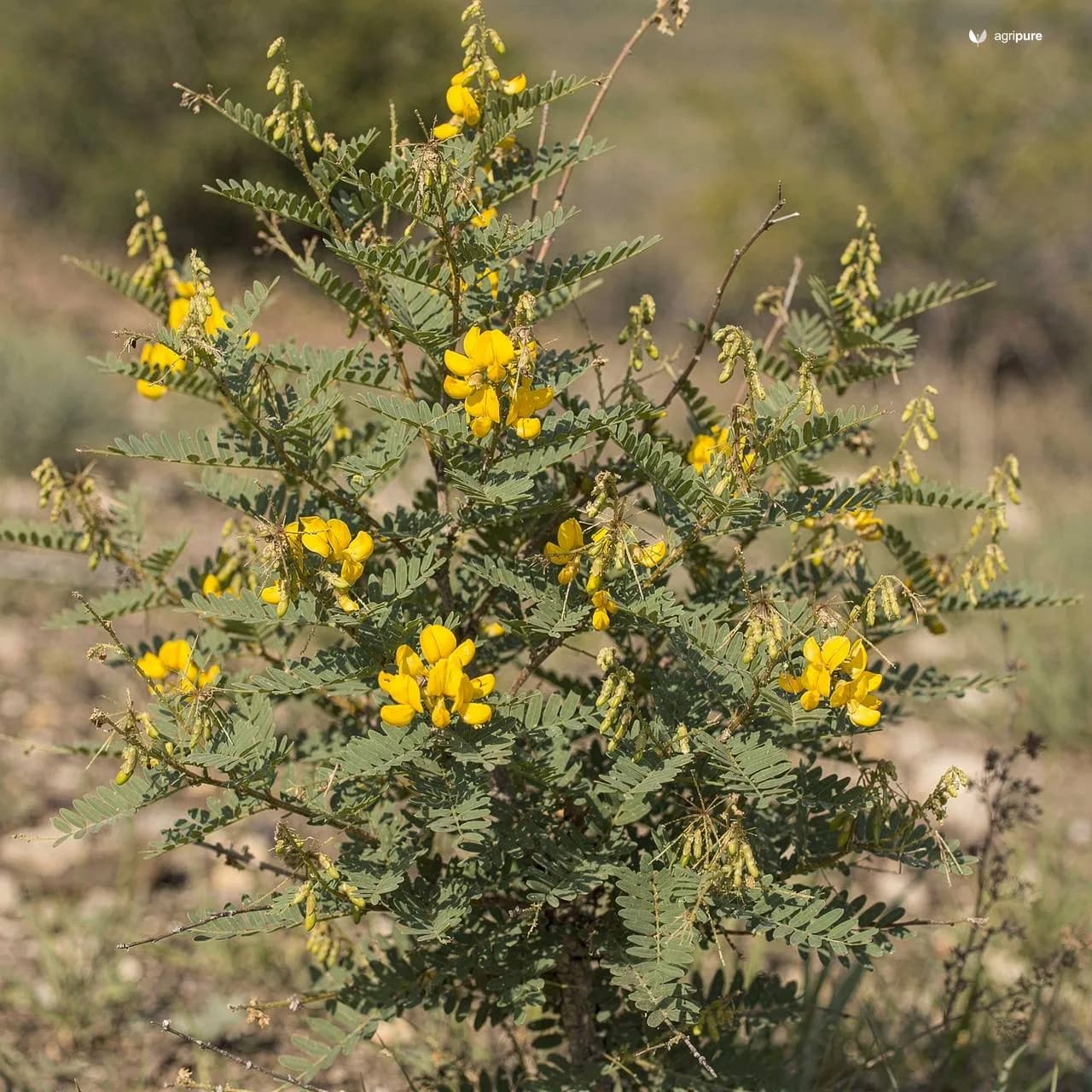
It is an erect, spiny shrub that reaches roughly 2 to 3 metres (about 6.5 to 10 feet) tall, classified by USDA’s GRIN database simply as a woody shrub. The leaves are pinnate, the feather-like compound form typical of the genus Caragana, and the branches are noticeably spiny, a trait that makes the plant valued as a dense, stock-proof hedge. The flowers are yellow and borne in stalked clusters, deepening to orange-red as they mature. The seed pods are reported to be about twice the size of those of the related Siberian pea tree (C. arborescens), and the beans inside are edible though somewhat bitter.
Growing Himalayan pea shrub
This is a temperate, montane species, naturally adapted to the cool mountain climates of its native range across Afghanistan, Central Asia, and the western and central Himalaya. It is described as a hardy shrub that tolerates both wind and drought, which is much of what makes it useful on harsh, exposed sites. It is grown outdoors as a garden plant in the United Kingdom, although it is not native to Britain or Ireland.
No authoritative source assigns a specific USDA hardiness zone to C. brevispina, so a zone number is deliberately omitted here rather than guessed at; what the sources do support is that it is a cold-climate, temperate mountain plant that handles wind and dry spells. As a legume in the pea family, it is capable of nitrogen fixation, the trait that allows many Fabaceae to improve poorer soils, and the plant is specifically described as a nitrogen-fixing shrub suited to windbreak use. The accessible literature does not give species-specific figures for soil texture, pH, or a documented sun-versus-shade requirement, so those details are left out rather than invented.
Reliable, species-specific propagation instructions are likewise not published in the sources consulted. The Balkan Ecology Project offers the plant and notes its fast growth but does not describe a propagation method, and USDA GRIN lists it as a woody species without a protocol. Rather than borrow seed-treatment methods from other Caragana species and present them as fact for this one, this profile leaves propagation detail open. Treat it as the tough, fast-growing windbreak legume the sources describe: a shrub for the windward edges, slopes, and poor corners of a property rather than rich, sheltered beds.
Harvest and uses
The clearest practical value of the Himalayan pea shrub on a homestead is as living infrastructure. Its dense, spiny growth makes it useful as a hedge, and as a hardy, nitrogen-fixing legume it is well suited to windbreak and shelterbelt plantings, where it can shelter more tender crops while adding fertility to the soil around it. Because it tolerates wind and drought, it earns its place on exposed, marginal ground that would defeat thirstier or more delicate shrubs.
There is a modest edible return as well. The beans produced in its sizeable pods can be eaten, though they are described as somewhat bitter, so they read more as a minor food than a staple crop. No reliable yield figures, pod dimensions, or harvest timings for this exact species appear in the accessible sources, so none are stated here. In short, C. brevispina is grown chiefly as a structural, soil-improving shrub, with edible seed as a secondary bonus.
How to identify it
Several features together distinguish the Himalayan pea shrub:1345
- Habit: An erect, woody, deciduous shrub roughly 2 to 3 metres (about 6.5 to 10 feet) tall.
- Spines: Distinctly spiny branches, dense enough to make the plant useful as a barrier hedge.
- Leaves: Pinnate (feather-like compound) leaves, the characteristic foliage of the genus Caragana.
- Flowers: Yellow, pea-like flowers in stalked clusters that turn orange-red as they age.
- Pods: Seed pods roughly twice the size of those of the Siberian pea tree, holding edible but bitter beans.
Safety and cautions
The sources do not report Caragana brevispina as a toxic plant, but two practical cautions are worth noting. First, the beans are explicitly described as somewhat bitter, and bitterness in raw legume seeds is a reasonable cue to cook them well and treat them as a minor food eaten in moderation rather than a bulk staple. Second, this is a genuinely spiny shrub, so site it where its thorns are an asset, such as a stock barrier or boundary hedge, rather than along paths or play areas, and wear gloves when pruning or harvesting. As with any wild or unfamiliar edible, confirm the identification before eating anything from it.
Sources
- Caragana brevispina — USDA APHIS / GRIN taxonomy
- Caragana brevispina — Royal Horticultural Society (RHS)
- Caragana brevispina — Balkan Ecology Project
- Caragana brevispina — Plants of the World Online, Royal Botanic Gardens, Kew
- Long-Stalked Peashrub (Caragana brevispina) — Flowers of India
Sourcing notes
Raise it from seed, soaking or scarifying the hard coat first; it establishes fast on poor, well-drained ground and suits direct sowing on degraded high-altitude slopes.