Key takeaways
- Damping-off is a fungal disease that can kill young seedlings quickly, often within 24 hours of emergence.
- Sterile seed starting mix and clean containers are crucial to reduce pathogen introduction by up to 90%.
- Proper watering — keeping soil moist but not waterlogged — is key; a soil moisture meter can be highly beneficial.
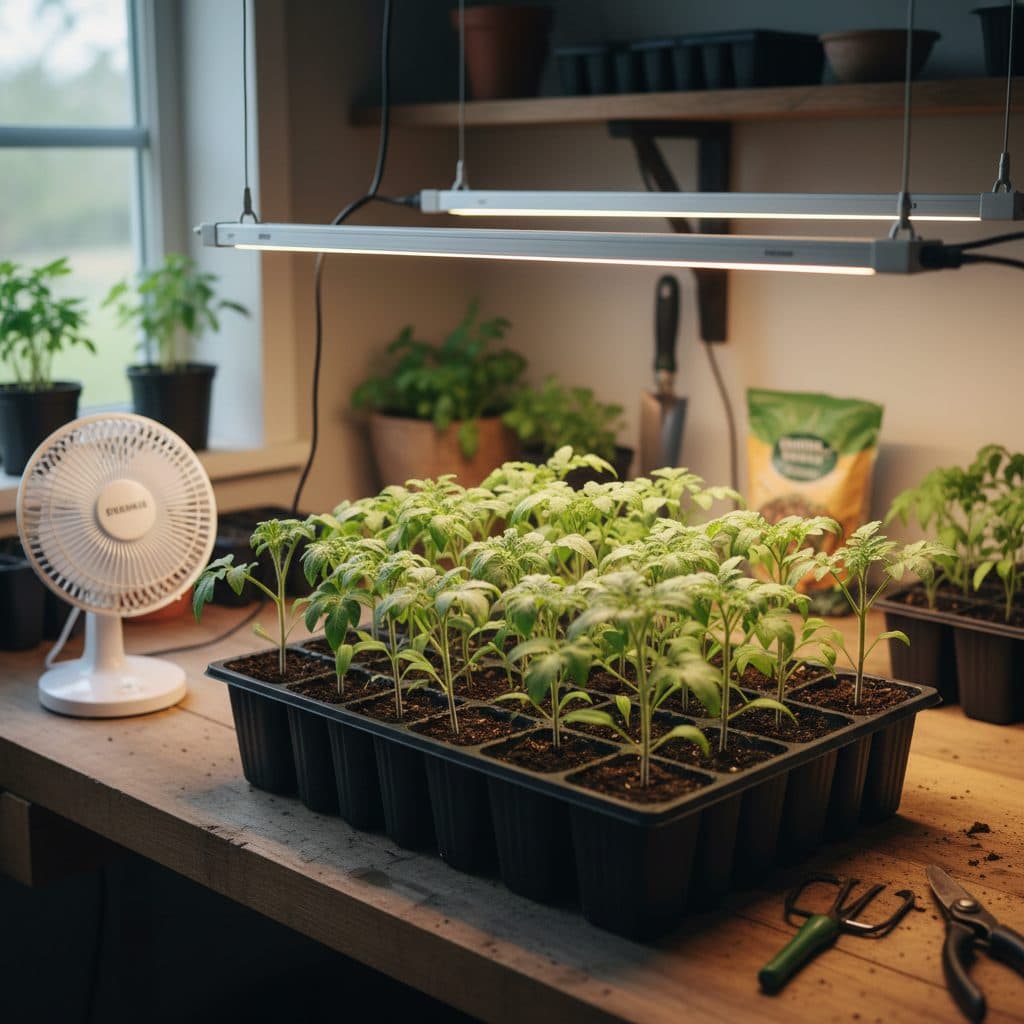
- Adequate air circulation, achieved with small fans, helps dry leaf surfaces and reduce humidity around seedlings.
- Maintaining consistent soil temperatures between 65°F and 75°F promotes rapid germination and strong seedling growth.
- Selecting larger, healthier seeds can improve seedling vigor and survival rates by as much as 30%.
Quick answer: To prevent damping-off and seedling failure, ensure sterile seed starting mix and containers, maintain proper soil moisture, provide adequate air circulation, and keep consistent soil temperatures between 65-75°F for optimal seedling health.
In the spring, across USDA zones 5 through 9, many US growers begin their journey for the season by starting seeds indoors. This early effort, however, often faces a silent, swift enemy: damping-off. This common seedling disease can wipe out trays of promising young plants, like tomato or cucumber, seemingly overnight. It is a frustrating setback, costing time, effort, and seed.
Understanding the causes and implementing preventative measures can dramatically increase your success rate. From maintaining proper soil moisture to ensuring good air circulation, there are several practical steps that can reduce seedling mortality by 70% or more. These steps protect your spring starts and can support a transplant rate of 85% or higher.
Understanding damping-off and its causes
Damping-off is not a single disease, but rather a collection of fungal pathogens, primarily Pythium, Phytophthora, Rhizoctonia, and Fusarium, that attack young seedlings. These fungi thrive in cool, wet conditions and can cause significant losses, sometimes affecting 100% of a tray of seedlings if left unchecked. Research from 1995 on Atriplex species showed that seedling failure due to damping-off was a significant factor in early plant mortality [1].
common fungal culprits and their preferred conditions
Each pathogen has slightly different preferences, but they all share a love for high humidity and excessive moisture. Pythium and Phytophthora are known as water molds, flourishing in waterlogged soils and often causing seeds to rot before germination or young stems to collapse at the soil line. Rhizoctonia tends to cause reddish-brown lesions at the soil line, while Fusarium can lead to wilting and discoloration. These pathogens can be present in unsterilized soil, on uncleaned tools, or even on seed surfaces, waiting for the right conditions to strike. For instance, a soil temperature consistently below 65°F combined with overwatering can create an ideal breeding ground, increasing disease incidence by 40%.
- Pythium spp.: Causes pre-emergence seed rot and post-emergence stem collapse.
- Phytophthora spp.: Similar to Pythium, often leading to root and crown rot.
- Rhizoctonia solani: Characterized by reddish-brown lesions at the soil line.
- Fusarium spp.: Leads to wilting, stunting, and internal stem discoloration.
- High humidity: Above 70% relative humidity, especially in still air.
Sterilization and sanitation practices
The first line of defense against damping-off is careful sterilization and sanitation. Pathogens can linger on old pots, seed trays, and even gardening tools. Before planting, wash all containers thoroughly with hot, soapy water and then disinfect them with a 10% bleach solution (one part bleach to nine parts water) for at least 30 minutes. Rinse them well afterwards to remove any bleach residue, which could harm young plants.
choosing the right seed starting mix
Using a sterile, soilless seed starting mix is paramount. These mixes are typically composed of peat moss, vermiculite, and perlite, providing excellent drainage and aeration while being free of disease spores. Avoid using garden soil, which is almost guaranteed to contain damping-off pathogens and weed seeds, increasing your risk of seedling loss by 80%. Some growers also bake their own potting soil to sterilize it, heating it to 180°F for 30 minutes in an oven, though commercial sterile mixes are generally more consistent and reliable for small-scale starts. For an added boost of nutrients, consider incorporating a small amount of Fermented Soybean Meal Organic Fertilizer into your mix, providing slow-release nitrogen for strong early growth.
- Disinfect containers: Use a 10% bleach solution for 30 minutes.
- Use sterile mix: Opt for soilless seed starting mixes.
- Clean tools: Wipe down trowels and dibblers with rubbing alcohol.
- Avoid garden soil: It harbors pathogens and weed seeds.
- Wash hands: Before handling seeds and seedlings.
Optimizing environmental conditions
Once your seeds are sown in a sterile medium, maintaining optimal environmental conditions is critical for preventing damping-off. This involves a delicate balance of moisture, temperature, and air circulation. Many growers in USDA zone 7, for example, find that consistent indoor conditions are easier to control than outdoor fluctuations in early spring.
managing moisture, temperature, and air flow
Moisture: Overwatering is a leading cause of damping-off. Keep the seed starting mix consistently moist, but never soggy. A good rule of thumb is to water from the bottom, allowing the mix to wick up moisture, and then letting the top layer dry slightly between waterings. Using a soil moisture meter can help you accurately gauge moisture levels, preventing both over and underwatering. For most seedlings, aim for a moisture reading between 4 and 6 on a typical meter. Temperature: Most vegetable seeds, including tomatoes and cucurbits, germinate best with soil temperatures between 70°F and 85°F. Once germinated, a slightly cooler air temperature of 65°F to 70°F during the day and 60°F at night is ideal. Seedling heat mats can elevate soil temperature by 10°F to 20°F, significantly improving germination rates and speed. Air Circulation: Stagnant, humid air creates an ideal microclimate for fungal growth. A small oscillating fan, set on a low setting, can provide gentle air movement, drying leaf surfaces and reducing humidity around the seedlings. This can reduce fungal issues by 50% or more. Consider using a Reflective Indoor Grow Tent to help control these environmental factors more precisely.
- Water from bottom: Prevents surface compaction and overwatering.
- Use a heat mat: Maintains ideal soil temperatures (70°F-85°F).
- Provide air circulation: A small fan reduces humidity and strengthens stems.
- Monitor moisture: A soil moisture meter helps prevent soggy conditions.
- Ventilation: Ensure grow tents have adequate air exchange.
Seed selection and planting depth
The quality of your seeds and how you plant them can also significantly impact seedling survival. Not all seeds are created equal, and choosing robust, viable seeds is a proactive step against early failure. Research from 2000 indicated that seed size and growth rate affect tree seedling survival in deep shade, suggesting that larger, stronger seeds have an inherent advantage [6]. This principle applies to vegetable seedlings as well, where vigorous seeds are more likely to outgrow potential pathogen attacks.
seed treatment and proper planting depth
Seed Quality: Purchase seeds from reputable suppliers known for high germination rates. Inspect seeds for any signs of mold or damage before planting. Larger seeds often contain more stored energy, leading to stronger, faster-growing seedlings that are less susceptible to damping-off. For example, a large tomato seed might produce a seedling that is 20% more robust in its first week compared to a smaller, weaker seed. Planting Depth: Plant seeds at the recommended depth, typically two to three times their diameter. Planting too deep can delay emergence, leaving seedlings vulnerable to pathogens in the soil for a longer period. Planting too shallow can expose the roots to drying air. For most cucurbits, a planting depth of one-half to one inch is common. After planting, a thin layer of fine vermiculite can be sprinkled over the seeds; this helps retain moisture without becoming waterlogged and reflects light, which can inhibit some fungal spores. Studies on spinach have even explored genetic tolerance to damping-off, which points to the role of seed vigor [3].
- Choose quality seeds: Select seeds from trusted sources with high germination rates.
- Inspect seeds: Look for plump, undamaged seeds free of mold.
- Plant at correct depth: Typically two to three times the seed’s diameter.
- Use vermiculite: A thin layer helps retain moisture and deter fungi.
- Avoid overcrowding: Space seeds adequately for air circulation.
Post-emergence care and diagnostics
Even with the best preventative measures, damping-off can sometimes occur. Rapid diagnosis and intervention help save remaining seedlings. Once your seedlings have emerged, typically within five to ten days for many common vegetables like spring onions, continued vigilance is necessary.
identifying and treating affected seedlings
Symptoms: The most common symptom of damping-off is seedlings suddenly collapsing at the soil line, appearing pinched or water-soaked. They may also fail to emerge (pre-emergence damping-off) or become stunted and discolored. If you see a seedling collapse, remove it immediately, along with the surrounding soil, to prevent the spread of pathogens. Intervention: If damping-off appears, increase air circulation, reduce watering frequency, and ensure the soil surface dries out between waterings. Some growers apply a thin layer of fine sand or cinnamon powder to the soil surface; cinnamon has mild fungicidal properties and can help inhibit further spread. For tougher cases, some commercial growers use biological controls like Trichoderma harzianum, a beneficial fungus that outcompetes pathogens. However, for home growers, strict environmental control is often the most effective approach, potentially reducing further losses by 70%. Ensure your grow lights are set at the correct height, typically 2-4 inches above the seedlings, to prevent stretching and promote sturdy growth.
- Remove affected plants: Isolate diseased seedlings immediately.
- Increase air flow: Use a fan to dry surfaces and reduce humidity.
- Reduce watering: Allow soil to dry slightly between applications.
- Apply cinnamon: A light dusting can deter fungal spread.
- Provide adequate light: Prevents leggy growth, which weakens seedlings.
Common Seedling Problems and Solutions
Problem | Symptoms | Key Prevention/Solution |
|---|---|---|
Damping-Off | Seedlings collapse at soil line, rot before emergence, fuzzy mold on soil. | Sterile mix, proper watering, air circulation, 70-85°F soil. |
Leggy Seedlings | Tall, thin, weak stems stretching towards light. | Adequate light (2-4 inches from source), fan for air movement. |
Nutrient Deficiency | Yellowing leaves, stunted growth, purple discoloration. | Balanced seed starting fertilizer, proper pH (6.0-6.8). |
Overwatering | Soggy soil, yellowing leaves, stunted growth, root rot. | Bottom watering, soil moisture meter, allow soil to dry slightly. |
Underwatering | Wilting leaves, dry, crusty soil, slow growth. | Consistent moisture, check soil daily, use a moisture meter. |
Pathogen Reduction: Disinfecting seed starting containers with a 10% bleach solution can eliminate up to 99% of surface pathogens.
Optimal Germination: Maintaining soil temperatures between 70°F and 85°F can increase germination rates by 25% for many vegetable seeds.
Moisture Control: A soil moisture meter helps maintain ideal moisture levels, preventing overwatering, which causes 60% of damping-off cases.
Frequently asked questions
What is the primary cause of damping-off in seedlings?
The primary cause of damping-off is a group of fungal pathogens, such as Pythium and Rhizoctonia, which thrive in overly wet, cool, and poorly ventilated conditions. Overwatering is often responsible for 60% of damping-off incidents in home gardens.
How can I tell if my seedlings have damping-off?
Seedlings affected by damping-off typically collapse at the soil line, appearing pinched or water-soaked, often within 24 to 48 hours of emergence. You might also notice fuzzy white or gray mold on the soil surface, especially if humidity is above 70%.
Is it possible to save seedlings once damping-off appears?
Once damping-off symptoms appear on a seedling, it is generally not salvageable. The best course of action is to immediately remove the infected seedling and surrounding soil to prevent the spread of pathogens to healthy plants, potentially saving 70% of the remaining tray.
What is the ideal soil temperature for preventing damping-off?
For most vegetable seeds, maintaining a soil temperature between 70°F and 85°F for germination, and then around 65°F to 70°F for seedling growth, helps prevent damping-off. Cooler temperatures, especially below 60°F, slow growth and increase susceptibility.
Can I reuse old potting soil for starting seeds?
No, it is strongly advised against reusing old potting soil for starting seeds. Old soil can harbor damping-off pathogens, weed seeds, and insect eggs, increasing the risk of seedling failure by as much as 80%. Always use a fresh, sterile seed starting mix.
How does air circulation help prevent damping-off?
Good air circulation, provided by a small fan, helps to dry the soil surface and leaf surfaces, reducing the high humidity that fungal pathogens need to thrive. This can decrease the incidence of damping-off by 50% or more and also promotes stronger stem development.
References
- Seedling Failure in Atriplex (Chenopodiaceae) Due to “Damping-Off.” (1995). Seedling Failure in Atriplex (Chenopodiaceae) Due to “Damping-Off.”.
- Preventing a New Global Financial Crisis Amidst the Current ‘Inflation Crisis’ and the Spring 2023 Bank Failure Episodes (2023). Preventing a New Global Financial Crisis Amidst the Current ‘Inflation Crisis’ and the Spring 2023 Bank Failure Episodes.
- From seed to seedling – damping-off tolerance in Spinacia oleracea L (2023). From seed to seedling – damping-off tolerance in Spinacia oleracea L.
- Preventing future pandemics starts with recognizing links between human and animal health (2021). Preventing future pandemics starts with recognizing links between human and animal health.
- Preventing shingles starts with vaccinating against chickenpox (2025). Preventing shingles starts with vaccinating against chickenpox.
- SEED SIZE, NITROGEN SUPPLY, AND GROWTH RATE AFFECT TREE SEEDLING SURVIVAL IN DEEP SHADE (2000). [SEED SIZE, NITROGEN SUPPLY, AND GROWTH RATE AFFECT TREE SEEDLING SURVIVAL IN DEEP SHADE](https://doi.org/10.1890/0012-9658(2000)081[1887:ssnsag]2.0.co;2).