Key takeaways
- Amending sandy or rocky soil with 25-50% organic matter significantly improves water retention and nutrient availability.
- Select drought-tolerant crops like switchgrass, sorghum, and specific varieties of beans and squash that thrive in arid conditions and poor soils.
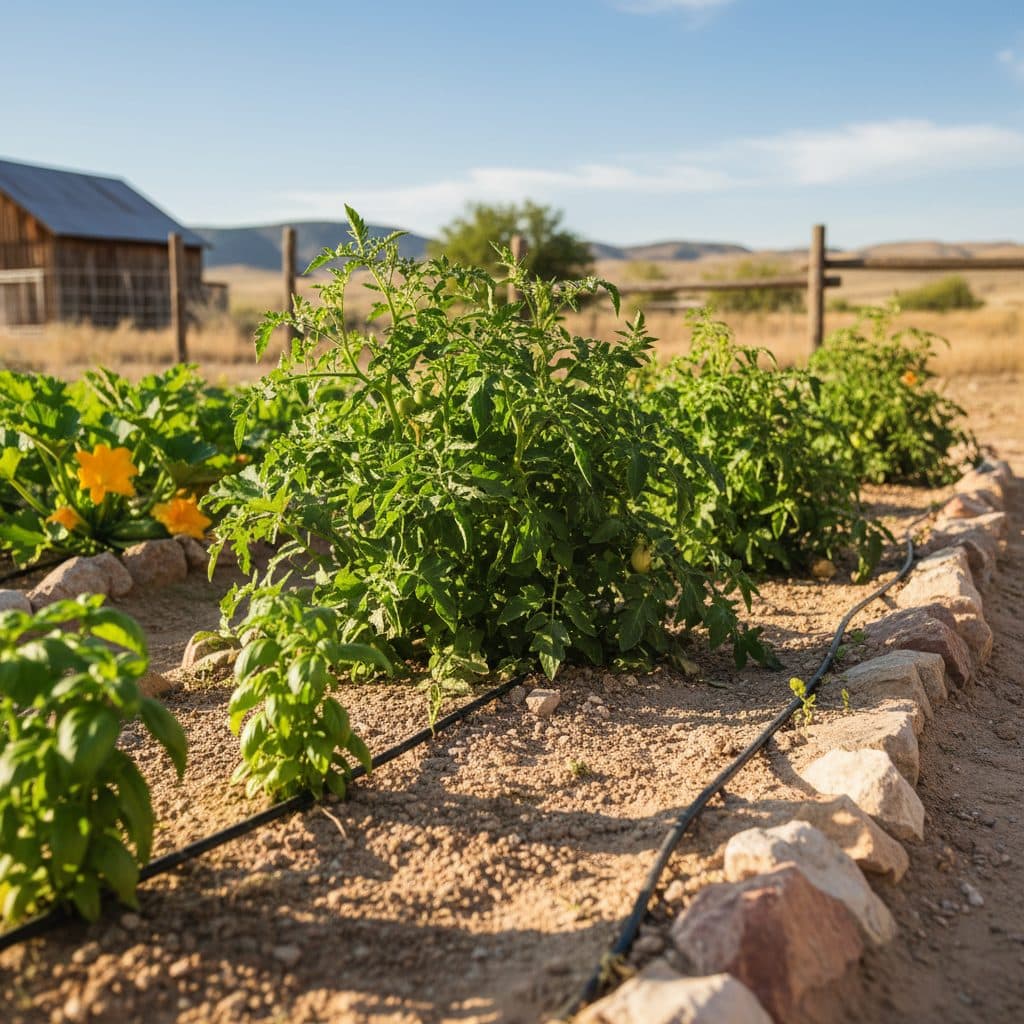
- Implement efficient irrigation methods, such as drip systems, to deliver water directly to plant roots and reduce water loss by up to 50%.
- Regular soil testing identifies nutrient deficiencies, particularly molybdenum and phosphorus, which are often lacking in sandy soils.
- Utilize cover crops like annual rye and crimson clover to add organic matter, suppress weeds, and prevent erosion in challenging garden beds.
- Focus on building soil health over time through continuous organic amendments and mindful crop rotation to foster long-term resilience.
Quick answer: To grow resilient crops in sandy, light, or rocky soils, amend them with 25-50% organic matter, select drought-tolerant plants, and implement efficient drip irrigation. Regular soil testing and cover cropping further enhance soil health and water retention.
Gardening in parts of the United States, from the arid Southwest to the sandy coastlines of Florida and the rocky hills of New England, often means contending with soils that challenge traditional growing methods. These light, sandy, or rocky soils present unique hurdles: they drain quickly, hold fewer nutrients, and can be difficult for roots to penetrate. For instance, in USDA zone 8b along the Gulf Coast, sandy soils are prevalent, drying out rapidly after a 1-inch rainfall event, making consistent moisture a constant battle.
Focusing on soil improvement, water management, and selecting appropriate plant species makes a productive garden achievable.
Understanding sandy, light, and rocky soils
Before we can grow successfully, we need to understand the fundamental characteristics of these challenging soil types. Sandy soils, common in areas like the Central Valley of California or the Great Plains, are characterized by large, coarse particles. This structure leads to excellent drainage but poor water retention, meaning water and nutrients can leach away quickly — often within hours after irrigation. Research indicates that sandy-rocky soils, such as those found near Lake B. Miassovo, exhibit distinct plant group distributions governed by moisture gradients [1].
The challenges of poor soil structure
Light and rocky soils, often found in mountainous regions or areas with glacial till like parts of Wisconsin, share some of these issues. Rocky soils impede root growth and make cultivation difficult, while light soils generally refer to those with a high sand content or low organic matter. Both types struggle with nutrient retention; for example, a sandy loam soil may require careful management to maintain sufficient phosphorus for vegetable crops [5]. These soils also tend to have lower cation exchange capacity (CEC), meaning they hold onto fewer positively charged nutrient ions like calcium, magnesium, and potassium.
- poor water retention: water drains rapidly, leading to frequent irrigation needs.
- low nutrient holding capacity: essential minerals leach out quickly, requiring more frequent fertilization.
- poor root penetration: rocky soils can physically obstruct root development.
- temperature fluctuations: sandy soils heat up and cool down faster than heavier soils.
- reduced microbial activity: less organic matter often means a less diverse and active soil microbiome.
Understanding these inherent limitations is the first step toward building a resilient garden. Because these soils behave differently from rich loams, management strategies must adapt to their natural drainage and texture.
Building soil resilience: amendments and cover crops
The most impactful strategy for improving sandy, light, or rocky soils is to significantly increase their organic matter content. Organic matter acts like a sponge, dramatically improving water retention and nutrient holding capacity. For instance, adding 25-50% organic matter by volume can transform a sandy bed into a much more hospitable environment. This can be achieved through consistent application of compost, well-rotted manure, or other organic materials.
The power of organic amendments and cover crops
In addition to direct amendments, cover crops help build soil health over time. Planting cover crops like annual rye, crimson clover, or hairy vetch in off-seasons protects the soil from erosion, adds biomass, and improves soil structure as their roots grow and decay. For example, a study in a sandy-rocky island chain demonstrated that plant roots stabilize and enrich challenging substrates [2]. Incorporating a nitrogen-fixing cover crop can also reduce the need for synthetic nitrogen fertilizers by up to 30%.
- compost: improves water retention, adds diverse nutrients, and fosters beneficial microbial life.
- well-rotted manure: provides nutrients and organic matter; ensure it’s aged to avoid burning plants.
- leaf mold: excellent for water retention, especially in sandy soils.
- wood chips/shredded bark: good for long-term organic matter, but can temporarily tie up nitrogen.
- cover crops: green manures that add biomass, fix nitrogen, and prevent erosion.
When incorporating amendments, aim to mix them into the top 6-12 inches of soil. For rocky soils, consider creating raised beds filled with a custom blend of compost and topsoil to bypass the rocky layer entirely. Regular soil testing, perhaps every three years, helps monitor progress and identify specific nutrient needs.
Drought-tolerant crops for US regions
Once soil improvement is underway, crop selection is the next consideration. Many crops naturally thrive in conditions that mimic sandy or rocky environments, often requiring less water and tolerating higher temperatures. In USDA zones 7-10, for example, many Mediterranean herbs like rosemary, thyme, and oregano are excellent choices, requiring minimal irrigation once established.
Resilient plant choices for challenging conditions
Consider crops that have evolved to withstand dry spells and nutrient-poor soils. Certain bioenergy crops, such as switchgrass (Panicum virgatum) and miscanthus (Miscanthus giganteus), are known for their deep root systems and ability to grow in marginal lands, including sandy soils, across a wide range of US climates [4]. While not typically garden vegetables, their resilience demonstrates what’s possible. For edible gardens, look to varieties specifically bred for drought tolerance. For instance, many heirloom bean varieties are more resilient than modern cultivars.
- sweet potatoes: thrive in sandy soil, require less water than regular potatoes, suitable for zones 4-11.
- okra: heat-loving and drought-tolerant, grows well in sandy loam, ideal for zones 5-11.
- asparagus: once established, highly tolerant of sandy soils and drought, perennial in zones 4-8.
- melons (certain varieties): cantaloupe and watermelon can tolerate sandy soil and heat, especially with deep watering, in zones 4-11.
- beans (bush and pole): many varieties are relatively drought-tolerant, especially when mulched, suitable for zones 3-10.
- rosemary, thyme, sage: Mediterranean herbs that prefer well-drained, even rocky soils, and are very drought-resistant in zones 5-10.
In regions like the high desert of Arizona (USDA zone 9a), native plants and adapted crops like tepary beans or specific squash varieties demonstrate remarkable resilience, often needing only 25% of the water compared to conventional crops. When choosing seeds, look for terms like ‘drought-resistant’ or ‘desert-adapted’ in the description.
Water management and nutrient strategies
Effective water management is essential in sandy, light, and rocky soils. Since these soils drain quickly, traditional overhead watering can be inefficient, leading to significant water loss through evaporation and deep percolation. Implementing targeted irrigation methods can reduce water consumption by 30-50% compared to sprinkler systems. For example, in dry regions like central Texas (USDA zone 8a), drip irrigation systems deliver water directly to the plant’s root zone, minimizing waste.
Efficient irrigation and targeted nutrition
Regulated deficit irrigation, where plants are intentionally subjected to mild water stress at specific growth stages, can also improve water use efficiency for certain crops without significantly impacting yield [6]. This method requires careful monitoring to avoid over-stressing plants. Beyond water, nutrient management in these soils requires a different approach. Because nutrients leach quickly, frequent, smaller applications of fertilizer are often more effective than one large application.
- drip irrigation: delivers water directly to roots, reducing evaporation and runoff by up to 60%.
- soaker hoses: similar to drip, ideal for rows of plants, conserving 30-50% more water than overhead.
- mulching: a 3-4 inch layer of organic mulch (straw, wood chips) reduces evaporation by 20-30% and moderates soil temperature.
- slow-release fertilizers: provide a steady supply of nutrients over time, preventing leaching.
- liquid feeds: apply diluted liquid fertilizers (like fish emulsion or fermented soybean meal) more frequently at lower concentrations.
Micronutrients can also be an issue. For instance, molybdenum requirements for crops grown on sandy clay loam soils can be significant, and deficiencies can impact plant health [3]. Regular soil tests will help identify these specific needs, allowing for targeted application of amendments like boron, zinc, or iron as needed. For example, in sandy soils, boron can leach out quickly, potentially impacting fruit development in crops like tomatoes.
Comparison of soil types for gardening
soil type | water retention | nutrient retention | root penetration |
|---|---|---|---|
sandy soil | low (drains quickly) | low (leaches easily) | easy (but unstable) |
rocky soil | variable (depends on fines) | variable (depends on fines) | difficult (physical barrier) |
loamy soil | moderate (balanced) | moderate (good capacity) | easy (stable structure) |
clay soil | high (retains well) | high (strong binding) | difficult (compacts easily) |
organic matter boost: Adding 2-4 inches of compost annually can increase soil organic matter by 0.5-1% per year, significantly improving water holding capacity in sandy soils.
water saving: Drip irrigation systems can reduce water consumption in gardens by up to 60% compared to overhead sprinklers, especially in fast-draining soils.
Frequently asked questions
What is the best way to improve sandy soil for gardening?
The best way to improve sandy soil is by incorporating large amounts of organic matter, such as compost, well-rotted manure, or leaf mold. Aim for 2-4 inches of organic material mixed into the top 6-12 inches of soil annually to significantly increase water and nutrient retention.
Which vegetables grow well in rocky soil?
Root vegetables with shallow or spreading roots like radishes, lettuce, spinach, and bush beans can tolerate rocky soil better than deep-rooted crops. Creating raised beds filled with amended soil is also an excellent strategy for growing most vegetables in very rocky areas, allowing for 12-18 inches of good soil depth.
How often should I water plants in sandy soil?
Plants in sandy soil typically need more frequent watering than those in loamy or clay soils. Water deeply two or three times a week instead of daily shallow watering, allowing water to penetrate 6-8 inches. Use a soil moisture meter to check moisture levels at a 4-inch depth before watering.
Do I need to fertilize sandy soil more often?
Yes, sandy soils leach nutrients quickly, so more frequent, smaller applications of fertilizer are usually necessary. Consider using slow-release granular fertilizers or applying diluted liquid feeds every two to four weeks during the growing season to maintain adequate nutrient levels for your plants.
What are some good cover crops for sandy soil?
Good cover crops for sandy soil include annual rye, crimson clover, hairy vetch, and buckwheat. These crops add organic matter, improve soil structure, and some, like clover and vetch, can fix nitrogen, benefiting subsequent cash crops by reducing the need for synthetic nitrogen by up to 30%.
References
- Figure 3 – Spatial distribution of plant groups of the sandy-rocky shallow strip of Lake B. Miassovo along the moisture gradient. Soil types: a – sandy, b – san (2023). Figure 3 – Spatial distribution of plant groups of the sandy-rocky shallow strip of Lake B. Miassovo along the moisture gradient. Soil types: a – sandy, b – san.
- Spatial Responses of Vegetation-Soil System to Complex Factors in a Sandy-Rocky Island Chain (2021). Spatial Responses of Vegetation-Soil System to Complex Factors in a Sandy-Rocky Island Chain.
- MOLYBDENUM REQUIREMENT OF CROPS GROWN ON A SANDY CLAY LOAM SOIL IN THE GREENHOUSE (1970). MOLYBDENUM REQUIREMENT OF CROPS GROWN ON A SANDY CLAY LOAM SOIL IN THE GREENHOUSE.
- Bioenergy Crops (2005). Bioenergy Crops.
- THE PHOSPHORUS CONTENT OF A SANDY LOAM CONTAINING SUFFICIENT AVAILABLE PHOSPHORUS FOR VEGETABLE CROPS (1941). THE PHOSPHORUS CONTENT OF A SANDY LOAM CONTAINING SUFFICIENT AVAILABLE PHOSPHORUS FOR VEGETABLE CROPS.
- Regulated deficit irrigation for crop production under drought stress. A review (2015). Regulated deficit irrigation for crop production under drought stress. A review.