secondary
Caraway
siah zeera
Carum carvi
Also known as Siah Zeera (Pakistan).
- kpk hills
- balochistan highlands
- pothohar
International hardiness
- USDA 4-8
- RHS H6
- AU: Cool temperate, Warm temperate, Mediterranean
Where it grows — regional guide
| Zones / rating | Regional notes |
|---|---|
USDA 4-8 | Hardy biennial in USDA zones 4 to 8; harvest seed heads before they drop, as it is tracked as a noxious pasture weed in some states. |
| Zones / rating | Regional notes |
|---|---|
H6 (-20 to -15C) | Fully hardy under RHS H6 in sunny beds; cut flower umbels as seeds mature to stop self-sown volunteers spreading into borders. |
| Zones / rating | Regional notes |
|---|---|
Cool temperate, Warm temperate, Mediterranean | Grown as a cool-season biennial in southern temperate gardens; cut seed heads before they shatter to prevent pasture escape. |
| Zones / rating | Regional notes |
|---|---|
USDA 4-8 (USDA scale) Canada uses its own zone system; Canadian zones run roughly one lower than USDA. | Hardy biennial across cold agricultural zones; harvest seed heads diligently, as wild caraway is a tracked invasive weed in Canada. |
| Zones / rating | Regional notes |
|---|---|
KPK hills, Balochistan highlands, Pothohar | Pakistan:Grown in highland valleys for aromatic spice seeds; harvest seed heads before they scatter to prevent weedy pasture escape. India:Cultivated in cool hill tracts for aromatic seeds; harvest mature umbels promptly to prevent volunteer seedlings escaping into pasture. |
Grows alongside
Species that appear with Caraway in 2 of our published guides — a starting list for a guild, not a planting plan.
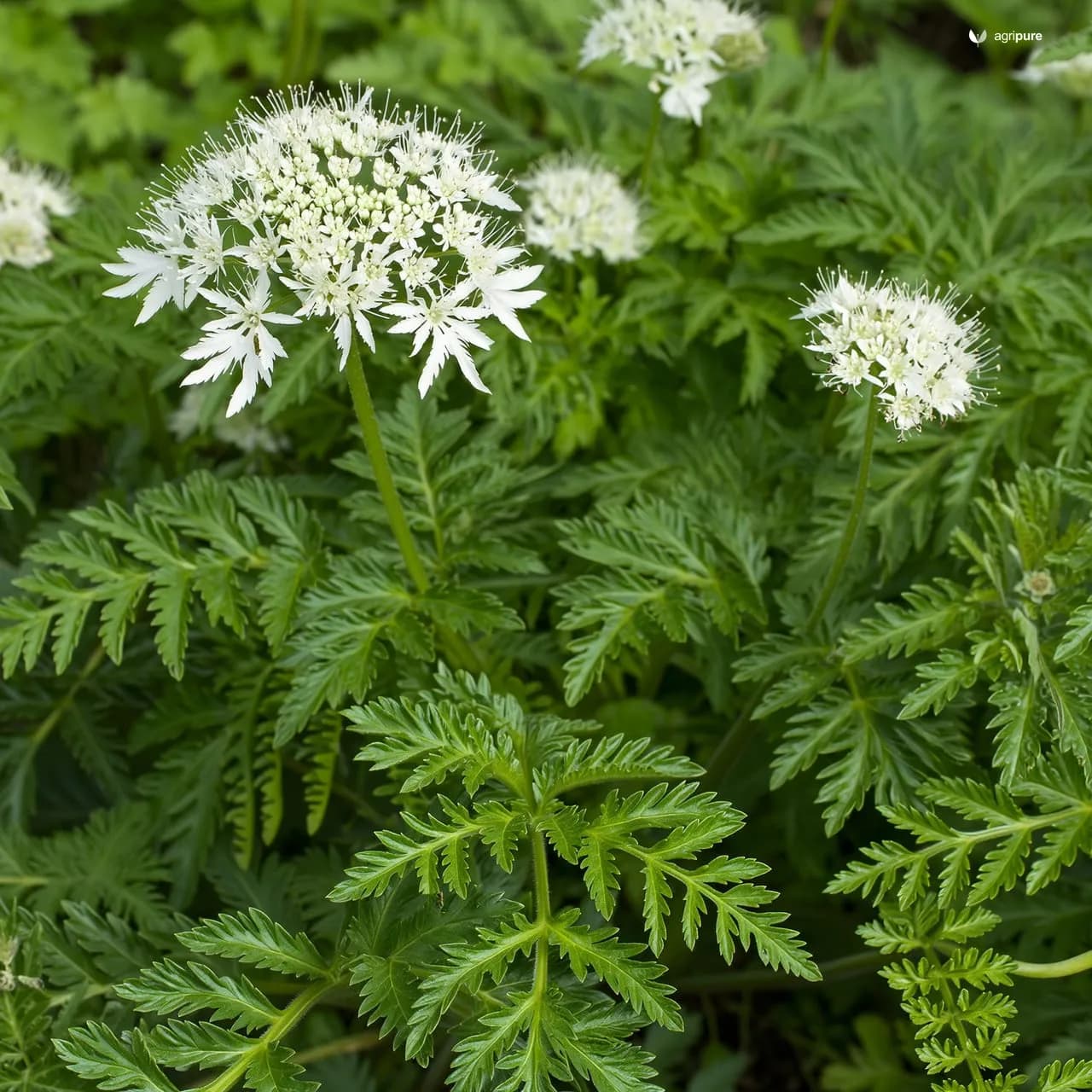
Caraway (Carum carvi) is a cool-temperate herb in the carrot and parsley family (Apiaceae), grown mainly for its small, aromatic, crescent-shaped “seeds” (botanically dry fruits), along with edible leaves and roots. It is native to Europe, western Asia, and North Africa, and has naturalized widely across most of the United States and Canada, reaching as far north as Greenland. For a homesteader, caraway is a low-fuss biennial that earns its space twice over: a single planting gives lacy edible greens the first year and a heavy crop of warm, slightly peppery spice seed the second, while its long bloom feeds beneficial insects in between.
Caraway is typically a biennial, building a rosette of finely divided, fern-like, lacy leaves and a carrot-like taproot in its first year, then sending up flowering stems and setting seed in the second. The plant carries one to several erect, branched, smooth (glabrous) stems and stands roughly 1 to 2 ft (30 to 60 cm) tall, with some floras describing plants up to 4 ft (120 cm); its spread is around 1 ft (30 cm). The fusiform, carrot-shaped taproot can reach about 25 cm long. The aromatic, compound foliage is often described as smelling of parsley and dill.
Growing caraway
Caraway is normally grown from seed sown directly where it is to crop, because its taproot resents transplanting. In temperate, four-season climates the standard approach is to sow in early spring; in mild-winter areas it can be treated as an annual and grown by winter sowing instead. Helpfully for small plots, the species is self-fertile, so even a single plant can set seed. The cited sources do not give reliable figures for germination time or precise sowing depth, so those details are deliberately left out rather than guessed at.
For site and soil, caraway prefers moist but well-drained garden soil and tolerates a fairly broad pH range of about 4.8 to 7.6.1 In the wild it favours well-drained sunny meadows and hills, and it is commonly found on roadsides, disturbed ground, abandoned fields, pastures, and waste areas. Give it full sun to light shade; plants grown in full sun are richer in essential oil and more aromatic, which matters directly to seed quality. Caraway is often found in moist meadows and can tolerate excess soil moisture and light frost, but only where the soil still drains freely. The sources give no precise irrigation schedule, so in practice aim for even moisture while avoiding waterlogging. Mature spread is about 1 ft (30 cm), a useful guide for spacing plants in the bed.
Harvest and uses
The harvest most growers are after is the seed, which forms in the plant’s second year. Caraway flowers in flat-topped umbels of many tiny white or pinkish-white florets, each cluster about 1 to 2.5 in (2.5 to 6 cm) across, blooming from late spring into early summer, or around June to August depending on region. Each flower matures into a dry schizocarp, a two-part fruit that splits into the familiar curved “caraway seeds”. The seeds are strongly aromatic, owing their flavour to an essential oil whose main components are carvone, limonene, and anethole.
Caraway is a genuinely multi-use plant: its lacy first-year leaves are edible and aromatic, the seeds are a classic warm baking and pickling spice long valued as a digestive remedy, and the carrot-like roots are also edible. The dry fruits are the main commodity and the reason most homesteaders grow it.
Pollinators and beneficial insects
One of caraway’s quieter virtues is what its flowers do for the rest of the garden. The umbels are attractive to pollinators and, importantly, to parasitic wasps that prey on aphids, making caraway a useful insectary plant for an integrated, low-spray homestead system. Letting a few second-year plants flower through their season feeds these beneficials during the same window your other crops are most vulnerable to aphid pressure.
Note on wild and weedy stands
Because caraway naturalizes so readily across North America and turns up on roadsides, pastures, and disturbed land, it can behave as a weedy escape outside the garden; in some jurisdictions wild caraway is tracked as an invasive or noxious plant. If you grow it, harvest your seed heads and avoid letting volunteers spread unchecked into nearby pasture or wild ground. This is a stewardship caution rather than a toxicity one: the plant itself is a long-established culinary herb.
Sources
- Carum carvi (Caraway, Meridian Fennel, Persian Cumin) – NC State Extension
- Wild Caraway – Invasive Species Council of British Columbia
- Carum carvi (Caraway) – Minnesota Wildflowers
- Caraway (Carum carvi L.) Plant Portrait – NordGen (Nordic Genetic Resource Center)
- Herb Study: Caraway – University of California Master Gardeners (UC ANR)
- Wild Caraway Fact Sheet – Weld County, Colorado