
Key takeaways
- Prioritize soil health with organic matter to improve water retention and nutrient availability in hot conditions.
- Opt for slow-release, low-nitrogen fertilizers during extreme summer heat to prevent burn and support root development.
- Adjust watering practices significantly, applying water deeply and less frequently, ideally in the early morning.
- Monitor soil moisture and pH regularly to ensure plants can access nutrients and avoid stress.
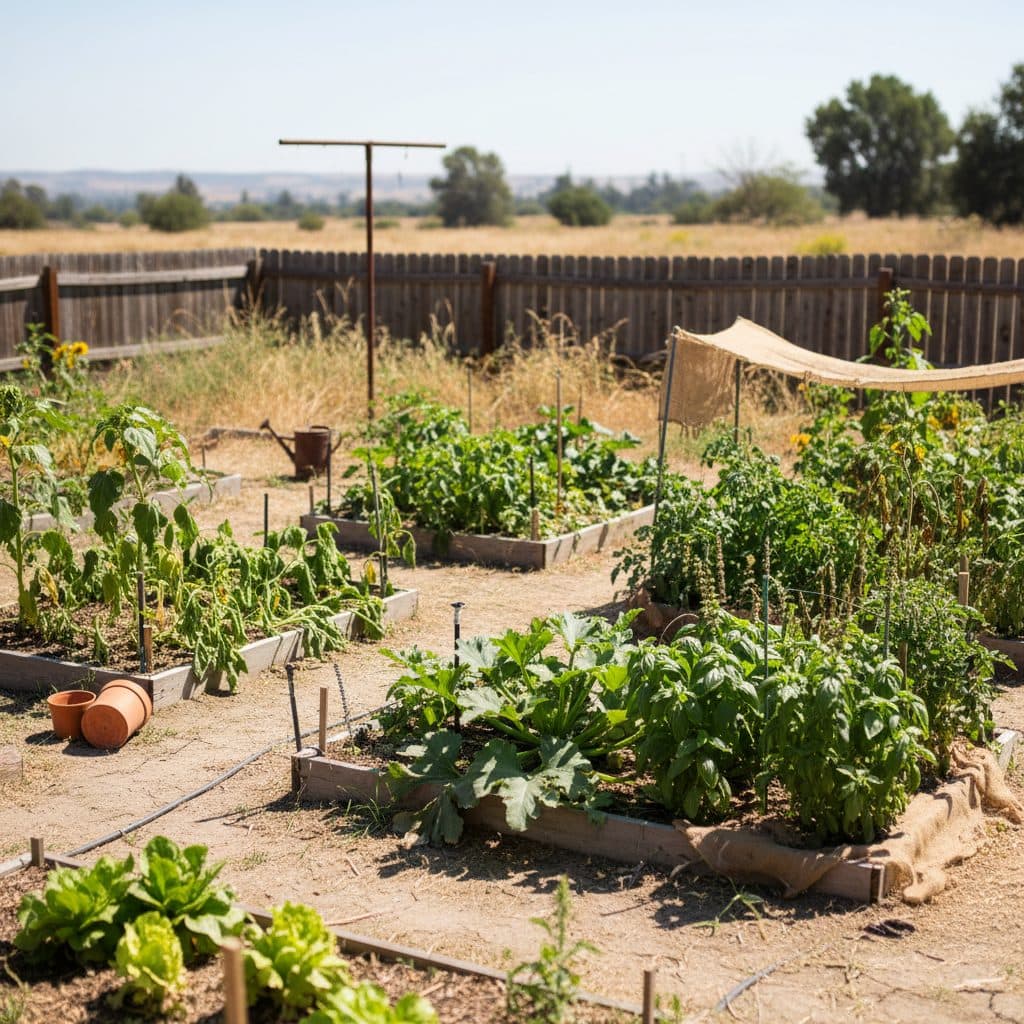
- Consider shade cloth for sensitive plants when temperatures consistently exceed 90 degrees Fahrenheit.
- Understand that plant nutrient needs shift in heat, requiring less nitrogen and more potassium for resilience.
Quick answer: To maintain garden productivity in extreme heat and drought, prioritize soil health with organic matter, use slow-release, low-nitrogen fertilizers, and adjust watering practices. These strategies help plants manage heat stress and optimize nutrient uptake.
Across the American Southwest, from California’s Central Valley to the high deserts of Arizona and New Mexico, gardeners face increasingly brutal summer conditions. In 2023, Phoenix, Arizona, endured a record 31 consecutive days of 110 degrees Fahrenheit or higher, a clear signal that traditional gardening practices need to adapt. This extreme heat, often coupled with severe drought, fundamentally changes how plants absorb nutrients and utilize water, demanding a thoughtful shift in our fertilizer strategies. Maintaining a productive garden in these challenging environments requires understanding these physiological changes and responding with targeted interventions.
In USDA zone 8b and hotter summer regions, fertilizer management shifts during peak heat. Rather than increasing feeding, summer fertility centers on soil resilience, root protection, and timing applications when moisture allows nutrient uptake without burning roots.
Understanding heat stress and plant nutrient uptake
When temperatures consistently exceed 90 degrees Fahrenheit, plants enter a state of heat stress. This stress impacts their ability to photosynthesize, absorb water, and take up essential nutrients. For instance, in an urban environment like Houston, Texas, surface temperatures can be significantly higher than surrounding rural areas during extreme summer heat, intensifying this stress [5]. Roots become less efficient at absorbing water and nutrients like nitrogen and phosphorus, as metabolic processes slow down. This reduced uptake means that even if nutrients are present in the soil, plants may not be able to utilize them effectively, leading to visible deficiencies and stunted growth.
How heat impacts plant physiology
High temperatures accelerate transpiration, causing plants to lose water rapidly through their leaves. To conserve moisture, stomata (tiny pores on the leaves) close, which in turn limits carbon dioxide intake and slows photosynthesis. This physiological response directly impacts nutrient transport, as water is the primary vehicle for moving nutrients from the soil to the plant’s cells. In regions experiencing compound impacts of extreme summer heat waves and droughts, such as those observed in urban areas, plants face a double challenge of water scarcity and impaired nutrient mobility [2]. Understanding these mechanisms is the first step toward a resilient summer fertilizer strategy.
- Reduced root activity: High soil temperatures inhibit root growth and function, limiting nutrient absorption.
- Stomata closure: Plants close pores to conserve water, reducing carbon dioxide uptake and nutrient transport.
- Increased respiration: Plants burn more energy to survive heat, leaving less for growth and nutrient processing.
- Nutrient immobility: Water-soluble nutrients like nitrates become less available as soil moisture decreases.
- Enzyme denaturation: Extreme heat can damage enzymes critical for nutrient conversion and uptake.
Building soil resilience in hot climates
The foundation of any successful garden, especially in challenging climates, is healthy soil. In areas like California’s Central Valley (USDA zone 9a), where summer temperatures can regularly hit 105 degrees Fahrenheit, soil rich in organic matter acts as a buffer against extreme heat and drought. Organic matter, such as compost or well-rotted manure, improves soil structure, increases water retention by up to 20% in sandy soils, and provides a steady supply of nutrients. This resilience supports sustainable crop production, which emphasizes efficient management of water and fertilizer [6].
The role of organic matter and microbes
Incorporating 2-3 inches of compost into your garden beds annually increases your soil’s capacity to hold moisture and support microbial life. These microorganisms break down organic material and make nutrients available to plants, a process that slows down in hot, dry conditions. Active soil biology helps plants access nutrients even when uptake is reduced by heat stress. For specific soil methods, see our guide on organic gardening fertilizer.
- Improved water retention: Organic matter holds water like a sponge, reducing irrigation needs by 15%.
- Enhanced nutrient cycling: Microbes decompose organic material, making nutrients accessible to plants.
- Temperature moderation: A layer of organic mulch can reduce soil surface temperatures by 10-15 degrees Fahrenheit.
- Better soil structure: Prevents compaction and improves aeration for healthier root development.
- Buffering capacity: Helps stabilize soil pH, which can fluctuate in extreme conditions.
Choosing the right summer fertilizer
During periods of extreme heat, plants require a different nutrient profile than during their active growth phases in spring. High nitrogen fertilizers, which promote leafy growth, can exacerbate heat stress by encouraging tender new foliage susceptible to sunscald and water loss. Instead, use fertilizers with lower nitrogen (N) and higher phosphorus (P) and potassium (K) ratios, such as a 5-10-10 or 4-8-12 blend. These formulations support root development, flowering, and fruiting while helping plants tolerate heat stress.
Slow-release and organic options
Slow-release fertilizers are particularly beneficial in summer because they provide a steady supply of nutrients over several weeks or months, reducing the risk of nutrient burn and minimizing leaching. Organic options, like fermented soybean meal organic fertilizer, offer a gentle, slow-release nutrient source that also feeds beneficial soil microbes. For example, fermented soybean meal typically has an NPK ratio around 7-2-1, providing nitrogen gradually as microbes break it down. This is ideal for maintaining plant health without overstimulating vegetative growth during 100-degree Fahrenheit days common in parts of Oklahoma (USDA zone 7a).
- Low nitrogen (N): Prevents excessive leafy growth that can be prone to heat stress.
- Higher phosphorus (P): Supports strong root development and flower formation.
- Higher potassium (K): Enhances plant resilience, water regulation, and disease resistance.
- Slow-release: Provides nutrients gradually, reducing the risk of burning and nutrient loss.
- Organic sources: Improve soil health and feed beneficial microorganisms.
Strategic application: timing and method
The timing and method of fertilizer application are just as critical as the type of fertilizer used, especially when temperatures consistently reach 95 degrees Fahrenheit in regions like central Georgia (USDA zone 8a). Applying fertilizer during the hottest part of the day or week can shock plants and lead to nutrient burn, as high temperatures accelerate chemical reactions and water evaporation. Instead, aim to fertilize in the early morning or late evening when temperatures are cooler, and plants are less stressed. This allows the nutrients to be absorbed more gradually and efficiently.
Proper application techniques
For granular fertilizers, broadcast them evenly around the plant’s drip line, avoiding direct contact with stems or leaves. Always water thoroughly immediately after application to help dissolve the nutrients and carry them into the root zone. This also prevents salt buildup that can occur with synthetic fertilizers. For liquid fertilizers, dilute them according to package directions (often to half strength in hot weather) and apply as a soil drench. Foliar feeding is generally not recommended in extreme heat, as the solution can evaporate quickly, leaving behind concentrated salts that can burn leaves. Efficient fertilizer use, combined with proper water management, can reduce nutrient losses by up to 30% [6].
- Early morning/late evening: Apply when temperatures are cooler to minimize plant stress.
- Water thoroughly: Always irrigate immediately after granular application to prevent burn.
- Dilute liquid fertilizers: Use half-strength solutions to avoid shocking heat-stressed plants.
- Avoid direct contact: Keep granular fertilizers off plant stems and leaves.
- Focus on the root zone: Apply nutrients where roots can most effectively absorb them.
Water management is fertilizer management
In extreme heat, water availability governs fertilizer uptake. Nutrients, particularly nitrogen and potassium, are absorbed by plants in solution with water. When soil moisture is depleted, roots cannot absorb nutrients regardless of soil fertility levels. In arid regions like southern Nevada (USDA zone 9a), where summer rainfall is minimal, proper irrigation scheduling can improve water use efficiency by 25% [6]. Deep, infrequent watering encourages roots to grow deeper, making plants more resilient to surface heat and drought. Aim for 1-2 inches of water per week, delivered in one or two sessions.
Monitoring soil moisture and pH
Overwatering can be just as detrimental as underwatering, especially in hot conditions, as it can lead to root rot and nutrient leaching. Using a soil moisture meter can help you determine exactly when your plants need water, preventing guesswork. For example, a meter reading of 3-4 indicates ideal moisture for most garden vegetables. Additionally, soil pH affects nutrient availability; extreme heat can alter microbial activity and, consequently, soil pH. A 3-in-1 soil pH, moisture, and fertility meter provides a comprehensive snapshot, ensuring your soil environment is optimal for nutrient uptake.
- Deep watering: Encourages deep root growth, making plants more drought-tolerant.
- Infrequent irrigation: Reduces surface evaporation and conserves water.
- Monitor soil moisture: Prevents over or under-watering, optimizing nutrient delivery.
- Check soil pH: Ensures nutrients are available in the correct chemical form for uptake.
- Mulch heavily: Reduces evaporation by 20-30% and moderates soil temperature.
Monitoring plant health and adapting
Plants under extreme summer heat, especially when temperatures consistently exceed 100 degrees Fahrenheit in areas like Arizona’s Sonoran Desert (USDA zone 9b), will show signs of stress. Reading these signals helps you adapt fertilizer and watering schedules. Wilting leaves, yellowing foliage, stunted growth, or poor fruit set are all indicators that your plants are struggling. These symptoms can point to either nutrient deficiencies, water stress, or both, requiring careful observation and a responsive approach.
Adjusting based on plant signals
If leaves are yellowing between the veins, it might indicate an iron or magnesium deficiency, which can be exacerbated by high pH or poor nutrient mobility in dry soil. If older leaves are uniformly yellowing, it could be a sign of nitrogen deficiency, even if you’ve applied a low-N fertilizer; however, consider water stress first. Use a 3-in-1 soil pH, moisture, and fertility meter to quickly check the soil conditions before applying more nutrients. Sometimes, simply increasing water or providing temporary shade can alleviate symptoms more effectively than additional fertilizer. Plants under heat stress prioritize survival over growth, reducing nutrient uptake efficiency by 20-30%.
- Observe wilting: Indicates water stress; check soil moisture before adding fertilizer.
- Note leaf discoloration: Yellowing can signal nutrient deficiencies or heat stress.
- Check growth rate: Stunted growth may mean nutrient lockout or severe environmental stress.
- Monitor fruit set: Poor fruit development often points to heat stress or nutrient imbalance.
- Taste test: Bitterness in produce like cucumbers can indicate water stress.
Protecting plants from direct heat and sun
Beyond fertilizer and water, physical protection from the sun’s intense rays can significantly reduce heat stress and improve nutrient utilization. In regions like the Mojave Desert (USDA zone 9a), where summer temperatures can exceed 115 degrees Fahrenheit, direct sun exposure for 8-10 hours can be too much for many garden vegetables. Shade cloth, typically providing 30-50% shade, can lower ambient temperatures around plants by several degrees and reduce leaf surface temperatures by 10-15 degrees Fahrenheit. This simple intervention can prevent sunscald and reduce the plant’s need to close stomata, allowing for more consistent nutrient uptake.
Mulching and windbreaks
A 3 to 4 inch layer of organic mulch (straw, wood chips, or shredded leaves) moderates the soil environment. Mulch conserves soil moisture by reducing evaporation by up to 30% and insulates the soil to keep root zones cooler. This maintains consistent soil temperatures needed for root health and nutrient absorption. Additionally, temporary windbreaks can protect plants from hot, drying winds that further exacerbate water loss and stress. Consider planting taller, more heat-tolerant crops like okra or sunflowers on the south and west sides of your garden to provide natural shade for more sensitive plants like lettuce or spinach, which struggle above 80 degrees Fahrenheit.
- Shade cloth: Reduces direct sun exposure and lowers plant temperatures by 10-15 degrees.
- Thick mulching: Insulates soil, retains moisture, and keeps roots cooler.
- Windbreaks: Protect plants from desiccating hot winds, reducing water loss.
- Strategic planting: Use taller plants to cast natural shade on sensitive crops.
- Container placement: Move potted plants to shadier spots during peak heat hours.
Fertilizer strategies: spring vs. summer in hot climates
Characteristic | Spring/Early Summer (Moderate Heat) | Mid-Summer (Extreme Heat) |
|---|---|---|
Primary NPK Ratio | Higher Nitrogen (e.g., 10-5-5) | Lower Nitrogen, Higher P/K (e.g., 5-10-10) |
Release Type | Balanced, faster-acting granular or liquid | Slow-release granular, organic amendments |
Application Frequency | Every 2-4 weeks for heavy feeders | Every 4-8 weeks, or as needed based on plant stress |
Watering Strategy | Regular, consistent moisture | Deep, infrequent watering with soil moisture monitoring |
Key Goal | Vegetative growth, establishment, flowering | Stress resilience, fruit development, survival |
Urban Heat Impact: Surface temperatures in urban areas can be significantly higher, sometimes by 10-15 degrees Fahrenheit, compared to rural surroundings during extreme summer heat, intensifying plant stress [5].
Water Use Efficiency: Proper irrigation scheduling and mulching can improve water use efficiency by 25% to 30% in arid regions, directly impacting nutrient availability and plant health [6].
Frequently asked questions
How often should I fertilize my garden in extreme summer heat?
In extreme summer heat, reduce fertilizer frequency. For most plants, applying a slow-release, low-nitrogen fertilizer every four to eight weeks is sufficient, especially if soil organic matter is high. Always monitor plant health and soil moisture before reapplying any nutrients.
What type of fertilizer is best for hot, dry conditions?
Opt for slow-release, low-nitrogen fertilizers with higher phosphorus and potassium (e.g., 5-10-10 or organic options like fermented soybean meal). These support root health and stress resilience without promoting tender new growth susceptible to burn. Avoid high-nitrogen quick-release products.
Can I use liquid fertilizers in hot weather?
Yes, but with caution. Dilute liquid fertilizers to half strength and apply them as a soil drench in the early morning or late evening. Avoid foliar feeding when temperatures exceed 85 degrees Fahrenheit, as rapid evaporation can lead to leaf burn and inefficient nutrient absorption.
How does heat stress affect nutrient absorption?
Extreme heat reduces a plant’s ability to absorb nutrients by slowing root activity, closing stomata to conserve water, and impairing metabolic processes. This means plants may only absorb 70-80% of available nutrients compared to optimal conditions, even if nutrients are present in the soil.
Is mulching really that important for fertilizer effectiveness in summer?
Absolutely. A 3-4 inch layer of organic mulch significantly reduces soil temperature and evaporation by 20-30%. This helps maintain consistent soil moisture needed for nutrient dissolution and uptake, improving the effectiveness of applied fertilizers.
What are the first signs of heat-related nutrient problems?
Early signs include wilting during the hottest part of the day, yellowing of leaves (especially older ones), stunted growth, and poor fruit set. These symptoms often indicate a combination of water stress and impaired nutrient uptake, requiring immediate attention to watering and possibly a gentle nutrient boost.
References
- Maritime Continent Deforestation-Induced Extreme Rainfall Regime Shifts During the Early Summer Monsoon Season (2026). Maritime Continent Deforestation-Induced Extreme Rainfall Regime Shifts During the Early Summer Monsoon Season.
- Compound impact of extreme summer heat waves and droughts on surface urban heat island in Budapest (2025). Compound impact of extreme summer heat waves and droughts on surface urban heat island in Budapest.
- Heat Transfer Measurements in Neutrally Buoyant Suspensions in the Inertial Regime (2022). Heat Transfer Measurements in Neutrally Buoyant Suspensions in the Inertial Regime.
- Thermally Developing Laminar Liquid Flow and Heat Transfer in Microtubes at Slip Regime (2020). Thermally Developing Laminar Liquid Flow and Heat Transfer in Microtubes at Slip Regime.
- Analysing the surface temperature of the urban environment during extreme summer heat (2025). Analysing the surface temperature of the urban environment during extreme summer heat.
- Managing water and fertilizer for sustainable agricultural intensification (2015). Managing water and fertilizer for sustainable agricultural intensification.