pioneer
Smallflower Clematis
Clematis grata
- pothohar
- kpk hills
- balochistan highlands
International hardiness
- USDA 6-9
- RHS H5
- AU: Cool temperate, Warm temperate
Where it grows — regional guide
| Zones / rating | Regional notes |
|---|---|
USDA 6-9 | No region-specific data yet |
| Zones / rating | Regional notes |
|---|---|
H5 (-15 to -10C) | No region-specific data yet |
| Zones / rating | Regional notes |
|---|---|
Cool temperate, Warm temperate | No region-specific data yet |
| Zones / rating | Regional notes |
|---|---|
USDA 6-9 (USDA scale) Canada uses its own zone system; Canadian zones run roughly one lower than USDA. | No region-specific data yet |
| Zones / rating | Regional notes |
|---|---|
Pothohar, KPK hills, Balochistan highlands | Pakistan:Grown on rough banks and hill scrub for feathery seed heads; wear gloves against irritant sap, and keep away from grazing stock as it is toxic. India:Climbing vine of temperate hill hedgerows; it is poisonous if eaten and sap irritates skin, so wear gloves. |
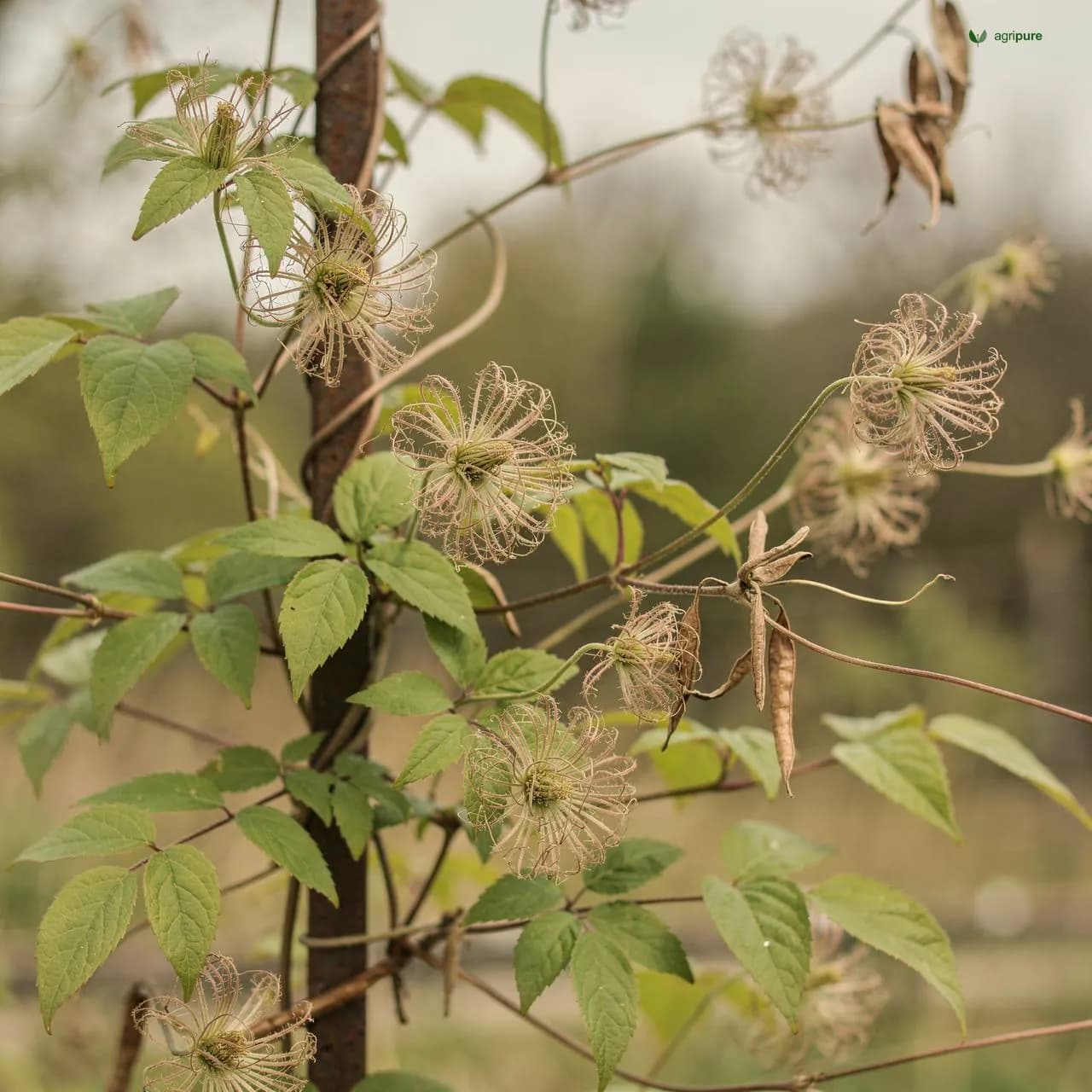
Smallflower clematis (Clematis grata) is a deciduous, woody climbing vine in the buttercup family, Ranunculaceae, recognised by authoritative floras and botanical checklists as a distinct species of cool-temperate East Asia. Like other members of its genus, it is a liana that climbs by twining with its leaf stalks rather than with tendrils, carrying the small, creamy-white flowers and feathery seed heads that mark out the wild, small-flowered clematises. For a homesteader it is worth knowing first as a plant to identify and handle with care, not one to grow for the table: it is not an edible plant, and, like the rest of the genus, it contains irritant compounds and is considered poisonous if eaten.
Because detailed English-language descriptions of this species are sparse, gardeners most often meet it simply as a “small-flowered, white, wild clematis” on Asian or European plant lists rather than as a named ornamental. It should not be confused with the trade plants sold as sweet autumn clematis (Clematis terniflora or Clematis paniculata), which are different species whose cultivation details cannot be assumed to apply here. The identification section below sets out the diagnostic features.
Growing smallflower clematis
Global and regional floras treat Clematis grata as native to temperate East Asia, distributed through China, Japan, Korea, and adjacent regions, where it grows as a woodland and hedgerow vine of temperate and montane habitats. No primary horticultural source assigns a precise USDA hardiness zone to this species. The genus Clematis spans many species hardy across roughly USDA zones 4–9, with the small-flowered, species-type clematises generally among the hardiest, so given its cool-temperate origin it is reasonable — though only an inference from native climate — to expect hardiness in cold-winter temperate zones.
There is essentially no detailed, English-language culture guide written specifically for Clematis grata, so propagation here follows the standard practice for small-flowered species clematis, noted as genus-level guidance:
- From seed: Species clematis, including small-flowered types, are routinely grown from seed in horticulture and botanic gardens; seed is the usual route for the species (as opposed to named cultivars).
- From cuttings: Clematis are also propagated from semi-ripe or hardwood cuttings, typically nodal cuttings of the current season’s growth taken in summer.
Spacing, sowing dates, soil pH, watering schedules, and time to maturity are not documented for this species in the sources, so they are omitted rather than stated with false precision. Treat it as a vigorous twining vine that needs something to climb and room to scramble, bearing in mind that, like its relatives, it can swamp smaller plants if left unchecked.
Harvest and uses
This is not a harvest crop. Clematis grata is not an edible plant, and the sources are explicit that, like other clematis, it is poisonous if eaten. It has no documented culinary use, and the genus is grown ornamentally rather than for food or forage. The only tangible return is structural and visual: the feathery, silvery seed heads that follow the flowers, and the vine’s ability to clothe a fence, arbour, or rough support. Reliable species-specific yield, food, material, or medicinal data are absent from the sources, so none is claimed.
How to identify it
Use this combination of features to separate smallflower clematis from larger-flowered garden clematis and from look-alike wild vines:12
- Habit: A deciduous, woody climbing vine (liana) that twines up supports using its leaf stalks rather than tendrils.
- Leaves: Arranged in opposite pairs; compound, with about three to five broadly ovate to elliptic leaflets and entire to shallowly toothed margins.
- Flowers: Small, only about 1–2 cm across, with four creamy-white to white sepals, carried in branched clusters — far smaller than the showy hybrids.
- Seed heads: Dry achenes with long, plumose styles forming the silvery, feathery seed heads typical of Clematis.
Safety and cautions
Smallflower clematis should be treated as an ornamental and wild vine, not a food, forage, or home-remedy plant. The sources are clear on the key points:
- It is definitely not an edible plant and is considered poisonous if eaten.
- Like other clematis, it contains the irritant compound protoanemonin, the toxin found across the genus; this is the mechanism behind clematis toxicity, noted at genus level.
- Because the whole genus carries irritant compounds, handle cut growth and sap with care, keep it away from children and from livestock as a feed, and do not use it internally.
No traditional medicinal use, preparation, or dose for this species is supported by the sources, and none is implied. Grow it, if at all, as a hardy climbing ornamental, valued for form rather than the table.
Sources
- Clematis — North Carolina State Extension, Plant Toolbox
- Clematis — Wikipedia
- Clematis for the Home Garden (Plant Evaluation Notes) — Chicago Botanic Garden
Sourcing notes
Easiest to propagate from seed or hardwood cuttings taken from local hill stands, or simply by transplanting rooted runners; it is rarely sold in nurseries and is usually established from wild material on rough ground.