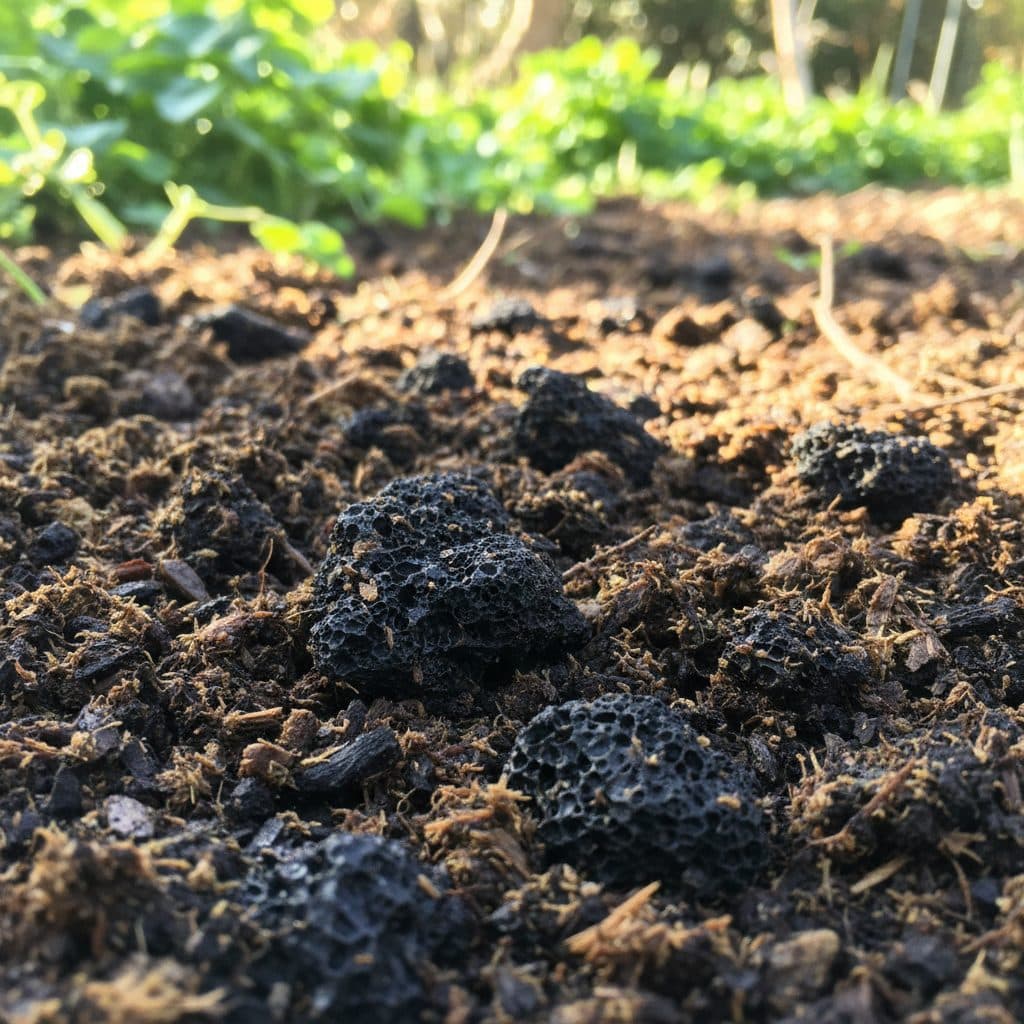
Making and using biochar from yard and wood waste

Key takeaways
- Pyrolysis temperature parameters: Heat wood biomass between 350°C and 700°C (662°F to 1292°F) under low-oxygen conditions to produce high-quality carbon structures.
- Inoculation requirement: Charge raw biochar for at least 14 days before soil application to prevent nitrogen tie-up and crop stunting.
- Composting blend ratio: Mix one part biochar with four parts active compost (a 20% blend) to balance C:N ratios and capture ammonia.
- Kiln setups: Build a simple flame-cap kiln using a 55-gallon steel drum or a conical soil trench measuring 3 feet deep.
- Application rates: Apply charged biochar at a rate of 10% by volume in garden beds, which equals about 1 pound per square foot.
- Carbon stability timeframe: Sequester carbon in US soils for hundreds to thousands of years, as biochar does not decay like raw mulch.
Quick answer: Biochar can be made from yard and wood waste through pyrolysis in low-oxygen kilns, such as a flame-cap drum or trench. Raw biochar must be charged with compost for 14-21 days before applying to soil to prevent nitrogen tie-up and improve soil fertility.
The Environmental Protection Agency (EPA) estimates that the average American generated 328 pounds of food waste in 2016, with households accounting for 40% to 50% of the nation’s 26.5 million tons of annual food waste. While composting processes food scraps quickly, backyard gardeners also generate large quantities of woody yard waste, such as fallen branches and brush. This woody biomass can become biochar, a highly stable, porous form of carbon produced through low-oxygen burning, which traps carbon in the soil and boosts its nutrient holding capacity.
By pyrolyzing wood scraps at home, you can create a permanent soil amendment that lasts for up to 1,000 years. This process helps urban and rural growers build rich organic garden soil.
The chemistry and benefits of biochar
These stable carbon structures are created by heating biomass in the absence of oxygen. Under normal backyard burning, carbon combines with oxygen and escapes as carbon dioxide gas, leaving only 1% to 5% of the carbon in the ash. Pyrolysis, however, preserves up to 50% of the original wood carbon in a solid, porous matrix.

Porous structure and cation exchange capacity
This thermal processing creates millions of microscopic pores, giving biochar a surface area of over 3,000 square feet per gram. These empty chambers act as microscopic sponges that hold water and water-soluble plant nutrients. Once colonized by soil microbes, the biochar’s cation exchange capacity increases, preventing essential minerals from washing away during heavy rains.
Long-term carbon sequestration
Because biochar consists of highly stable aromatic carbon rings, it resists microbial decomposition. Unlike raw leaves or straw that rot away within 12 months, biochar remains in the soil for 100 to 1,000 years. This permanent structure provides a continuous habitat for beneficial mycorrhizal fungi.
Constructing a DIY flame-cap kiln
This backyard pyrolysis process can be executed safely using simple steel containers or trenches. The flame-cap method creates an airless combustion zone that prevents the wood from turning to ash, maintaining a combustion temperature around 500°C.
Conical soil trench kiln
This earth-based kiln is the simplest DIY option, requiring only a shovel and a water source like a 50-gallon hose:
- Dig a cone-shaped pit measuring 3 feet wide at the top and 3 feet deep.
- Build a small fire at the bottom of the pit using dry kindling under 1 inch thick.
- Add layers of dry branches (under 2 inches thick) as soon as the previous layer turns ash-white.
- Keep the flame cap burning at the top of the pit, which consumes 100% of the descending oxygen.
- Douse the pit with 20 gallons of water once the pit is filled with glowing black coals.
Steel drum kiln (55-gallon setup)
This metal setup uses a standard 55-gallon open-head steel drum:
- Feedstock sizing: Cut branches into pieces under 6 inches long using a wood chipper to ensure even heating.
- Air regulation: Drill five 1-inch holes around the bottom rim of the drum to allow limited primary air intake, and cover the top of the drum with a steel lid once the pyrolysis is complete to cut off 100% of the oxygen.
Why raw biochar must be charged
This empty carbon sponge is highly reactive when first produced. Raw biochar has a C:N ratio between 100:1 and 500:1, making it too inert to provide nutrients directly.
Preventing nitrogen tie-up
If you apply raw biochar directly to your garden beds, it will absorb all available nitrogen, phosphorus, and moisture from the surrounding soil. This absorption ties up nutrients, starving plant roots and stunting crop growth by up to 50% during the first season. Pre-charging (or inoculating) the biochar fills these empty pores with nutrients and microbes before it hits the soil.
The 1:4 charging recipe
This inoculation process requires mixing raw biochar with a nutrient-rich organic base to lower the starting C:N ratio to around 30:1:
- Crush the quenched biochar into pieces under 1/4-inch in size.
- Mix one part crushed biochar with four parts active compost or animal manure.
- Wet the mixture until it reaches 50% moisture (damp sponge consistency).
- Let the mixture sit in a warm area for 14 to 21 days to allow microbes to colonize the carbon pores.
Composting Step | Traditional Compost Pile | Biochar-Enhanced Compost |
|---|---|---|
C:N Ratio Target | 25:1 to 30:1 | 35:1 (accounting for biochar carbon) |
Moisture Range | 50% to 60% | 50% to 65% (biochar absorbs water) |
Turning Cycle | Every 3 to 7 days | Every 7 to 10 days |
Nutrient Retention | 60% nitrogen retained | 90% nitrogen retained (ammonia captured) |
Applying biochar in your garden
These inoculated carbon chunks are ready to be integrated into your garden beds once the 14-day charging cycle is complete. A single application provides permanent benefits.
- Bed preparation: Spread a 1/2-inch layer of charged biochar over your garden beds and till it into the top 6 inches of soil.
- Container planting: Mix 10% charged biochar by volume into potting mixes for growing tomatoes (Tomato) and sweet basil (Basil).
- Soil diagnostics: Check pH shifts before and after adding biochar using a 3-in-1 Soil pH, Moisture & Light Meter.
- Tool preparation: Dig 3-foot trench kilns and blend biochar with compost using our sturdy Garden Hand-Tool Set — Trowel, Rake, Cultivator & Weeder.
Woody yard waste can be shredded to feed your hot pile using our Branch Wood Chipper (6.5 / 13 / 15 HP).
Troubleshooting biochar production issues
These thermal processes require careful monitoring to ensure wood is charred rather than burned to ash, which affects up to 15% of DIY burns.
Biochar turning to white ash
- Cause: Oxygen entered the kiln bottom, or the pile was not quenched with water at the right time, destroying 80% of the carbon.
- Solution: Add fresh wood faster to block descending oxygen, and quench the kiln with 20 gallons of water as soon as the coals glow bright red.
Smoke and heavy air pollution
- Cause: Wood is too wet (above 20% moisture), or the flame cap was not established, preventing secondary combustion.
- Solution: Use only seasoned wood dry enough to crackle, and maintain a bright, clean flame at the top of the kiln for 100% combustion of gases.
Poor nutrient absorption
- Cause: Biochar was not crushed under 1/4-inch, or the charging mix lacked active microbes.
- Solution: Crush biochar into particles under 1/4-inch, and verify your compost is active and moist before blending.
Safety Warning: Pyrolysis generates carbon monoxide and temperatures over 900°F (482°C). Always operate flame-cap kilns outdoors, at least 25 feet away from buildings, and keep a pressurized water hose nearby.
Frequently asked questions
What is biochar, and how does it help soil?
Biochar is a highly stable, porous carbon created by heating wood under low-oxygen conditions. It acts as a permanent sponge in the soil, holding water, nutrients, and microbes for centuries without decomposing.
Why must I charge biochar before putting it in the garden?
Raw biochar is highly reactive and empty. If applied directly to the soil, it will pull nutrients and moisture away from your plants, stunting their growth by up to 50%. Pre-charging it with compost or fertilizer fills the pores first.
What is the temperature range for making biochar?
Slow pyrolysis typically occurs between 350°C and 700°C (662°F to 1292°F). Heating wood in this temperature range creates stable carbon rings with high nutrient retention capacities.
How much biochar should I add to my garden?
We recommend applying charged biochar at a rate of 10% by volume. For garden beds, this equals about a 1/2-inch layer tilled into the top 6 inches of soil, or approximately 1 pound per square foot.
References
- North Carolina State Extension. (2023). Biochar and Soil Carbon. NCSU Extension.
- University of California Agriculture and Natural Resources. (2021). Biochar as a Soil Amendment. UCANR Extension.
- Living Web Farms. (2022). Composting with Biochar. Living Web Farms.
- Oklahoma State University Extension. (2022). Soil Nitrogen Adsorption of Biochar. OSU Extension.
- USDA Agricultural Research Service. (2023). Pyrolysis Temperatures and Biochar Quality. USDA ARS.