secondary
Saffron
zafran
Crocus sativus
Also known as Zafran (Pakistan), Kesar (India), Saffron Crocus (United States, UK & Ireland, Australia).
- kpk hills
- balochistan highlands
International hardiness
- USDA 6-9
- RHS H5
- AU: Mediterranean, Cool temperate, Warm temperate
Where it grows — regional guide
| Zones / rating | Regional notes |
|---|---|
USDA 6-9 | Hardy in USDA zones 6 to 9 in gritty, sharp-draining beds; confirm identity before planting to avoid confusing with toxic autumn crocus. |
| Zones / rating | Regional notes |
|---|---|
H5 (-15 to -10C) | Hardy under RHS H5 in dry, free-draining raised beds; ensure corms are true saffron and never gather from toxic meadow saffron. |
| Zones / rating | Regional notes |
|---|---|
Mediterranean, Cool temperate, Warm temperate | Suited to cool-temperate and mediterranean zones with dry summers; plant in gritty raised beds, confirming corms are not toxic Colchicum. |
| Zones / rating | Regional notes |
|---|---|
USDA 6-9 (USDA scale) Canada uses its own zone system; Canadian zones run roughly one lower than USDA. | No region-specific data yet |
| Zones / rating | Regional notes |
|---|---|
KPK hills, Balochistan highlands | Pakistan:Grown in cool highland valleys with dry summers; verify corm identity carefully to avoid confusion with deadly poisonous autumn crocus. India:Cultivated in cool Kashmir valleys in gritty raised beds; confirm stock is genuine Crocus sativus to prevent mixing with toxic Colchicum. |
Grows alongside
Species that appear with Saffron in 7 of our published guides — a starting list for a guild, not a planting plan.
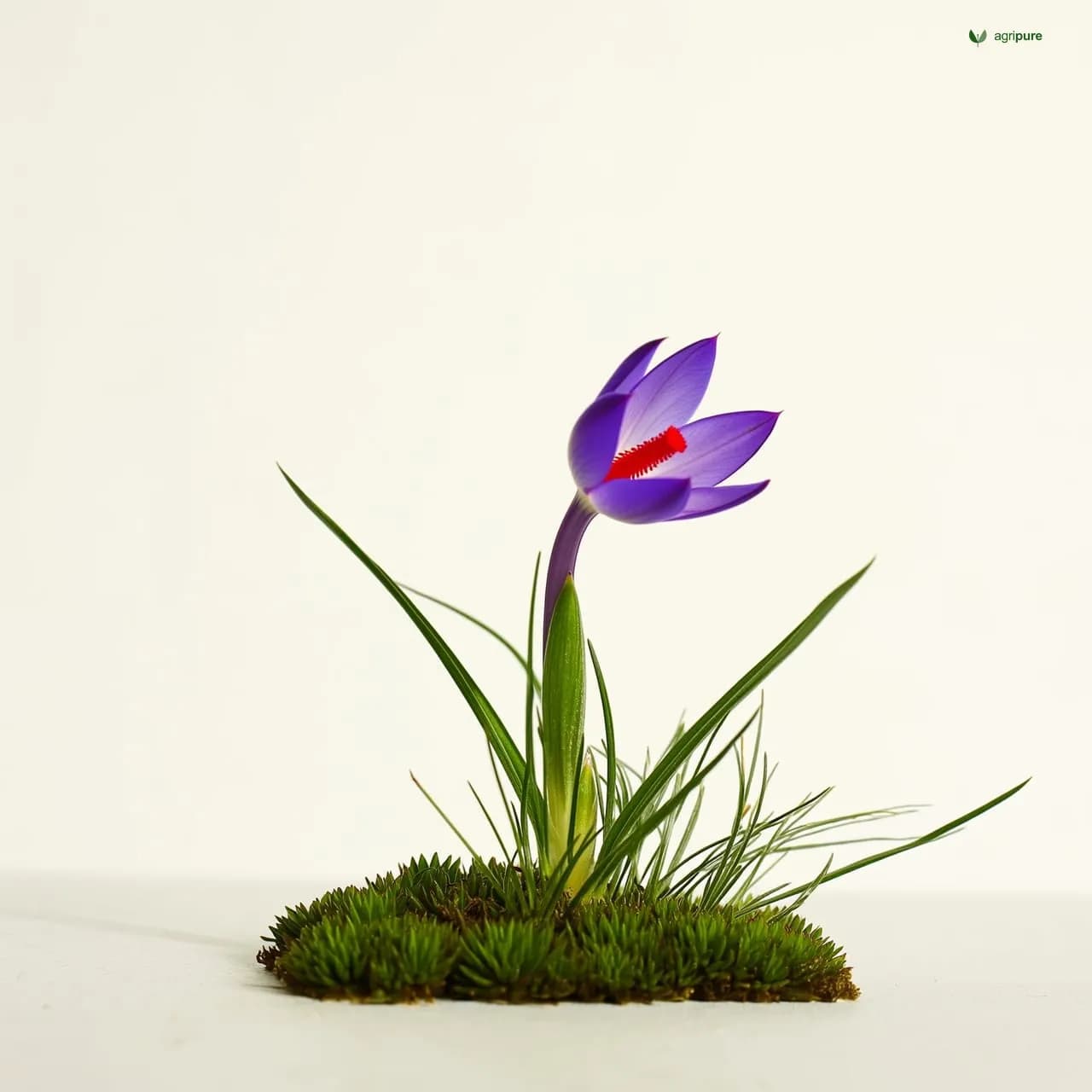
Saffron (Crocus sativus) is a small autumn-flowering crocus of the iris family (Iridaceae), grown not for its bloom but for the three deep-red stigmas inside each flower: the threads that, once dried, become the spice saffron. It is a curious crop in that it has no wild populations at all: the species is unknown in the wild and survives only in cultivation, most likely descended from a naturally occurring hybrid selected long ago for its long stigmas and probably native to Greece and Asia Minor.4 For a grower this means saffron is entirely a hand-tended, human-propagated plant: a low, grassy geophyte just 4 to 6 inches (10 to 15 cm) tall that rewards patience and good drainage with one of the most valuable harvests by weight in agriculture.
Growing Saffron
Saffron is reliably hardy in roughly USDA zones 6 to 8, with one horticultural guide putting it at zone 6–8 in cooler southern conditions and 6–9 in drier western climates; in regions colder than zone 6 the corms can still be grown but need to be lifted and stored indoors over winter.6 What it really wants is a climate with long, dry summers, because the corms spend summer dormant and rot if they sit wet during that rest.6
Because the plant cannot set viable seed, it is propagated only vegetatively — by dividing its corms, the bulb-like underground storage organs from which it grows.45 The corms multiply on their own over the years, and plantings generally need lifting and dividing after about four to six years to relieve overcrowding before flowering falls off. Plant corms around 4 inches (10 cm) deep and 4 inches (10 cm) apart.
Drainage is the single most important condition. Saffron is easily grown in average, medium-moisture, well-drained soils, but it does best in gritty, free-draining ground; heavy clay and poorly drained or overly moist sites are to be avoided. Practical guides suggest loose clay to sandy soils and report that the plants respond well to raised beds, which sharpen drainage and keep the corms drier through their summer dormancy.6 Give it full sun for the best results, though it will tolerate part shade.56
The defining habit of this plant is its reversed, autumn-flowering calendar. The flowers open in early to mid-autumn, and the thin, grassy leaves emerge with or shortly after the blooms, then persist for roughly 8 to 12 weeks before withering away.246 Each plant typically throws three or four deep lavender-to-purple flowers, often purple-veined, with six petal-like tepals, and every flower carries exactly three long scarlet-to-red stigmas — the harvested saffron threads.58 Because the threads are so few per flower, yields are small by weight and the harvest is unavoidably done by hand, flower by flower.
Harvest and uses
The harvest is the whole point of the crop and the reason saffron is grown at all. Within each autumn flower sit three long, scarlet style branches, the stigmas, and these are picked out and dried to make the spice. With only three threads to a bloom and just three or four blooms to a plant, the maths explains saffron’s reputation: it takes a great many flowers to gather even a small quantity of dried spice, which is why it is hand-harvested at the flower and why it remains so costly by weight. The dried stigmas are prized in the kitchen for the colour, aroma and flavour they lend to rice dishes, sweets and infusions, the culinary use that has driven the plant’s cultivation for centuries.
Telling true saffron from its toxic lookalike
One distinction matters more than any other for anyone growing or buying this plant. True saffron, Crocus sativus, is a genuine crocus in the iris family and its stigmas are edible. It is easily confused with a superficially similar autumn-blooming plant, Colchicum autumnale, commonly called “autumn crocus” or “meadow saffron,” which belongs to a different family (Colchicaceae) and is not a true crocus at all. The simple rule worth memorising is that Crocus sativus is the edible, true crocus, while Colchicum autumnale is the toxic imposter. Confusing the two is the central hazard around saffron, so buy corms from reputable suppliers and confirm the botanical name before planting anything you intend to harvest for the kitchen.
Safety and cautions
The most important safety point for saffron is one of identity, not of dose. The plant most often mistaken for it, Colchicum autumnale (autumn crocus or meadow saffron), is reported to have all parts poisonous, and it is not a true crocus despite the shared common name. Because the two are easy to mix up, the practical caution is to be certain you are growing and harvesting Crocus sativus (the edible, true crocus) and never to gather “saffron” from a plant whose identity you have not confirmed. Keep the genuinely toxic lookalike well away from anything destined for food, and out of reach of children and animals. Beyond correct identification, treat saffron as a culinary spice rather than a remedy; the sources here document its botany, cultivation and food use, and do not support any medicinal or curative claims.
Sources
- Grow Organic. “Solve the Autumn Crocus Confusion.”
- Missouri Botanical Garden. “Crocus sativus.” Plant Finder.
- Wikipedia. “Crocus sativus.”
- Brooklyn Botanic Garden. “Saffron Crocus.”
- Washington College. “Crocus sativus.” Center for Environment & Society plant database.
- White Flower Farm. “How to Harvest Saffron Crocus.”
- PictureThis. “Crocus sativus.”