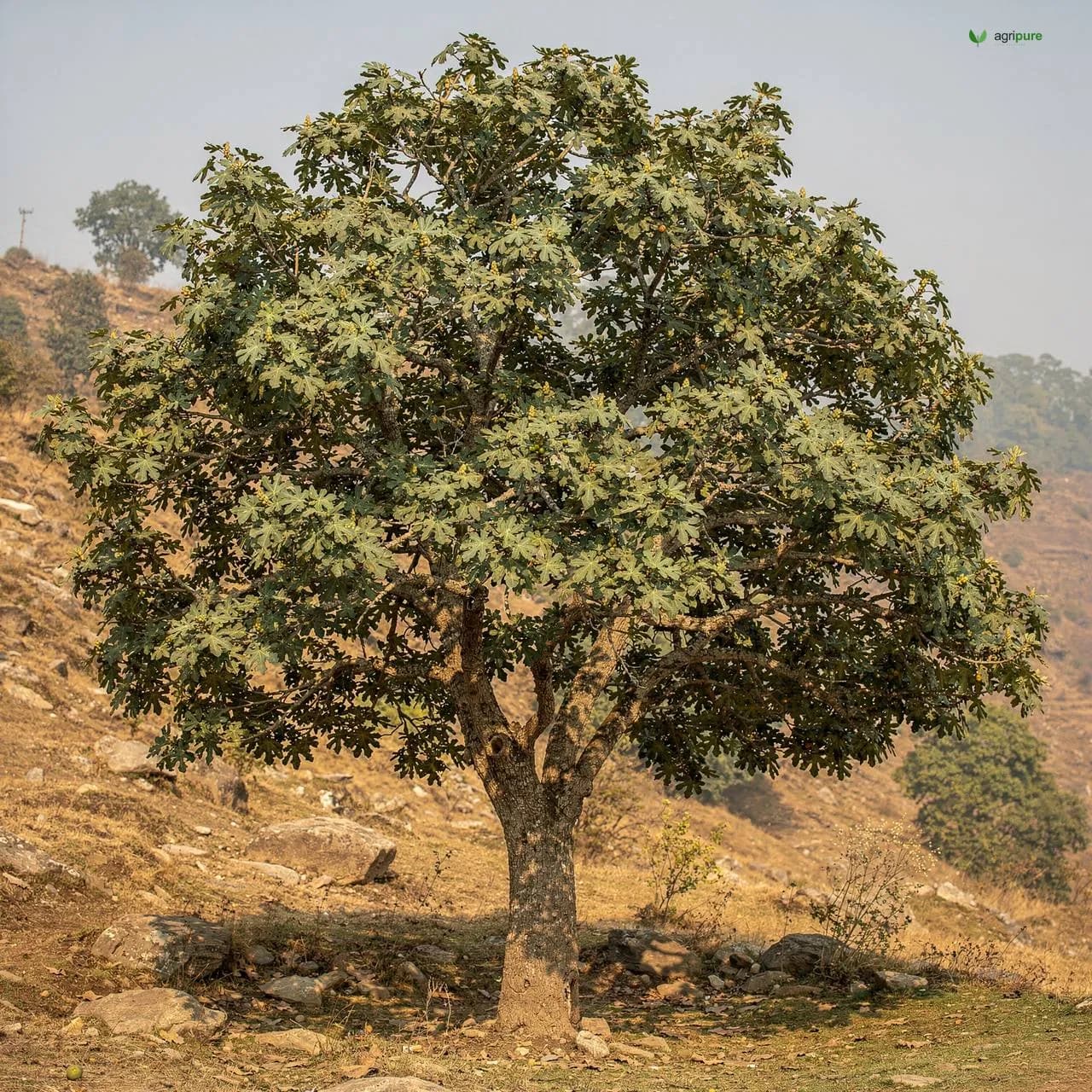
secondary
Punjab Fig (Wild Himalayan Fig)
phagwara / injir
Ficus palmata
- pothohar
- kpk hills
International hardiness
- USDA 8-11
- RHS H4
- AU: Warm temperate, Mediterranean, Subtropical
Where it grows — regional guide
| Zones / rating | Regional notes |
|---|---|
USDA 8-11 | Grown in USDA zones 8 to 11 on rocky, sun-baked slopes; it yields small sweet figs and provides light canopy shade. |
| Zones / rating | Regional notes |
|---|---|
H4 (-10 to -5C) | Tolerant under RHS H4; grown against sunny shelter walls in mild districts for ornamental foliage and small edible figs. |
| Zones / rating | Regional notes |
|---|---|
Warm temperate, Mediterranean, Subtropical | Grown in warm Mediterranean and dry districts on poor rocky ground; it yields sweet wild figs and supplemental stock browse. |
| Zones / rating | Regional notes |
|---|---|
USDA 8-11 (USDA scale) Canada uses its own zone system; Canadian zones run roughly one lower than USDA. | No region-specific data yet |
| Zones / rating | Regional notes |
|---|---|
Pothohar, KPK hills | Pakistan:Native wild fig of rocky slopes and dry hills; sweet purplish figs are eaten fresh or dried and foliage feeds goats. India:Native to northwestern Himalayan slopes; it yields sweet edible wild figs and useful dry-season goat browse. |
Punjab fig (Ficus palmata, locally phagwara or injir, and also called the wild Himalayan fig) is the hardy wild fig that colonises rocky slopes across the Pothohar plateau and the lower KPK hills. Its sweet figs are eaten fresh or dried, and its foliage is fed to goats. On a syntropic site it is a secondary tree: a quick, opportunistic coloniser of broken ground that gives an early return in fruit and fodder while slower trees establish.
Where it thrives
Wild fig is a tree of hot, dry slopes. It is a common, highly variable fig of the northwest hills, growing on hot, dry slopes and clay soils, and it occurs commonly up to about 1,000 m above sea level. Its range is wide, running from Pakistan, Afghanistan, and Kashmir west through Iran and Arabia into northeast Africa. In Pakistan that places it through the rocky Pothohar country and the lower KPK slopes, where it takes hold on ground too dry and broken for most fruit trees. It is a deciduous tree growing to about 9 m.
Role in the system
Treat wild fig as a secondary coloniser for rocky, dry sites in the system. It is opportunistic and quick to take hold on broken ground, so it covers and begins to build soil on slopes that bare them. Its crown gives light shade and its fruit feeds birds, which spread its seed and tie it into the wider landscape. It returns fruit and fodder sooner than the slower hill trees, so it carries an early yield while the climax canopy is still establishing. The species is highly variable from tree to tree, so it pays to pick out a good-fruiting individual and propagate from it rather than rely on chance seedlings. As a tough, undemanding fig it pairs well with the wild pear and the oaks of the same hill country.
Uses
The fruit is the main return. The figs are sweet, about 2 to 2.5 cm across, turning purplish as they ripen, eaten fresh and often dried for later, with a wild tree yielding around 25 kg a year. The leaves are fed to livestock as fodder, and the young shoots are eaten as a vegetable, while the figs also have a traditional use for constipation and chest complaints. The wood is fuel. Over a year the same tree gives fresh and dried figs, goat fodder, and firewood off dry ground that would otherwise carry little.
Establishment
Wild fig strikes easily from cuttings, the simplest way to put a known fruiting tree onto a site, and it also comes up readily from seed spread by birds. It is hardy and low-input once established, asking little beyond a dry, rocky slope and full light. Cut foliage for fodder on a cycle light enough to leave the tree fruiting, and let the figs ripen fully on the tree for the best fruit.
Sources
- Wikipedia contributors. “Ficus palmata.” Wikipedia.
- Plants For A Future. “Ficus palmata: wild fig, Punjab fig.” PFAF Plant Database.
Sourcing notes
Propagate from hardwood cuttings off a good local fruiting tree, which root readily and come true; seed-grown plants are easy but variable. Wild fig is common on Pothohar rock slopes, so cutting material is simple to source locally.