pioneer
Linseed
alsi
Linum usitatissimum
Also known as Flax (United States, UK & Ireland, Canada, Australia), Alsi (Pakistan, India).
- punjab plains
- pothohar
- kpk hills
International hardiness
- USDA 5-11
- RHS H4
- AU: Warm temperate, Cool temperate, Mediterranean
Where it grows — regional guide
| Zones / rating | Regional notes |
|---|---|
USDA 5-11 | Grown as an annual grain or fibre crop across temperate states; raw seeds contain cyanogenic glycosides and must not be consumed raw in quantity. |
| Zones / rating | Regional notes |
|---|---|
H4 (-10 to -5C) | RHS rating H4: an easy annual grown for culinary seeds or fine blue flowers; raw seed material carries cyanogenic glycosides and requires heat or cooking. |
| Zones / rating | Regional notes |
|---|---|
Warm temperate, Cool temperate, Mediterranean | Sown as an autumn-winter annual in mediterranean and temperate cropping belts; raw seeds contain cyanogenic glycosides and are toxic if eaten raw in excess. |
| Zones / rating | Regional notes |
|---|---|
USDA 5-11 (USDA scale) Canada uses its own zone system; Canadian zones run roughly one lower than USDA. | A major annual cool-season oilseed crop on the prairies; seeds carry cyanogenic glycosides and must not be eaten raw in large amounts. |
| Zones / rating | Regional notes |
|---|---|
Punjab plains, Pothohar, KPK hills | Pakistan:A traditional rabi oilseed crop across the Punjab plains, Pothohar and KPK hills; raw seeds contain cyanogenic compounds and should not be eaten raw in quantity. India:Cultivated as a winter rabi crop across the northern plains for seed and oil; raw seeds carry cyanogenic glycosides and should not be consumed raw in excess. |
Grows alongside
Species that appear with Linseed in 3 of our published guides — a starting list for a guild, not a planting plan.
Linseed, also called common flax (Linum usitatissimum), is a slender, short-lived annual herb grown in temperate climates for two distinct products: oil-rich seeds, sold as linseed or flaxseed, and the long bast fibres in its stem that are spun into linen. It is described as native to Turkey and Iran, and domestication traces back to the eastern Mediterranean and Near East roughly 8,000 years ago, among the oldest cultivated plants in the world. For a homesteader, the appeal is its versatility from a single low-set crop, sown in the same window you would use for spring grains such as oats or spring wheat.
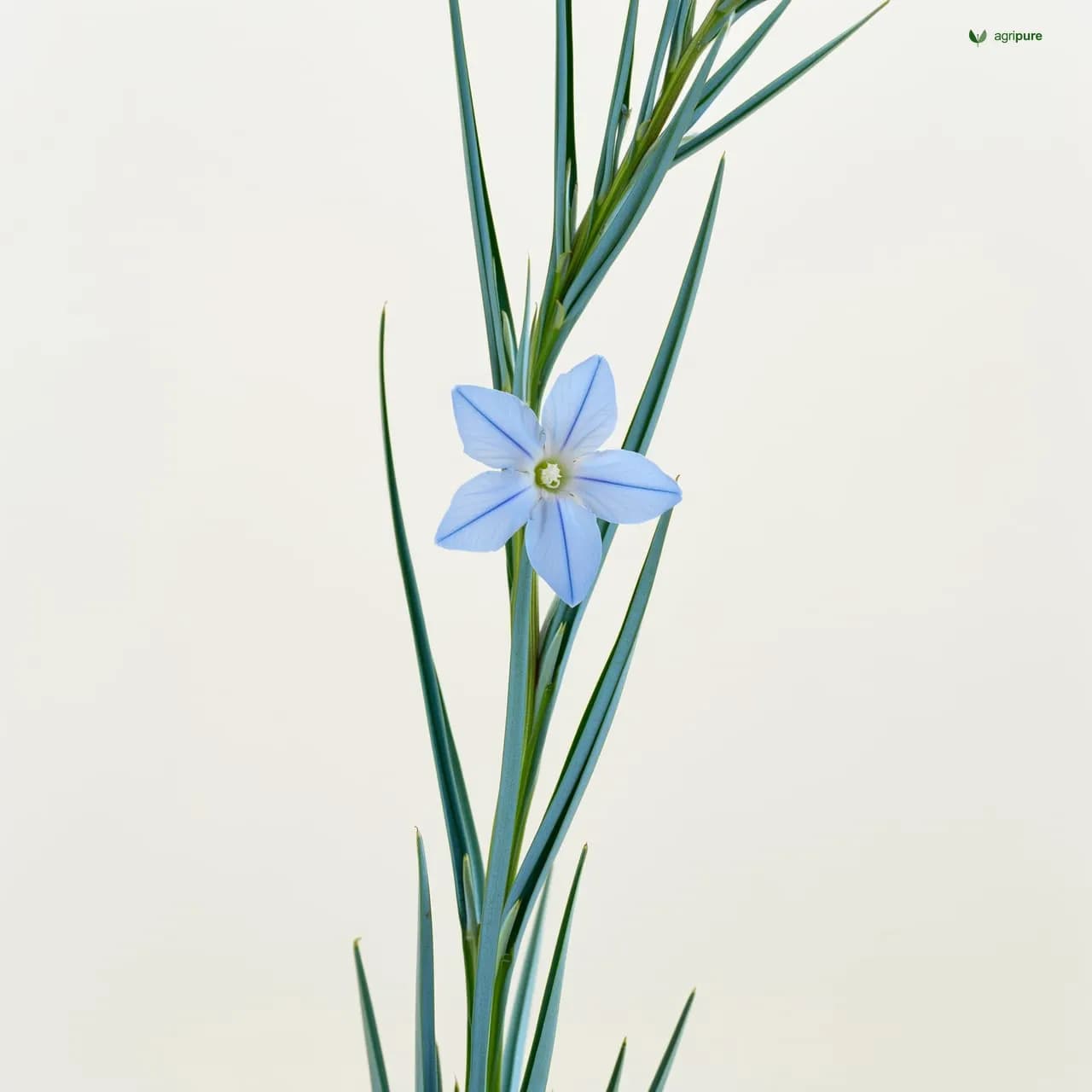
Flax is a slim, erect annual herb, generally about 0.3 to 0.9 m tall (roughly 1 to 3 feet), with detailed agronomic descriptions placing taller plants near a metre. The stems are slender and upright, and linen fibre is obtained from the bast fibres within them. The leaves are narrow and simple, set along the stem, and the plant carries the blue, five-petalled flowers that are the most recognisable field cue for flax and give it real ornamental value. Flowers are followed by dry, round to oval capsules, each holding several seeds. The seeds are flat, smooth, shiny and teardrop-shaped, with a bluntly pointed end that curves slightly to one side, and are generally larger than the seeds of most other Linum species. Seed colour ranges from brown to golden by cultivar; both are the same species and used interchangeably, though growers tend to choose certain types for oil and grain and others for fibre.
Growing linseed
Linseed is grown as an annual because it is not strongly cold tolerant; in its native habitat it can behave as a short-lived perennial, but in cultivation it is more typically grown as an annual. Canadian regulatory biology treats it as a cool-season annual crop suited to high-latitude temperate climates such as the Canadian Prairies, and it is now grown widely as a food and fibre crop across temperate regions, with major production in China, Russia, Canada, the United States, India and Argentina. The practical rule for the home grower: treat linseed as a cool-season annual field crop wherever spring grains will grow.
The crop is propagated by seed, the standard agricultural method, and is self-pollinating, so a single planting sets seed without other plants or pollinators nearby. As a field crop grown in open ground across all its major producing regions, it is best given full sun; standard agronomic practice assumes unshaded conditions for good yield. For soil, the guidance is general: flax is cultivated across a range of mineral soils and does best on well-drained, arable ground of the kind used for cereals and oilseeds. Sowing follows the same pattern as small grains, with seed drilled or broadcast into a prepared seedbed. Precise pH ranges, fertiliser rates, spacing and time-to-harvest figures are not reliably documented in these sources, so they are omitted rather than stated with false precision; in practice, sow it as you would a spring cereal and keep the ground well drained.
Harvest and uses
Linseed is a genuinely dual-purpose crop, valued for edible seed and oil, for industrial use, and for fibre. The harvest is the seed-filled capsule crop, taken when the plant has matured, much as a small grain would be. The seeds are pressed for linseed oil or used whole or ground as flaxseed in food, while the bast fibres stripped from the dried stems are processed into linen — the use behind the species epithet usitatissimum, “most useful”. The seed comes in both brown and golden forms with no practical difference in use, so a grower can choose by preference or availability. The plant also has documented medicinal use, but that carries important cautions set out below.
How to identify it
Flax is straightforward to recognise once in flower, by this combination of features:125
- Habit: Slim, erect annual herb, roughly 0.3 to 0.9 m tall, on a single thin stem.
- Leaves: Narrow and simple, set along the stem.
- Flowers: Distinctive blue, five-petalled flowers — the clearest cue.
- Fruit: Dry, round to oval capsules holding several seeds.
- Seeds: Flat, smooth, shiny, teardrop-shaped, brown to golden, larger than those of most other Linum species.
Safety and cautions
Linseed is widely eaten, but the sources are explicit that the whole plant contains cyanogenic glycosides, can be toxic in large quantities, and may cause drug interactions or specific risks in some people. A few grounded points for any homesteader growing it:
- The cyanogenic compounds mean the plant material should not be consumed raw in large amounts; this is the central toxicity caution attached to flax in the cited sources.
- Flaxseed has a long record of edible and traditional medicinal use, but that is not the same as a proven treatment, and this profile makes no claim that it treats or cures any condition.
- Because interactions and individual risks are documented, anyone pregnant or breastfeeding, or taking prescription medication, should seek qualified advice before using flax medicinally.
Sources
- Linum usitatissimum (Common Flax, Flax, Linseed) — NC State Extension
- Linum usitatissimum L. fact sheet — Seed ID Guide
- Linum usitatissimum (Linseed) — iNaturalist
- Linum usitatissimum L. — GBIF (Global Biodiversity Information Facility)
- Flax — Wikipedia
- The Biology of Linum usitatissimum L. (Flax) — Canadian Food Inspection Agency
- Linum usitatissimum — ScienceDirect Topics