pioneer
Black Cumin
kalonji
Nigella sativa
Also known as Black Seed (United States, Australia), Kalonji (Pakistan, India).
- punjab plains
- sindh coast
- pothohar
International hardiness
- USDA 2-11
- RHS H7
- AU: Mediterranean, Warm temperate, Arid / semi-arid, Cool temperate
Where it grows — regional guide
| Zones / rating | Regional notes |
|---|---|
USDA 2-11 | Cool-season annual grown for pungent black spice seeds; seed is safe in food amounts, but concentrated extracts carry toxicity and should be avoided in pregnancy. |
| Zones / rating | Regional notes |
|---|---|
H7 (below -20C) | RHS rating H7: hardy annual spice herb with feathery foliage and pale blue flowers; avoid non-seed plant parts and concentrated medicinal oils while pregnant. |
| Zones / rating | Regional notes |
|---|---|
Mediterranean, Warm temperate, Arid / semi-arid, Cool temperate | Sown as an autumn or winter annual in mediterranean and semi-arid cropping areas; safe in cooking amounts, but concentrated herbal oil carries toxicity risks. |
| Zones / rating | Regional notes |
|---|---|
USDA 2-11 (USDA scale) Canada uses its own zone system; Canadian zones run roughly one lower than USDA. | No region-specific data yet |
| Zones / rating | Regional notes |
|---|---|
Punjab plains, Sindh coast, Pothohar | Pakistan:A major rabi spice crop sown across Punjab, Sindh and Pothohar for aromatic black seeds; medicinal use of concentrated oil warrants caution during pregnancy. India:Grown across northern plains as a cool-season rabi seed spice; safe as a culinary seasoning, but concentrated seed oils carry toxic risks in excessive doses. |
Grows alongside
Species that appear with Black Cumin in 1 of our published guides — a starting list for a guild, not a planting plan.
Black cumin (Nigella sativa) is an annual flowering plant in the buttercup family (Ranunculaceae), grown mainly for its small, aromatic black seeds. It travels under a long list of names — black seed, black caraway, nigella, fennel flower, kalonji, and charnushka — and is native to a band running from eastern Europe (Bulgaria, Romania) through the Levant, Cyprus, Turkey, Iran, and Iraq, with broader sources placing it across southern Europe, northern Africa, and southern Asia. For a homesteader, the appeal is simple: it is an easy cool-season annual that yields a pungent culinary seed and a long-studied seed oil from a single short growing cycle.
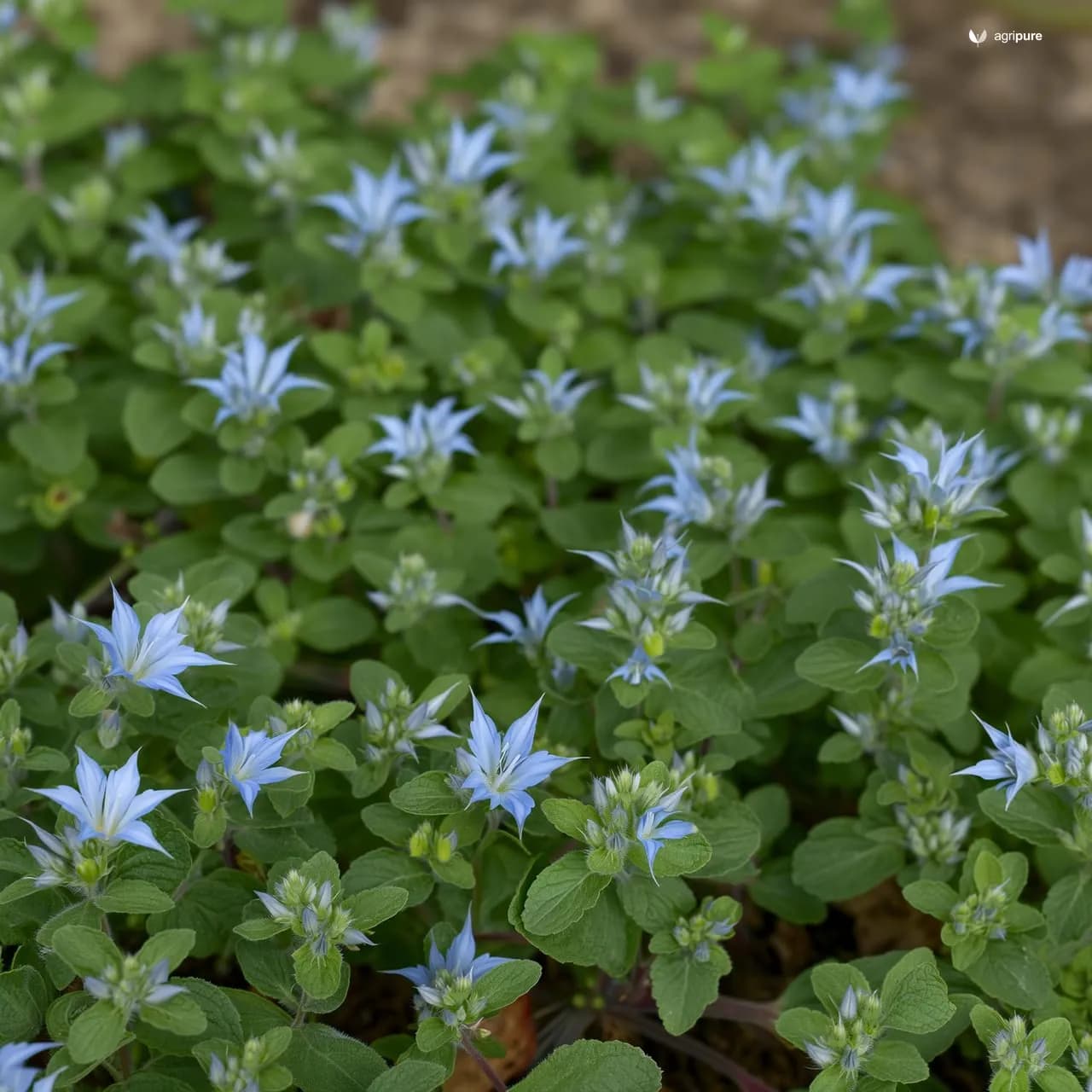
The plant is a slender annual herb, typically around 40 to 70 cm tall (roughly 16 to 28 inches), with fine, wispy, almost thread-like foliage that gives the whole plant an airy look. It carries pale blue or white flowers in the typical Ranunculaceae form — Go Botany notes a superior ovary and the absence of a hypanthium for this species. After flowering, the plant forms distinctive inflated seed capsules holding many seeds. The seeds themselves are black or dark brown, angular to funnel-shaped, with a strong aroma and a slightly bitter, nutty-peppery taste; mature seed has been described as aromatic, pungent, spicy, and fruity, somewhat like nutmeg.
Growing black cumin
Black cumin is propagated by seed only, which suits its annual habit — the seeds form in capsules that are dried, and seed is saved for the next sowing. It is grown as a field spice crop across a wide span, from Morocco through to northern India and Bangladesh, China, East Africa, Russia, and Europe, which tells you a good deal about its tolerances even where formal horticultural data is thin.
- Soil: Its widespread cultivation as a spice crop from North Africa to South Asia points to tolerance of well-drained, moderately fertile soils in climates ranging from semi-arid to sub-humid; it is generally grown on ordinary agricultural ground. No precise pH figure is given in the sources, so none is stated here.
- Sun: It is grown across southern and eastern Europe, the Middle East, and North Africa — regions of full sun and warm summers — and as an open-habitat annual it is best treated as a full-sun crop. None of the sources recommend shade.
- Water: Major production regions span semi-arid to monsoon climates, and the plant is widely grown as a rain-fed field crop. The sources do not give specific irrigation regimes; in practice, keep consistent moisture through germination and early growth, on well-drained soil that avoids waterlogging.
Exact sowing dates, plant spacing, and time-to-maturity figures are not consistently documented in these sources, so they are left out rather than stated with false precision. In the field it is handled as a small-seeded row crop, like other spice seeds, and at homestead scale it is most reliably treated as a cool-season annual sown direct into a fine, weed-free, free-draining bed.
Harvest and uses
The crop is the dried seed. Seeds develop inside the plant’s inflated capsules, which are dried and threshed to release them. The seed and seed oil are the edible products: black cumin is edible as a seed and seed oil in culinary quantities, valued for its pungent, aromatic flavor on breads, in pickles, and as a spice. The seed has also been studied extensively for its phytochemistry and traditional medicinal use, though that work is distinct from any proven treatment. As a homestead crop, its strongest case is a low-input, cool-season annual that yields a high-value spice and seed oil from a modest patch of ground.
How to identify it
Black cumin is recognizable by this combination of features:1346
- Habit: A slender annual herb, roughly 40 to 70 cm tall.
- Foliage: Fine, wispy, thread-like (filiform) leaves giving an airy, feathery appearance.
- Flowers: Pale blue or white, in the typical Ranunculaceae form (superior ovary, no hypanthium).
- Fruit: Inflated capsules containing many seeds.
- Seeds: Black to dark brown, angular or funnel-shaped, strongly aromatic, with a bitter, nutty-peppery taste.
Safety and cautions
Black cumin seed and seed oil are eaten in normal culinary amounts, but the sources are clear that the plant warrants caution beyond that. A few grounded points:
- The seed and seed oil are considered edible in culinary quantities, but other plant parts and concentrated medicinal use require caution, given the general toxicity of the Ranunculaceae family and documented side-effects.
- It has a long record of traditional use and has been studied extensively, but that is not the same as a proven treatment; this profile makes no claim that it treats or cures any condition.
- As a general principle with any concentrated herbal preparation, those who are pregnant or breastfeeding, and anyone on prescription medication, should seek qualified medical advice before using black seed beyond ordinary culinary amounts.
Sources
- Nigella sativa — Go Botany, Native Plant Trust
- Black cumin: which is which — Healthline
- Nigella sativa toxicity and side-effects review — ScienceDirect
- Nigella sativa — Wikipedia
- Black seed health benefits — WebMD
- Black seed — McCormick Science Institute
- Nigella sativa plant profile — USDA PLANTS Database