secondary
Plum — Aloo Bukhara (subcontinent)
aaloo bukhara (آلو بخارا)
Prunus salicina
Also known as Japanese Plum (India, United States, Australia, UK & Ireland, Canada).
- pothohar
- kpk hills
- punjab plains
International hardiness
- USDA 5-9
- RHS H6
- AU: Cool temperate, Warm temperate, Mediterranean
Where it grows — regional guide
| Zones / rating | Regional notes |
|---|---|
USDA 5-9 | Grown across USDA zones 5 to 9 in full sun for early-season summer fruit; site above frost pockets to protect early blooms, and never feed toxic pits or cyanogenic leaves to livestock. |
| Zones / rating | Regional notes |
|---|---|
H6 (-20 to -15C) | Hardy at RHS H6, though its early spring blooms are vulnerable to late frosts that can cut crops; seeds and leaves carry toxic cyanogenic compounds and must not be fed to livestock. |
| Zones / rating | Regional notes |
|---|---|
Cool temperate, Warm temperate, Mediterranean | Suited to cool-temperate, warm-temperate and Mediterranean regions with low winter chill; plant above frost hollows, and keep toxic pits and leaves away from livestock. |
| Zones / rating | Regional notes |
|---|---|
USDA 5-9 (USDA scale) Canada uses its own zone system; Canadian zones run roughly one lower than USDA. | Hardy in milder fruit-growing areas, though early spring flowers risk frost damage; discard pits and prunings because cyanogenic seeds and foliage are toxic to humans and livestock. |
| Zones / rating | Regional notes |
|---|---|
Pothohar, KPK hills, Punjab plains | Pakistan:Cultivated across the KPK hills, Pothohar, and upper Punjab plains for fresh and dried plums; seeds and foliage contain cyanogenic compounds and must not be eaten or fed to livestock. India:Grown in temperate hill tracts for sweet-tart dessert plums that ripen in summer; pits and leaves contain toxic cyanogenic compounds and must be kept away from livestock. |
The Japanese plum (Prunus salicina), widely known across the Indian subcontinent as aloo bukhara, is a small deciduous stone-fruit tree grown for its sweet-tart plums, which are used fresh, dried, and processed. Despite the common English name, it is native not to Japan but to a band of East and Southeast Asia, and it was carried into Japanese, Korean, and Western orchards centuries ago. For a homesteader, its draw is timing and adaptability: it flowers and fruits earlier and needs fewer winter chilling hours than the European plum, which makes it a workable stone fruit for milder-winter sites where P. domestica would crop poorly.
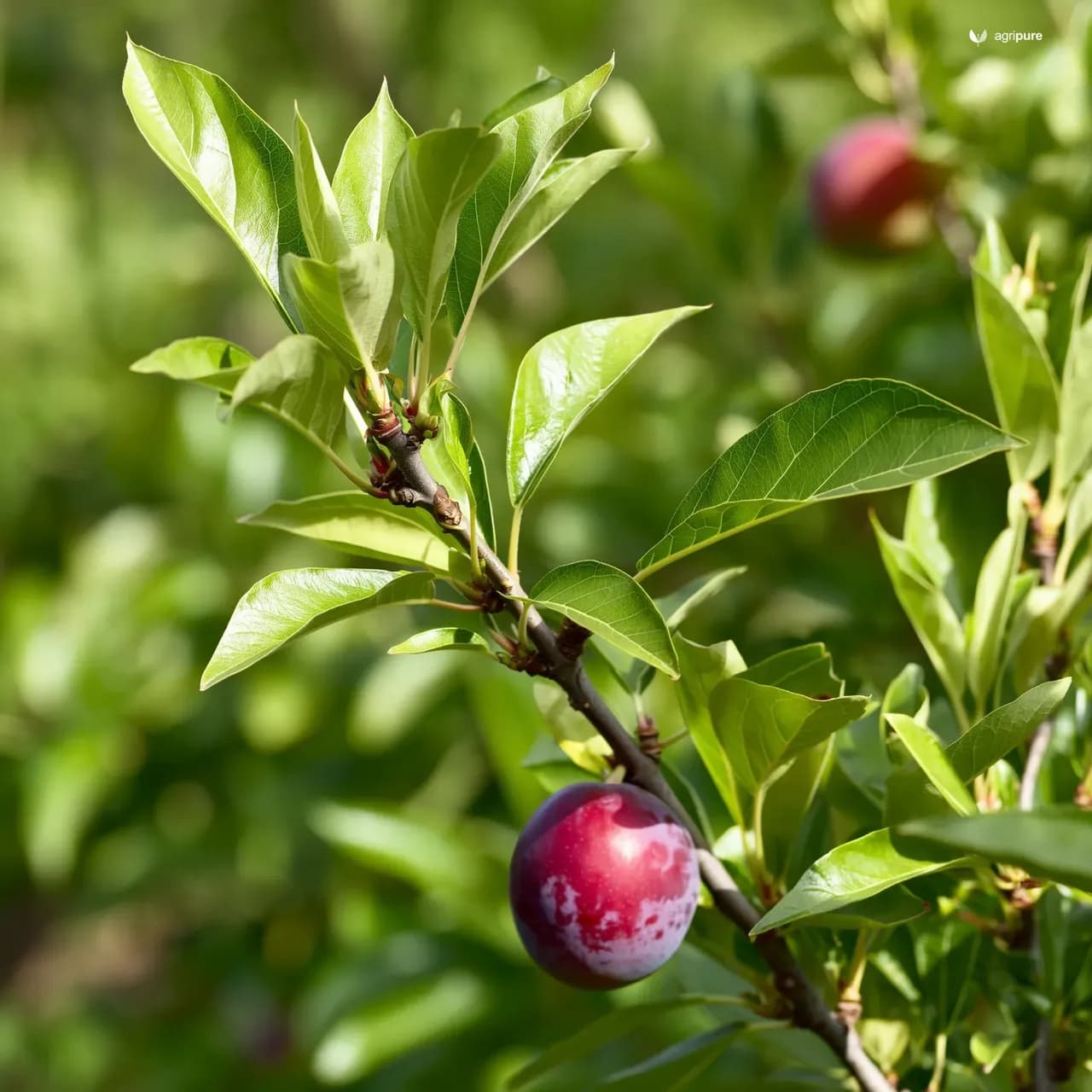
It is a small tree, typically about 20 to 33 ft (6 to 10 m) tall and 15 to 30 ft (4.5 to 9 m) wide at maturity. The leaves are simple and arranged alternately, as is typical of the genus Prunus. In early spring it carries fragrant white flowers, single or in small clusters, opening before or together with the new leaves and noticeably earlier than the European plum. The fruit is a smooth-skinned drupe, red to purple when ripe (yellow, orange, or blue in some cultivars), about 1.5 to 3 in (4 to 7.5 cm) across, with juicy yellow to yellow-pink flesh, ripening in summer.
Growing aloo bukhara plum
The species is native to China, Taiwan, Myanmar, Laos, and Vietnam, where it grows in sparse forests, forest margins, thickets, and along mountain trails and streams at elevations of 200 to 2,600 m. From there it has been widely introduced and cultivated in Japan, Korea, the United States, Australia, and many other temperate regions, including the Indian subcontinent. It does best in warmer temperate climates with mild winters and warm springs, suiting its early flowering, and is less cold-hardy than the European plum. Plant references list it for roughly **USDA hardiness zones 5a to 8b**, where it is grown in coastal, piedmont, and mountain areas that supply enough winter chill.
To establish it well at homestead scale, work from what the sources state plainly:
- Propagation: Listed propagation methods are seed and stem cuttings. In practice, named fruiting cultivars are usually grafted onto compatible rootstocks, but the primary source here specifies seed and cuttings.
- Sun: It performs best in full sun (six or more hours of direct sun a day). It will tolerate partial shade (two to six hours), but fruiting is best in full sun.
- Soil: It prefers well-drained loam at a roughly neutral pH (about 6.0 to 8.0). Good drainage matters for keeping the roots healthy.
- Water: After planting, water regularly to help establishment, then ease off once the roots take hold, letting the top couple of inches of soil dry between waterings so the ground never stays waterlogged. Mature trees still need even moisture during flowering and fruit swell for good yields.
- Spacing: Given its mature spread, horticultural sources recommend roughly 24 to 60 ft between trees, depending on the planting system.
Site the tree above frost pockets where you can. Because it blooms so early, late spring frosts are the main weather risk; they can damage the open blossom and cut the crop on an otherwise healthy tree.
Harvest and uses
The fruit ripens in summer, earlier than the European plum, and is picked as a dessert plum. The plums are eaten fresh, dried, and processed — the dried form is the aloo bukhara familiar in subcontinental kitchens and markets. The sourced material does not give reliable per-tree yield figures or a firm time-to-first-fruit for this species, so those are left out rather than guessed; expect a concentrated summer flush from an established tree.
How to tell it from the European plum
Where both plums might be grown, P. salicina is distinguished by being earlier-flowering and earlier-fruiting and by needing fewer chilling hours than P. domestica. Its smooth-skinned fruit runs red to purple (or yellow, orange, or blue by cultivar), and its flowers are fragrant and white, opening before or with the leaves in early spring. These traits — early bloom, lower chill requirement, and the red-to-purple summer drupe — are the practical field cues that separate the Japanese-type plum from its European cousin.
Safety and cautions
The plum flesh is edible and is the only part to eat. As with other stone fruits, the seeds (pits) and leaves of Prunus salicina are poisonous if consumed in quantity because they contain cyanogenic compounds; they should not be eaten. Enjoy the fruit, and keep the pits and foliage off the menu, including for livestock that might browse prunings or wilted leaves.
Sources
- Prunus salicina — North Carolina Extension Gardener Plant Toolbox, NC State Extension
- Prunus salicina — Wikipedia
- Japanese Plum (Prunus salicina) — My Garden Life Plant Library
- Prunus salicina care — Western Star Nurseries
- Introgression of Prunus Species in Plum — New York State Horticultural Society