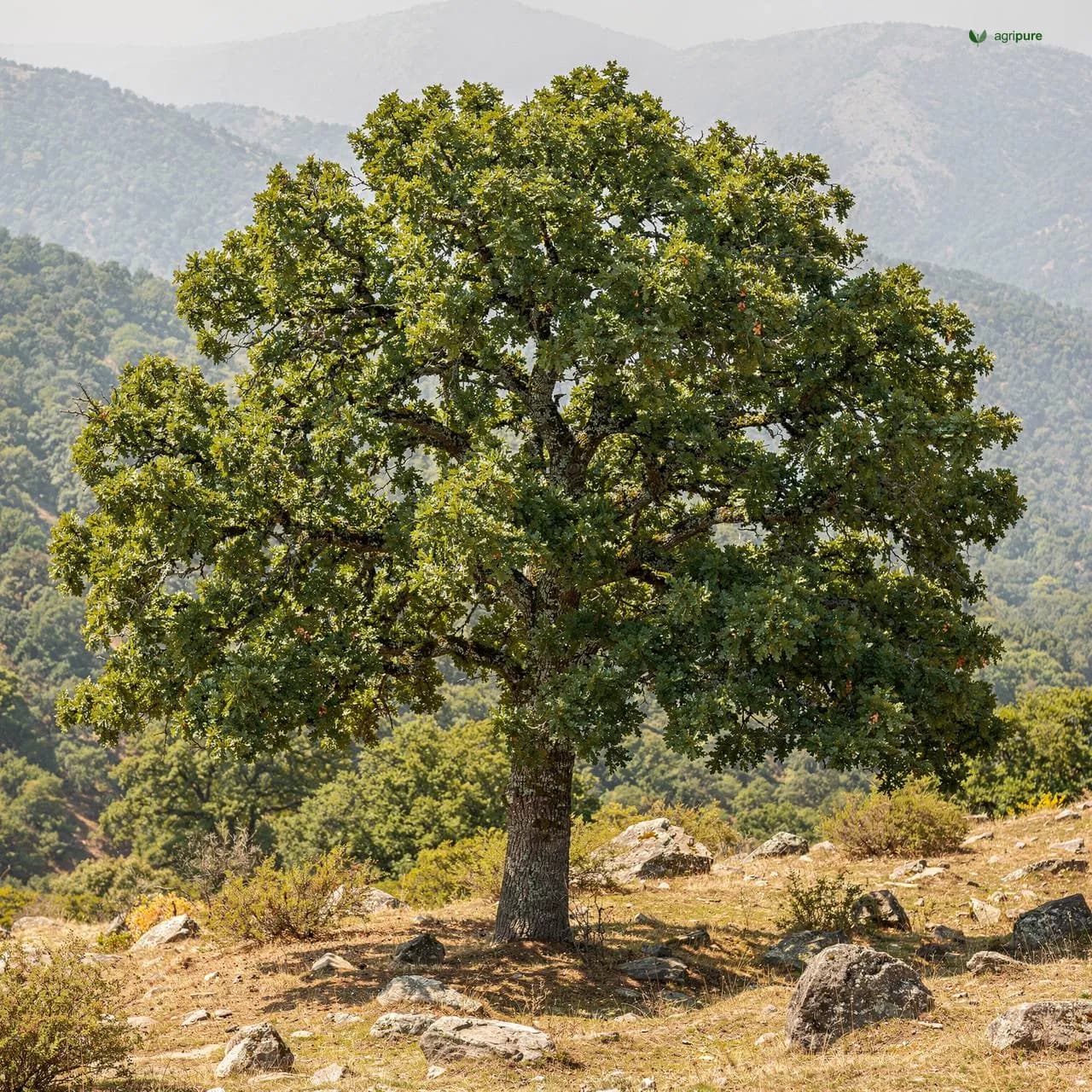
climax
Green Oak (Moru Oak)
moru
Quercus dilatata
- kpk hills
International hardiness
- USDA 7-9
- RHS H4
- AU: Cool temperate, Warm temperate
Where it grows — regional guide
| Zones / rating | Regional notes |
|---|---|
USDA 7-9 | No region-specific data yet |
| Zones / rating | Regional notes |
|---|---|
H4 (-10 to -5C) | No region-specific data yet |
| Zones / rating | Regional notes |
|---|---|
Cool temperate, Warm temperate | No region-specific data yet |
| Zones / rating | Regional notes |
|---|---|
USDA 7-9 (USDA scale) Canada uses its own zone system; Canadian zones run roughly one lower than USDA. | No region-specific data yet |
| Zones / rating | Regional notes |
|---|---|
KPK hills | Pakistan:A dominant native climax evergreen oak of cool, moist upper slopes in KPK; provides construction timber and winter browse, requiring protection from over-lopping. India:A key native evergreen canopy oak of the western Himalayan moist-temperate belt; yields dense firewood and winter leaf-fodder on deep, well-watered slopes. |
Green oak or moru oak (Quercus dilatata, also known as Quercus floribunda, locally moru) is the mid-elevation, moist-temperate oak of the western Himalaya, sitting above ban oak on the cooler, deeper-soiled slopes of the KPK hills. It is valued for charcoal, construction timber, and winter browse, and it is one of the climax oaks of the high forest. On a syntropic site you plant it for the long structure of the canopy and the shelter it throws over everything below, not for an early harvest.
Where it thrives
Moru oak holds the temperate belt of the western Himalaya from Nepal westwards, at altitudes of roughly 2,100 to 2,700 m, descending to about 1,700 m in cool, moist pockets. Its range runs through Afghanistan, Pakistan, India’s western Himalaya, and Nepal. Although it grows on all aspects, it avoids very dry sites and favours moist, cool, northerly slopes with deep, fertile soil. In Pakistan that places it on the higher, wetter KPK slopes above the ban-oak belt, where it is one of the dominant trees of the moist-temperate forest.
Role in the system
Treat moru oak as a climax canopy tree for the cool, moist mid-elevation forest. It is a large evergreen oak, slow and long-lived, so its role is to hold the site over a long horizon and anchor soil on deep-soiled slopes once the early pioneers have done their work. Its dense crown casts year-round shade and shelter over the understorey, and its litter and roots build soil on the slope. As a long-lived, indigenous canopy oak it is also rated for its carbon storage and sequestration, so on a planting it does the slow work of locking carbon into wood and soil while the understorey carries the short-term yield. It belongs with the other moist-temperate trees of the high forest and is set to inherit the top stratum as lighter nurse species thin out.
Uses
Moru oak is a genuine multipurpose tree. It provides fuelwood, charcoal, and timber for construction and farm implements, and it is an important fodder tree in parts of the Himalaya, where the crowns are extensively lopped for leaf-browse. The hard, heavy wood makes excellent charcoal, the timber goes into building and tools, and the foliage carries hill livestock through the winter. As an evergreen oak it keeps its canopy and its soil-building leaf-fall going year round, one of the roughly 35 Quercus species that dominate the moist-temperate Himalayan forest between about 1,000 and 3,500 m. Over its long life the same tree supplies fuel, durable wood, winter fodder, and the deep shelter of a closed canopy.
Cautions
As with ban oak, the threat is over-use. Grazing, fuelwood cutting, and fodder lopping have thinned oak forests across the western Himalaya, so a planting needs a light lopping cycle and protection from heavy browsing if crowns are to recover. It is slow, demands cool, moist, deep ground, and is raised from acorns that must be sown fresh, so it rewards patience and a well-chosen site.
Sources
- Heuzé, V., Tran, G. et al. “Moru oak (Quercus floribunda).” Feedipedia, INRAE, CIRAD, AFZ & FAO.
- Wikipedia contributors. “Quercus floribunda.” Wikipedia.
Sourcing notes
Raise from acorns gathered fresh and sown immediately, since they do not tolerate drying or storage. Source acorns from healthy trees on cool, moist northern slopes at 2,000 m and above to match the species to its mid-elevation niche.