climax
Holly Oak (Ban Oak)
rinj / ban
Quercus incana
Also known as Banj Oak (India).
- kpk hills
- pothohar
International hardiness
- USDA 8-9
- RHS H4
- AU: Cool temperate, Warm temperate
Where it grows — regional guide
| Zones / rating | Regional notes |
|---|---|
USDA 8-9 | No region-specific data yet |
| Zones / rating | Regional notes |
|---|---|
H4 (-10 to -5C) | No region-specific data yet |
| Zones / rating | Regional notes |
|---|---|
Cool temperate, Warm temperate | No region-specific data yet |
| Zones / rating | Regional notes |
|---|---|
USDA 8-9 (USDA scale) Canada uses its own zone system; Canadian zones run roughly one lower than USDA. | No region-specific data yet |
| Zones / rating | Regional notes |
|---|---|
KPK hills, Pothohar | Pakistan:The defining native evergreen oak of the Murree hills and KPK ranges; provides lasting slope shelter, firewood, and essential leaf-fodder for livestock. India:A keystone native evergreen oak of the lower western Himalayan forest from Himachal to Uttarakhand; heavily relied upon for firewood, compost, and livestock fodder. |
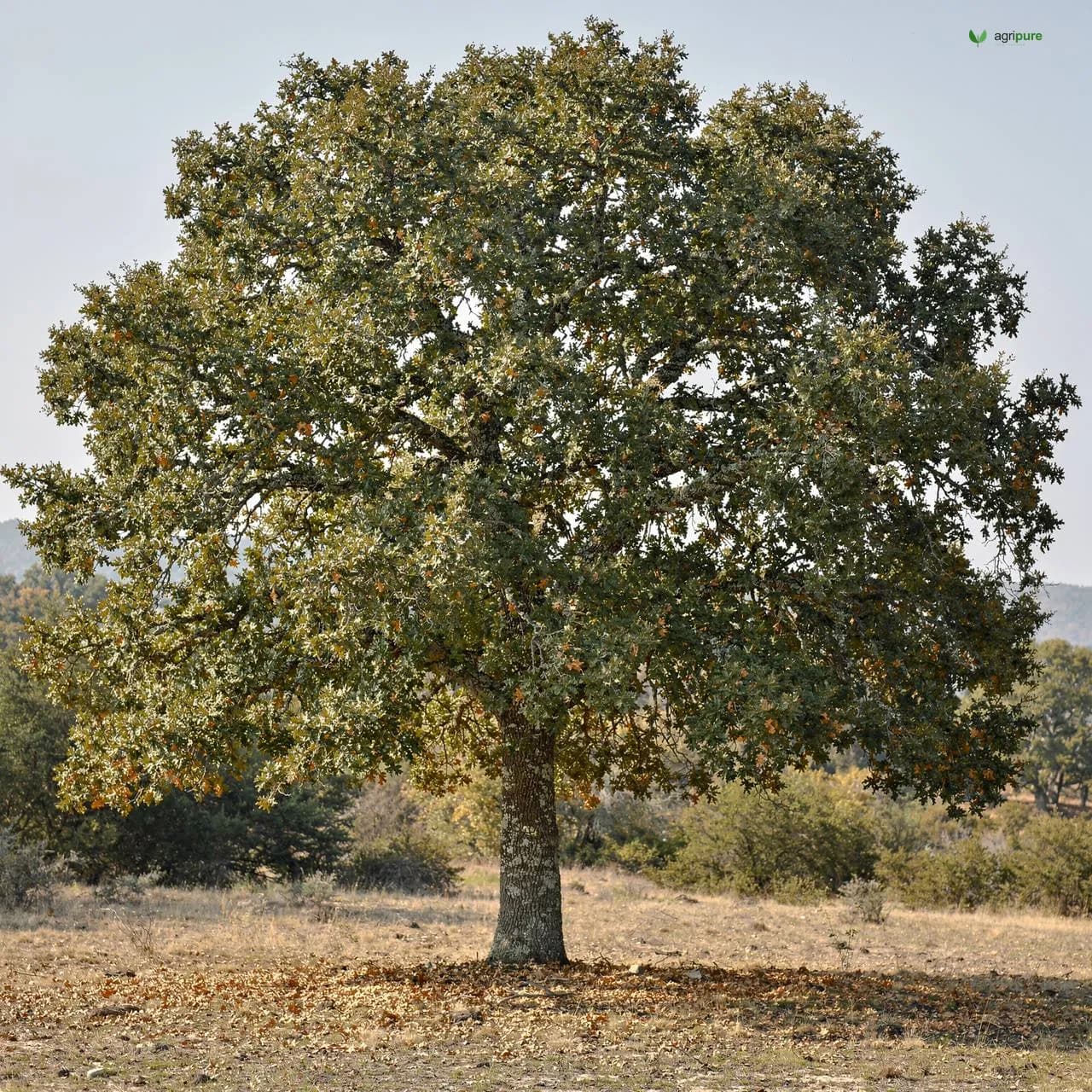
Holly oak or ban oak (Quercus incana, now usually treated as Quercus leucotrichophora, locally rinj or ban) is the dominant lower-elevation oak of the Murree hills and the KPK ranges, reaching down onto the higher Pothohar ground. Its acorns and leaf-fodder are a mainstay for hill livestock, and the whole tree is one of the workhorses of the rural economy in these hills. On a syntropic site it is a climax canopy tree: slow, evergreen, and planted for the long structure of the forest rather than a quick yield.
Where it thrives
Ban oak holds the mild, moist belt of the lower western Himalaya. In the Himalaya it is found at altitudes of roughly 1,500 to 2,400 m, descending lower on cooler aspects, and it is best adapted to a mild and moist climate where annual rainfall is high. Its distribution runs through Pakistan, northern India, Nepal, and Myanmar. It flowers in spring and the solitary acorns ripen toward the end of the year. In Pakistan that places it across the Murree and Galyat hills and the moister KPK slopes, where it is the defining oak of the lower temperate forest.
Role in the system
Treat ban oak as a climax canopy tree, the species that defines the mature forest in these hills. It is slow and long-lived, so its role is to hold the site and anchor soil on hill slopes once faster pioneers have come and gone. As an evergreen it casts year-round shade and shelter over the understorey layers, and its deep litter and roots build and hold soil on steep ground. It comes in under lighter nurse species and takes over the top stratum as those thin out, which is the layering-in-time logic of a syntropic planting.
Uses
The everyday returns are fuel and fodder. Ban oak is a major source of fuelwood and of leaf-fodder, lopped through the year for hill livestock, and the leaf litter is gathered for compost and bedding, so it sits at the centre of the rural farm economy across the hills. The acorns feed stock and wildlife, and the hard, heavy wood is used for fuel, charcoal, and rough timber and tools. Across a year the same tree gives firewood, winter browse, leaf compost, and shelter, which is why it is so heavily relied on, and so heavily cut.
Cautions
The pressure on ban oak is the warning. Heavy lopping for fodder and cutting for fuel have degraded many stands, so on a planting the tree needs protection from over-browsing and a lopping cycle light enough to let crowns recover. It is slow to establish and germinates from acorns that do not store well, so sow them fresh. Because whole hill communities lean on it for fuelwood, leaf-fodder, and compost, the demand on any single tree is heavy, and a planting only repays the wait if that load is spread across enough trees to let each one recover.
Sources
- Wikipedia contributors. “Quercus leucotrichophora.” Wikipedia.
- Heuzé, V., Tran, G. et al. “Banj oak (Quercus leucotrichophora).” Feedipedia, INRAE, CIRAD, AFZ & FAO.
Sourcing notes
Raise from acorns collected fresh in late autumn and sown at once, because acorns lose viability fast in storage. Seedlings are available through KPK and Punjab hill nurseries; choose stock from local moist-slope trees for the Murree and Galyat belt.