pioneer
Foxtail Millet
kakum
Setaria italica
Also known as Kakum (Pakistan).
- punjab plains
- pothohar
- kpk hills
International hardiness
- USDA 10-12
- RHS H2
- AU: Subtropical, Warm temperate, Arid / semi-arid, Mediterranean
Where it grows — regional guide
| Zones / rating | Regional notes |
|---|---|
USDA 10-12 | Grown as a warm-season annual forage or birdseed crop; avoid feeding drought-stressed stands to livestock, as nitrate accumulation and horse disorders can occur. |
| Zones / rating | Regional notes |
|---|---|
H2 (1 to 5C) | No region-specific data yet |
| Zones / rating | Regional notes |
|---|---|
Subtropical, Warm temperate, Arid / semi-arid, Mediterranean | Suited to warm-temperate, subtropical, and arid summer cropping as quick forage; manage drought-stressed feed carefully to prevent nitrate poisoning in livestock. |
| Zones / rating | Regional notes |
|---|---|
USDA 10-12 (USDA scale) Canada uses its own zone system; Canadian zones run roughly one lower than USDA. | No region-specific data yet |
| Zones / rating | Regional notes |
|---|---|
Punjab plains, Pothohar, KPK hills | Pakistan:A fast-maturing summer kharif grain and fodder grass across the plains and hills; exercise care when grazing horses or feeding drought-stressed stands due to nitrate risk. India:An ancient warm-season grain and drought-hardy fodder across dryland farming systems; avoid using as a sole feed for horses and beware of nitrate buildup in drought. |
Foxtail millet (Setaria italica) is a warm-season annual grass grown for grain and for forage, widely adapted to semi-arid temperate and subtropical climates. It is thought to be native to southern Asia and is one of the oldest cultivated millets, with archaeological evidence of cultivation along the Yellow River in China around 8,000 years ago. For the homesteader it is a fast, small-seeded cereal that packs a full grain crop into a single hot summer, makes a quick cover or wildlife planting, and asks little of the soil it grows in.
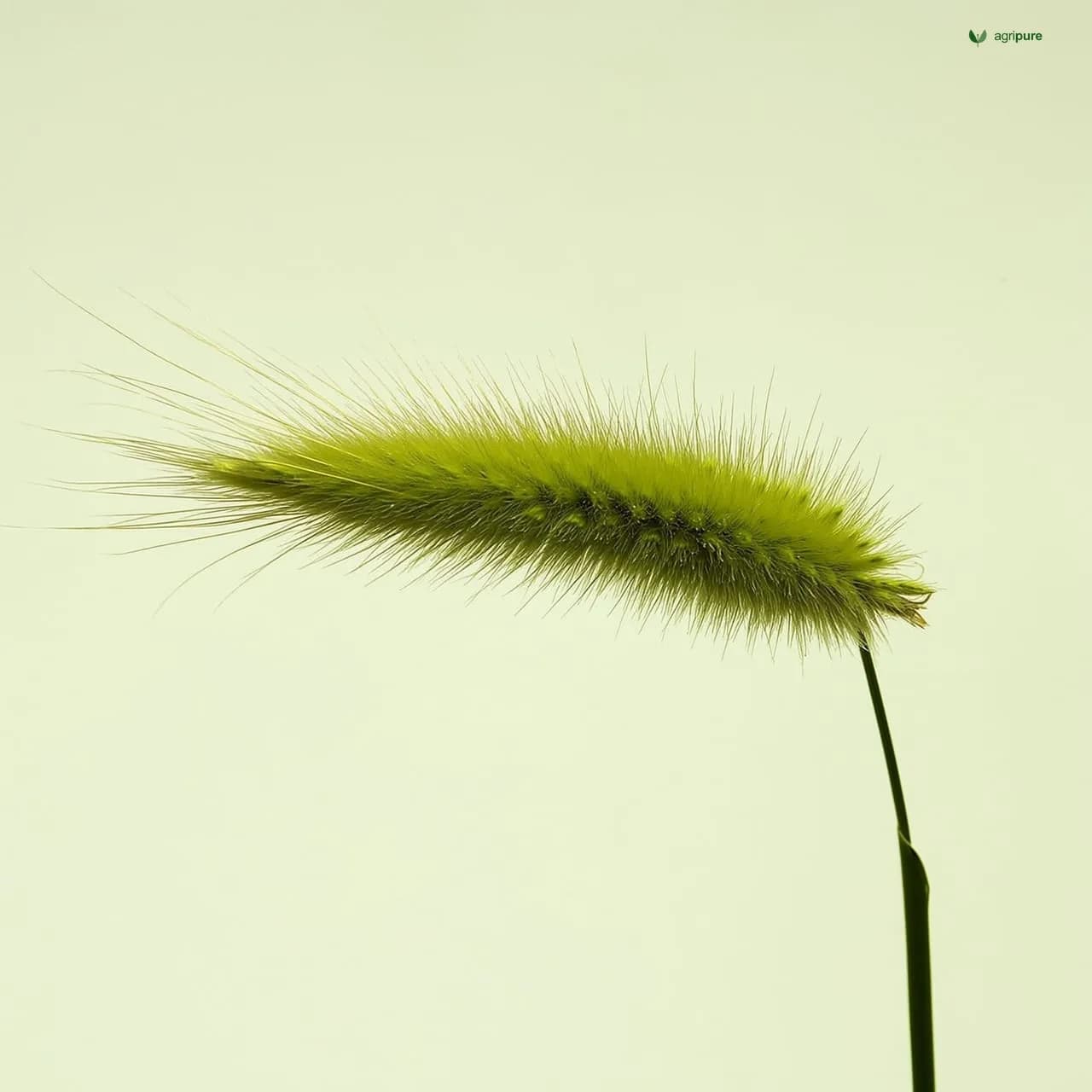
The plant is an erect, leafy grass standing roughly 2 to 5 feet (60 to 152 cm) tall, with coarse but leafy stems that are more slender than those of pearl millet. Its blades are the linear, alternately arranged leaves typical of the grass family (Poaceae, tribe Paniceae). The signature feature is the seedhead: a dense, cylindrical “foxtail” panicle 5 to 30 cm (2 to 12 in) long that looks hairy from its many bristles. The seeds are small caryopses about 2 mm across, wrapped in a thin papery hull that threshes easily, and seed colour varies with cultivar from yellow to red. The species also goes by Italian millet, German millet, Hungarian millet, and foxtail bristlegrass, and carries the botanical synonym Panicum italicum.
Growing foxtail millet
Foxtail millet is propagated by seed only; there is no vegetative propagation of the crop. Sow into a firm, well-prepared seedbed about a quarter to half an inch deep (roughly 0.6 to 1.3 cm). Standard agronomic seeding rates are about 15 to 20 lb per acre when drilled, or 20 to 30 lb per acre when broadcast. Because it is a warm-season crop, wait until the soil has warmed to at least 65°F (about 18°C) before planting, which usually means late spring or early summer.
It is not fussy about soil, growing in sandy to loamy ground across a pH range of roughly 5.5 to 7, and it performs best where drainage is good; it is not a wetland plant. One of its useful traits for difficult ground is good salinity tolerance relative to many other cereals. Give it full sun, which agronomic and wildlife sources list as its preferred exposure. On water it is genuinely drought tolerant as a forage crop and grows rapidly in warm weather, holding up through hot, summer-rainfall conditions such as those in Mississippi. That said, the crop has shallow roots and does not recover well from severe drought, so it tolerates dry spells better than a prolonged, deep drought. It can be grown from the plains up to about 1,500 m in elevation.
Harvest and uses
Foxtail millet is edible and is widely used as human food and as animal feed. The grain is the primary harvest: the small seeds sit in a thin, papery hull that threshes off easily, which makes hand-cleaning a modest crop manageable on a homestead scale. Beyond grain, it doubles as a forage and as a quick wildlife or cover planting, valued for its leafy, fine-stemmed growth and the cover its dense seedheads provide. Its short, fast cycle and tolerance of cooler, drier conditions than many other millets make it a practical catch crop where the warm season is real but not endless.
Where it grows and as a volunteer
Today foxtail millet is grown widely in China, India, Russia, Africa, and the United States; within the U.S. it is concentrated in the northern and western Great Plains and Midwest, including the Dakotas, Colorado, Kansas, Nebraska, and Wyoming. It is a warm-season crop suited to cooler, drier regions than many other millets. Gardeners should know it readily escapes cultivation: volunteer populations turn up along roads, fields, railways, and other disturbed ground in New England and elsewhere. It is a facultative upland species, usually found in non-wetland sites but occasionally in moist areas, and rarely if ever in true wetlands. If you grow it, plan to clean up volunteers so the planting does not spread beyond its bed.
Safety and cautions
While the grain is a staple food and the plant is a common feed, there are forage cautions worth noting. Foxtail millet can cause problems in horses and, like many summer grasses, may accumulate nitrates under drought stress when used as forage. If you intend to feed it to livestock, treat drought-stressed stands with care and avoid relying on it as a sole feed for horses.
Sources
- “Setaria italica (foxtail millet)” – Go Botany, Native Plant Trust
- “Foxtail millet” – Wikipedia
- “Foxtail Millet” – Roundstone Native Seed
- “Foxtail Millet (Setaria italica)” – Mississippi State University Extension
- “Plant Guide: Foxtail Millet (Setaria italica)” – USDA NRCS
- “Foxtail Millet (Setaria italica)” – Frontiers in Plant Science