secondary
Brinjal
baingan
Solanum melongena
Also known as Eggplant (United States, Canada, Australia), Aubergine (UK & Ireland), Baingan (Pakistan).
- punjab plains
- sindh coast
- pothohar
International hardiness
- USDA 10-11
- RHS H2
- AU: Tropical, Subtropical, Warm temperate, Mediterranean
Where it grows — regional guide
| Zones / rating | Regional notes |
|---|---|
USDA 10-11 | Grown as a warm-season annual in sunny beds after all frost has passed; cook the ripe fruit thoroughly and avoid consuming leaves, stems, or unripe fruit. |
| Zones / rating | Regional notes |
|---|---|
H2 (1 to 5C) | Rated RHS H2, it requires a warm greenhouse or sunny sheltered spot through summer to fruit; vegetative parts and unripe fruits carry toxic alkaloids. |
| Zones / rating | Regional notes |
|---|---|
Tropical, Subtropical, Warm temperate, Mediterranean | Cultivated as a warm-season annual across subtropical and Mediterranean areas; harvest mature fruit for cooking, and treat all green foliage as inedible. |
| Zones / rating | Regional notes |
|---|---|
USDA 10-11 (USDA scale) Canada uses its own zone system; Canadian zones run roughly one lower than USDA. | Grown as a summer annual under plastic or in warm containers to beat short summers; leaves and unripe fruits contain bitter alkaloids and must not be eaten. |
| Zones / rating | Regional notes |
|---|---|
Punjab plains, Sindh coast, Pothohar | Pakistan:A popular warm-season vegetable across the Punjab plains and Sindh coast; cook the ripe fruit for food and discard leaves and stems due to toxic alkaloids. India:A staple warm-season kitchen and field vegetable across the subcontinent; eat only the cooked mature fruit, as unripe fruit and vegetative foliage contain alkaloids. |
Grows alongside
Species that appear with Brinjal in 19 of our published guides — a starting list for a guild, not a planting plan.
Eggplant (Solanum melongena), also called brinjal or aubergine, is a warm-season fruit vegetable in the nightshade family (Solanaceae), the same family as tomato, potato, and pepper. Botanically it is a tender perennial shrub, but homesteaders almost always grow it as a single-season annual, raising fresh plants from seed each year and pulling them once the weather turns. Genetic and phylogeographic work traces the eggplant clade to Pleistocene origins in northern Africa, with dispersal into tropical Asia giving rise to Solanum insanum, the wild progenitor of the cultivated species, and floristic sources record its long-cultivated home range as the Indo-Burmese region of South and Southeast Asia. For the home grower, it is the heat-loving plant that turns a hot, sunny bed into a long run of glossy, meaty fruit.
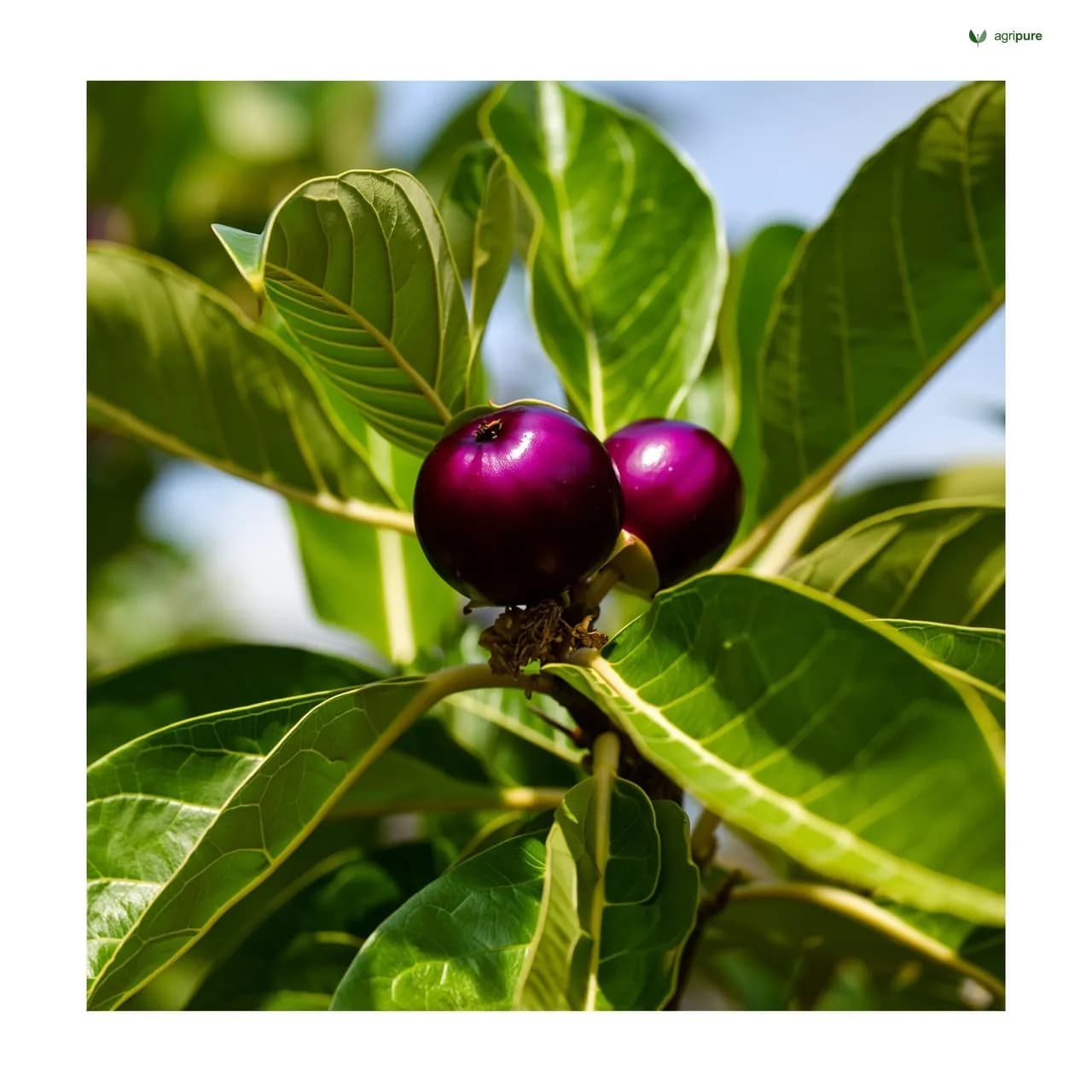
Eggplant grows as an erect, branching shrub up to about 1.5 m (roughly 5 ft) tall, with stems that are herbaceous when young and turn woody with age. The leaves are large, hairy, and ovate to ovate-oblong with wavy, sinuately lobed margins; cultivated plants typically carry coarse, lobed leaves about 10 to 20 cm long and 5 to 10 cm wide, ranging from green to purple-tinged depending on the variety. The flowers are purple and funnel-shaped, with five or six pointed lobes that give them a star-like outline, often drooping and roughly 3 to 4 cm across; individual flowers may be bisexual or male. The fruit is botanically a berry with a smooth, glossy skin and spongy, absorbent flesh holding numerous small, soft seeds.
Growing eggplant
Eggplant is a tropical to subtropical, monsoonal crop and a frost-tender plant: it is a delicate tropical perennial usually grown as a tender or half-hardy annual in temperate climates, valued for warm-season performance rather than any winter hardiness. As a perennial it broadly suits frost-free, long-season conditions in roughly USDA zones 9 to 12; in cooler zones it is grown successfully as a warm-season annual from transplants, provided soil and night temperatures stay well above freezing. (Those zone numbers are an interpretive mapping from the plant’s tropical-perennial description, not a figure from a single primary source.)
Eggplant is propagated primarily by seed. Under suitable conditions, seed germinates in about 14 days, so starting it in warm, controlled conditions ahead of the season gives the plant the long, warm run it needs to fruit. Because the species is delicate and frost-sensitive, the standard approach in temperate gardens is to raise transplants and set them out only once the danger of frost has passed and the ground has warmed, which mirrors how it is grown across both subtropical and tropical regions worldwide. The general botanical and horticultural sources gathered here do not give consistent figures for sowing temperature, plant spacing, or exact days to maturity, so those details are intentionally left out rather than stated with false precision; in practice, treat eggplant like other heat-loving solanaceous fruit crops and give it a warm, sunny, well-drained bed.
Harvest and uses
The fruit is the harvest, and it is best gathered while the skin is still smooth and glossy, the stage at which the flesh is at its best. Fruit size and shape vary enormously by cultivar: from egg-shaped or round to long and elongated, and from about 2.5 cm (1 in) up to as much as 40 cm long and 20 cm wide on the largest types. Colour is most commonly purple, but cultivars range through white, yellow, red, and variegated. The spongy, absorbent flesh is what makes eggplant so versatile in the kitchen; it is grown predominantly as a fruit vegetable across the subtropics and tropics and cooked rather than eaten raw. The many small seeds inside are technically edible but bitter, owing to nicotinoid alkaloids in the plant.
Safety and cautions
Eggplant fruit is safe to eat when ripe and properly prepared, and it is one of the most widely grown fruit vegetables in the world. As with other members of the nightshade family, however, the unripe fruit and the vegetative parts of the plant contain alkaloids and should not be eaten in quantity. The seeds in the fruit carry a bitter taste traced to nicotinoid alkaloids, a reminder that the edible value sits in the cooked, mature fruit rather than in the rest of the plant. Treat the leaves and stems as inedible, and enjoy the fruit cooked and ripe, as it has been used for centuries.
Sources
- Solanum melongena – National Parks Board (NParks), Singapore Flora & Fauna Web
- Solanum melongena research – National Center for Biotechnology Information (PMC)
- Eggplant – Wikipedia
- Solanum melongena – Missouri Botanical Garden Plant Finder
- Solanum melongena – ScienceDirect Topics
- Eggplant clade phylogeography – American Journal of Botany (Botanical Society of America)