secondary
Tomato
tamatar
Solanum lycopersicum
Also known as Tamatar (Pakistan).
- punjab plains
- sindh coast
- pothohar
- kpk hills
International hardiness
- USDA 10-11
- RHS H1c
- AU: Tropical, Subtropical, Warm temperate, Mediterranean
Where it grows — regional guide
| Zones / rating | Regional notes |
|---|---|
USDA 10-11 | Grown as a frost-tender summer annual across the country; avoid planting near walnut trees due to juglone sensitivity, and consume only the ripe fruit. |
| Zones / rating | Regional notes |
|---|---|
H1c (5 to 10C) | Rated RHS H1c, it is grown outdoors in warm summers or under glass in cooler districts; keep away from walnut roots and treat non-fruit foliage with caution. |
| Zones / rating | Regional notes |
|---|---|
Tropical, Subtropical, Warm temperate, Mediterranean | Cultivated as a warm-season annual across temperate and subtropical zones; isolate from walnut tree roots due to juglone, and do not eat the green foliage. |
| Zones / rating | Regional notes |
|---|---|
USDA 10-11 (USDA scale) Canada uses its own zone system; Canadian zones run roughly one lower than USDA. | Raised as a summer annual after the last spring frost; site beds away from walnut trees due to juglone toxicity, and treat all vegetative green foliage as inedible. |
| Zones / rating | Regional notes |
|---|---|
Punjab plains, Sindh coast, Pothohar, KPK hills | Pakistan:A staple warm-season vegetable grown across the plains and hills; protect from walnut root zones due to juglone, and harvest only the ripe fruit for eating. India:A major kitchen-garden and field crop grown in warm seasons; site away from walnut litter and roots due to juglone, and treat non-fruit green tissue as inedible. |
Grows alongside
Species that appear with Tomato in 300 of our published guides — a starting list for a guild, not a planting plan.
Tomato (Solanum lycopersicum) is a tender, branching vine in the nightshade family, Solanaceae, grown almost everywhere for its juicy, edible berries. Kew records the species as native to Peru, and the wild relatives of the cultivated tomato are native to western South America. Although it is botanically a perennial in frost-free climates, it is grown almost universally as a warm-season annual in the vegetable garden, set out after the last frost and pulled at the end of the season. For the homesteader it is the reliable summer staple: easy to raise from seed, productive over a long picking window, and endlessly useful in the kitchen.
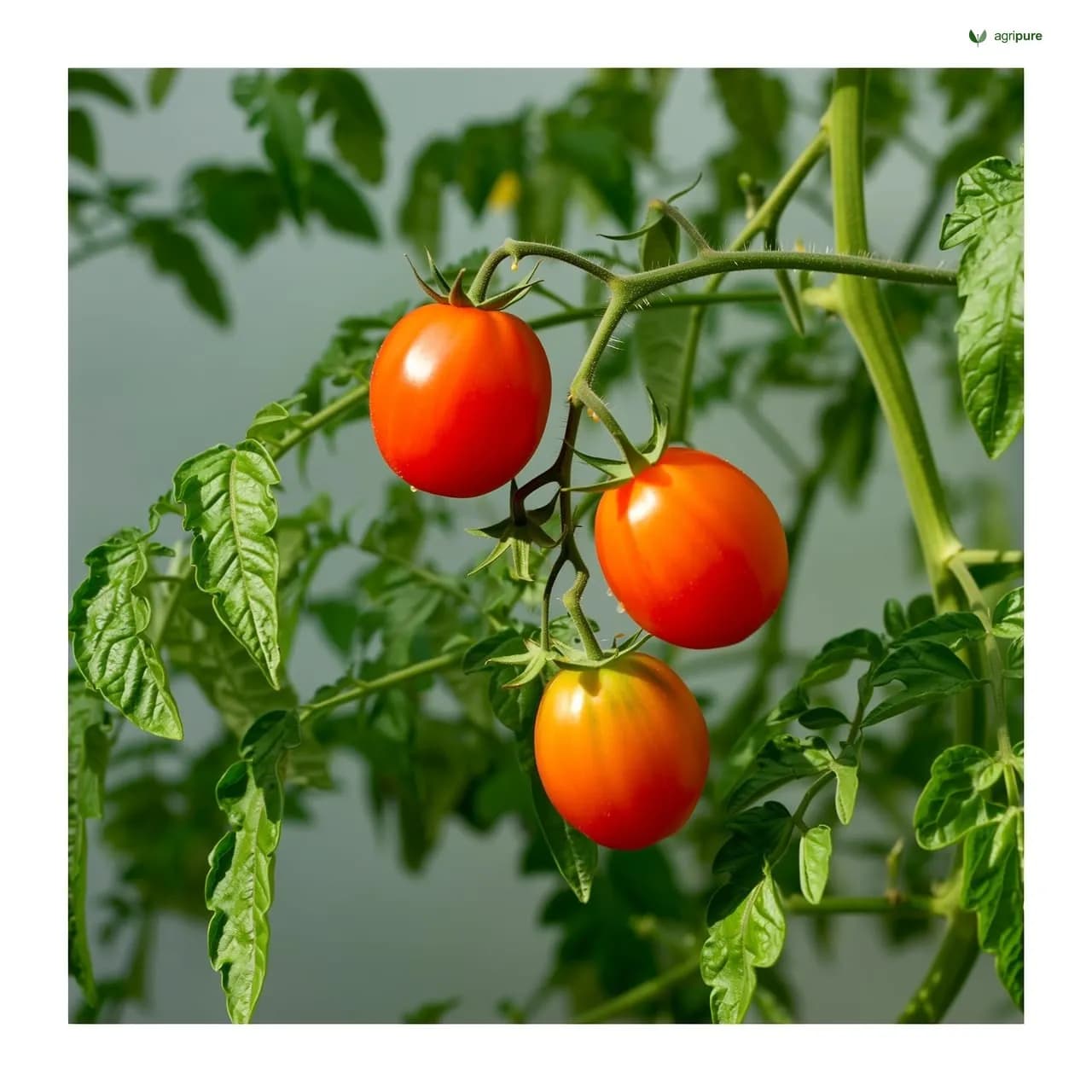
The plant grows as a soft, sprawling vine that climbs to about 2 metres when given support, with fine hairs covering the stems and leaves. It carries small, yellow, five-petaled flowers that give way to green berries, which ripen to red, yellow, orange, purple, or other colours depending on the cultivar. The fruit is the edible part, and the range of fruit colour and form across varieties is one of the species’ most distinctive traits at maturity.
Growing tomato
Tomato is a warm-season plant that should go outdoors only after the danger of frost has passed; in cooler climates it is grown as an annual. The usual route is to start seed indoors about five to six weeks before the last frost, or to buy ready-grown transplants; direct sowing outdoors works only in larger patio containers around the last frost date. The crop demands full sun.
It grows best in average, medium-moisture, well-drained garden soil and prefers a moist, humusy, deep, fertile loam. Keep plants regularly watered through the season. Spacing depends on how you train the vines: for standard plantings, set rows about 4 to 5 feet apart with plants 2 to 4 feet apart within the row, while staked or caged plants can be spaced about 1.5 feet apart. Mulch around the plants to conserve moisture and suppress weeds, and rotate the crop from season to season to reduce disease pressure.
Harvest and uses
The harvested product is the ripe fruit, which is eaten fresh, dried, or cooked into sauces, soups, curries, and a wide range of other dishes. Beyond fresh eating, the same fruit moves easily into processed forms such as sauces and soups, making tomato one of the most versatile crops a household can grow. The research behind this profile does not give a reliable days-to-maturity figure or a quantitative yield for the species, so those numbers are left out rather than guessed at.
Placement and companions
One placement caution is worth noting: tomato is sensitive to juglone and may perform poorly when planted near black walnut trees, whose roots and litter release the compound into the soil. Keep tomato beds well away from black walnuts, and pair the heavy-feeding vines with the usual garden mulching and rotation practices to keep them productive.
Safety and cautions
The fruit is the edible part and the main harvested portion of the plant. Tomato belongs to the nightshade family, which is a reasonable reason for general caution, but the sources behind this profile do not specifically document the toxicity of the foliage, stems, or unripe fruit of Solanum lycopersicum, so no firm claim is made about which non-fruit parts are poisonous. No medicinal-use monograph or dosing information was available in the research, so none is offered here; eat the ripe fruit and treat the rest of the plant as you would any nightshade foliage, with sensible caution.
Sources
- “Tomato (Solanum lycopersicum).” Royal Botanic Gardens, Kew.
- “The Biology of Solanum lycopersicum (Tomato).” Canadian Food Inspection Agency.
- “Tomato.” Wikipedia.
- “Solanum lycopersicum.” Missouri Botanical Garden, Plant Finder.