pioneer
Common Vetch
kasni
Vicia sativa
Also known as Kasni (Pakistan).
- punjab plains
- pothohar
- kpk hills
International hardiness
- USDA 5-9
- RHS H5
- AU: Warm temperate, Cool temperate, Mediterranean
Where it grows — regional guide
| Zones / rating | Regional notes |
|---|---|
USDA 5-9 | Grown as a cool-season annual cover crop and green manure in USDA zones 5 to 9; terminate stands before seeds mature because vetch seeds are toxic to livestock and poultry. |
| Zones / rating | Regional notes |
|---|---|
H5 (-15 to -10C) | Hardy to RHS H5 as an autumn-sown green manure on vegetable plots; turn into the ground before pods form, as ripe seeds are toxic to poultry and grazing livestock. |
| Zones / rating | Regional notes |
|---|---|
Warm temperate, Cool temperate, Mediterranean | Sown in Mediterranean and temperate winter cropping rotations for nitrogen fixation; terminate before seeding, as seeds can cause severe neurological damage in cattle. |
| Zones / rating | Regional notes |
|---|---|
USDA 5-9 (USDA scale) Canada uses its own zone system; Canadian zones run roughly one lower than USDA. | Grown as a cool-season green manure crop to build soil nitrogen; turn under before pods set seed, as mature vetch seeds are poisonous to chickens and cattle. |
| Zones / rating | Regional notes |
|---|---|
Punjab plains, Pothohar, KPK hills | Pakistan:A winter rabi climbing legume found across Punjab, Pothohar, and KPK fields; valued for soil fertility, but mature seeds must not be fed to livestock due to neurotoxicity. |
Grows alongside
Species that appear with Common Vetch in 4 of our published guides — a starting list for a guild, not a planting plan.
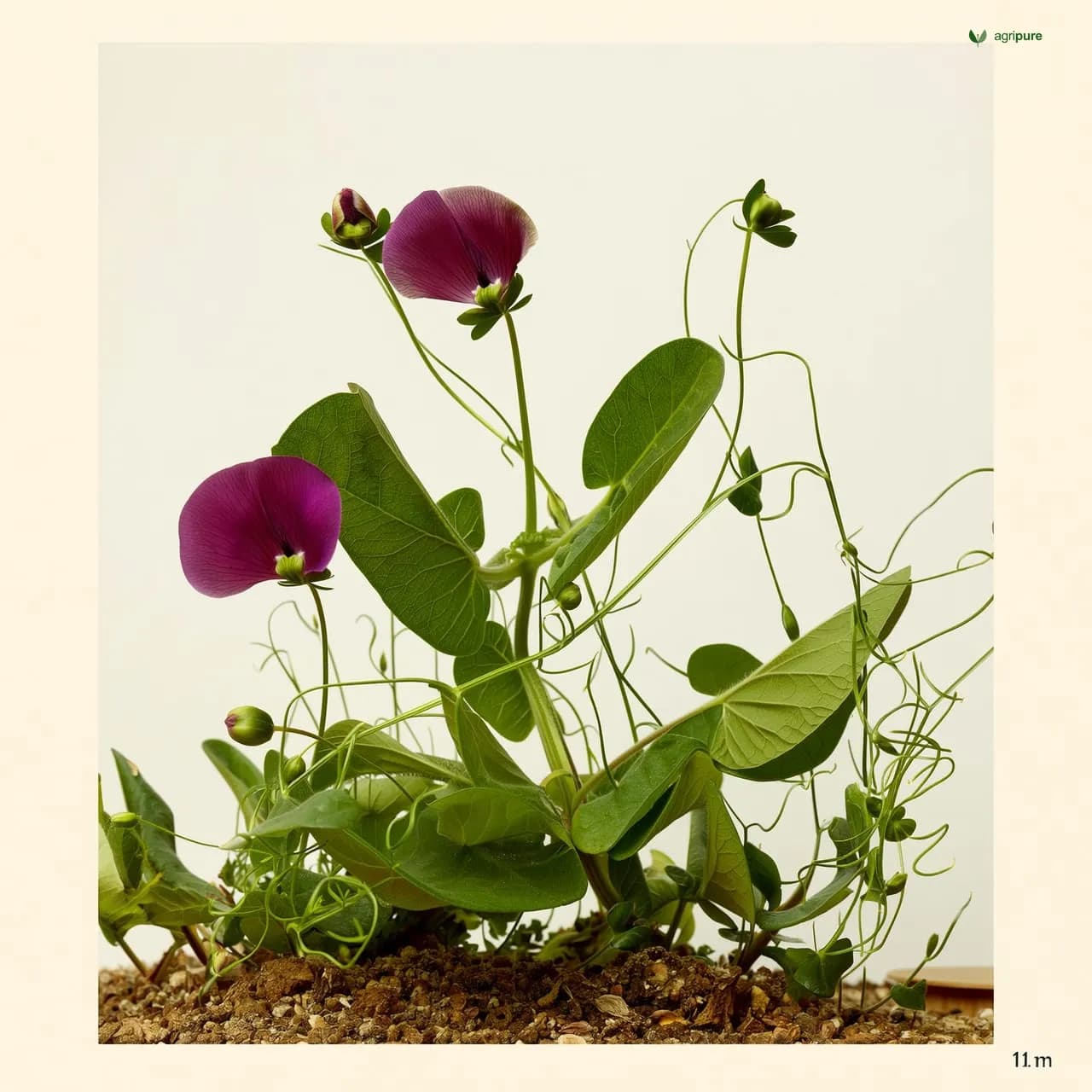
Common vetch (Vicia sativa) is a cool-season annual climbing legume in the pea family (Fabaceae), recognizable by its tendril-tipped compound leaves and pink to reddish-purple pea flowers. It is Old World in origin, variously credited to Europe, Asia, and North Africa, and was introduced into North America from Eurasia for agricultural purposes, where it is now widely naturalized. For a homesteader, the appeal is simple and seasonal: it is a fast, nitrogen-fixing cover that scrambles up through a nurse crop in the cool half of the year, then can be turned under as green manure before the main planting goes in.
The plant is a semi-erect, climbing annual that typically reaches about 1 to 2.5 feet tall in North America, climbing by tendrils rather than standing on its own. Its stems are light green, ribbed, and sparsely hairy, and the leaves are alternate and compound, ending in the tendrils it uses to grab support. The flowers are pink to reddish-purple and pea-like, with wings reported at roughly 18 to 30 mm long in one field guide. The cultivated form is described as having pods that are constricted between the seeds and usually hairy, ranging from yellowish to brown.
Growing common vetch
Common vetch is grown from seed, and seed is commonly inoculated with Rhizobium leguminosarum biovar viceae for best performance — the bacterial partner that lets the legume fix atmospheric nitrogen. It grows in full or partial sun and adapts to a range of conditions from moist to dry-mesic, tolerating a variety of soils including loam and clay loam. Most of its growth and development happen during cool spring weather.
Because it is a climbing vine, it benefits from adjacent companion plants for support; without something to climb, it tends to sprawl across the ground and becomes prone to rot. This is why it is so often drilled together with a cereal nurse crop — the cereal stems give it a ladder. On timing, one seed company describes it as a winter annual for southern areas and also suitable for early spring planting for plowing down in early summer. Note an important caveat on cold hardiness: although one plant database lists it across USDA zones 2a through 10b, Smith Seed cautions that it is not winter-hardy and is best used in southern areas, or anywhere winter survival of the stand is not required. UC IPM, for its part, treats vetches generally as annual, cool-season weeds, a reminder that the same vigor that makes it a useful cover also lets it persist where it is not wanted.
Harvest and uses
Blooming runs from late spring to mid-summer for about two months, which sets the window for whatever you intend to do with the stand. The plant reseeds aggressively, so if you do not want it volunteering the following season, time your harvest or termination to get ahead of pod maturity rather than letting the seed set and drop. Reliable yield figures were not available in the sources consulted here, so none are stated rather than inventing a number.
The greatest value of common vetch is as a soil and forage plant. It is widely used as a cover crop, green manure, and forage precisely because it fixes nitrogen, building fertility for the crop that follows. It is also planted in vineyards and orchards to help suppress spring weeds while the soil is otherwise bare. On the wildlife side, it feeds deer, rabbits, caterpillars, butterflies, and some game birds, so a patch does double duty as habitat. There is a limited culinary note as well: one source says the foliage is edible, and NC State notes the young leaves can be cooked, eaten young, or made into teas — but see the cautions below before treating any part as food.
Safety and cautions
Common vetch carries real toxicity concerns that center on its seeds, and these should be taken seriously by anyone growing it near livestock or poultry.
- NC State classifies the plant as having low-severity poison characteristics and identifies the seeds as the poisonous part.
- UC IPM states that vetch seeds are toxic to livestock and can cause a neurological disorder in cattle described as similar to rabies; the seeds can also kill or stunt chickens.
- Because the part flagged as toxic is the seed, the conservative approach is to avoid seed consumption entirely (by people or animals) unless a trusted, food-specific source verifies the preparation and safety of a particular use.
The sources here describe a leaf tea in passing but provide no medical efficacy, dosing, or safety data, so this profile makes no medicinal claim and gives no dosage. Treat common vetch as a soil-building cover and forage crop first; if you experiment with the young foliage as a green, do so cautiously and keep the seed out of the kitchen and away from animals.
Sources
- Common Vetch (Vicia sativa) — Midwest Cover Crops Council
- Common Vetch — NatureSpot
- Vicia sativa — NC State Extension Plant Toolbox
- Vicia sativa — Wikipedia
- Common Vetch — Smith Seed Services
- Vicia sativa (garden vetch) — USDA PLANTS Database
- Vetch (Vicia spp.) — UC IPM, University of California