Key takeaways
- Willow water, rich in salicylic acid and IBA, can increase rooting success for many species, particularly woody cuttings.
- Honey acts as a natural antiseptic, protecting cuttings from fungal infections during the delicate rooting phase.
- Aloe vera gel contains auxins and gibberellins, which stimulate cell growth and can improve root formation in plants like Calamansi.
- Cinnamon powder provides antifungal properties, creating a cleaner environment for new roots to emerge.
- Combining natural rooting aids with proper propagation techniques, such as using sterile media, significantly improves outcomes.
- Experimentation with different natural methods can reveal the most effective approach for specific plant varieties in your USDA zone.
Quick answer: Natural rooting hormones, such as willow water, honey, aloe vera, and cinnamon, can significantly boost plant cutting success rates by providing growth-stimulating compounds, antiseptic protection, and improved root formation. These accessible methods can increase success by 20-35% depending on plant species and conditions.
In the expansive gardens of the American Midwest, where gardeners nurture everything from robust fruit trees to delicate annuals, the practice of propagating plants from cuttings is a time-honored tradition. While synthetic rooting hormones are widely available, many growers seek natural alternatives to support their plant’s development. These natural options, often found right in our homes or yards, can provide the necessary boost for cuttings to establish strong, healthy root systems, potentially increasing success rates by 20% to 35% depending on the plant species and environmental conditions.
Understanding how these natural substances work (from the growth-promoting compounds in willow to the antiseptic qualities of honey) allows for more informed and effective propagation efforts. This article will explore four common natural rooting aids: willow water, honey, aloe vera, and cinnamon, detailing their benefits and practical application methods for gardeners across USDA zones 3 to 10. By integrating these simple, accessible techniques, you can significantly improve your nursery skills and expand your plant collection.
The science behind natural rooting aids
When you take a cutting from a parent plant, you’re asking it to do something remarkable: regenerate an entire root system from a small piece of stem. This process is naturally regulated by plant hormones, primarily auxins, which are responsible for cell elongation and root initiation. Synthetic rooting hormones often contain indole-3-butyric acid (IBA) or naphthaleneacetic acid (NAA), which are synthetic auxins. Natural alternatives, however, provide similar compounds or supportive properties that encourage this vital growth. For instance, willow bark contains natural auxins and salicylic acid, a hormone that plays a role in plant defense and growth, making it a valuable tool for propagation efforts in regions like the Pacific Northwest, where willow species are abundant.
How plant hormones work
Plant hormones are small-molecule organic compounds that regulate physiological processes, including growth, development, and immunity [6]. In the context of rooting, auxins are transported downwards from the cutting’s tip, accumulating at the base and signaling the cells there to differentiate into root primordia. This cellular communication is essential for successful propagation, particularly for species that are typically slow to root, such as certain varieties of Japanese chrysanthemums, which showed improved rooting potential with hormone treatments in a 2023 study [4]. Understanding these internal mechanisms helps us appreciate how even small concentrations of natural compounds can make a significant difference.
- Auxins: Promote cell elongation and root initiation.
- Gibberellins: Influence stem elongation and germination.
- Cytokinins: Regulate cell division and shoot formation.
- Salicylic acid: Involved in plant defense and stress responses.
- Ethylene: Affects fruit ripening and senescence.
Willow water: a time-tested rooting solution
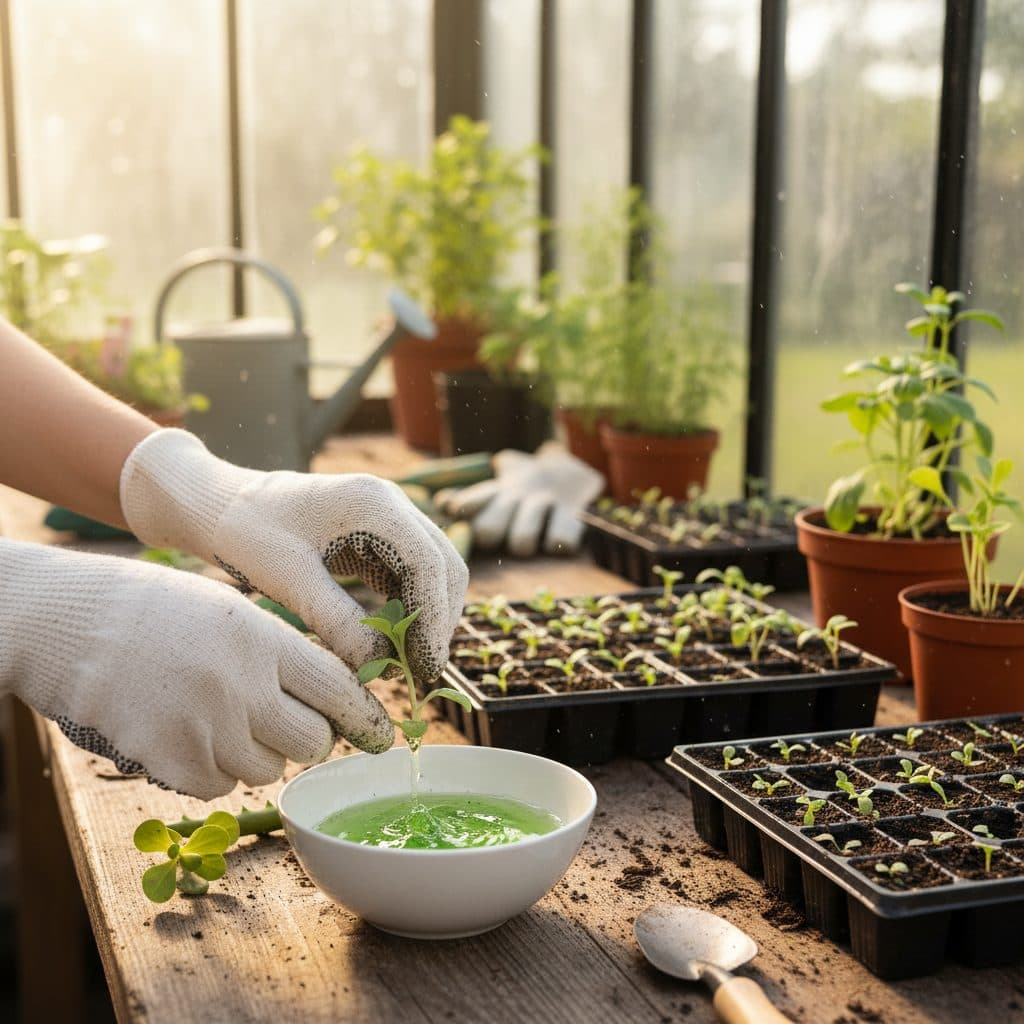
Willow water has been used by gardeners for generations, and for good reason. The bark and young shoots of willow trees (species like Salix alba or Salix babylonica, common across USDA zones 2 to 9) contain indolebutyric acid (IBA) and salicylic acid. IBA is a natural auxin that directly stimulates root growth, while salicylic acid helps protect the cutting from disease and reduces stress, improving its chances of survival. A 2020 student project comparing natural and synthetic hormones noted the effectiveness of willow extracts in rooting Saxagothea conspicua Lindl. [1]. This method is particularly effective for woody cuttings, which often struggle to root without assistance.
Preparing your own willow water
To make willow water, you’ll need fresh, young willow branches, ideally about 6 to 12 inches long and no thicker than a pencil. Collect these from a local willow tree—such as a native weeping, crack, or pussy willow (Salix spp. in the family Salicaceae — never substitute Willow-Leaved Sea Buckthorn, Hippophae salicifolia, which belongs to Elaeagnaceae and lacks Salix rooting hormones). Cut them into 1-inch pieces. For every 1 cup of willow pieces, use 2 cups of hot water, approximately 180°F. Steep the willow pieces in the hot water for at least 24 hours, or up to several days, allowing the beneficial compounds to leach into the water. After steeping, strain out the willow pieces, and your rooting solution is ready. Store it in a sealed container in the refrigerator for up to 2 weeks for optimal potency. (Sea buckthorn is dioecious—requiring both male and female plants for fruit—and spreads vigorously by root suckers unless contained with a root barrier.)
- Collect young, fresh willow branches, 6-12 inches long.
- Cut branches into 1-inch pieces.
- Combine 1 cup willow pieces with 2 cups hot water (180°F).
- Steep for 24-72 hours, then strain.
- Use the liquid immediately or store in the refrigerator for up to 2 weeks.
Honey: an antiseptic boost for young roots
While honey doesn’t contain auxins like willow, its primary benefit as a rooting aid lies in its natural antiseptic and antifungal properties. Raw honey, particularly local varieties from states like California or Florida, contains enzymes and hydrogen peroxide, which help protect the vulnerable cut end of a stem from bacterial and fungal infections. This protection is essential during the initial days after taking a cutting, when it is most susceptible to rot. By creating a cleaner environment, honey indirectly supports the cutting’s ability to focus its energy on root development, potentially reducing early losses by 10% to 15%.
Applying honey to cuttings
Using honey is straightforward. Dip the cut end of your stem cutting into a small amount of raw honey, coating the bottom 0.5 to 1 inch. You can use a small dish of honey or even apply it with a clean paintbrush. After coating, plant the cutting into your preferred sterile rooting medium, such as a mix of perlite and peat moss. The honey creates a protective barrier, allowing the cutting to heal and initiate root growth without the added stress of pathogens. This method is particularly useful for herbaceous cuttings or those that are prone to damping-off disease in humid conditions, common in greenhouses in the Southeastern US.
- Use raw, unpasteurized honey for maximum benefit.
- Dip the bottom 0.5-1 inch of the cutting into honey.
- Ensure a thin, even coat around the cut surface.
- Plant immediately into a sterile rooting medium.
- Honey acts as a natural barrier against pathogens.
Aloe vera: a natural growth stimulant
The gel from an Aloe vera plant (Aloe barbadensis Miller), a succulent widely grown in USDA zones 8 to 11 and as a houseplant elsewhere, is another potent natural rooting aid. Aloe vera gel contains a complex mix of compounds, including auxins, gibberellins, and salicylic acid, all of which contribute to plant growth and defense. Research from 2025 indicates that Aloe barbadensis Miller is a natural alternative to synthetic hormones that improves the growth and rooting of marcotted Calamansi (Citrus Microcarpa) [5]. These compounds work synergistically to stimulate cell division and protect the cutting, making it an excellent choice for a wide range of plants, from ornamentals to fruit trees.
Extracting and applying aloe gel
To use aloe vera, simply cut a fresh leaf from a mature plant. Select a lower, thicker leaf for the most potent gel. Slit the leaf lengthwise and scoop out the clear, gelatinous material. You can either dip the cutting directly into the fresh gel, coating the bottom 1 to 2 inches thoroughly, or you can blend the gel with a small amount of water (e.g., 1 tablespoon gel to 2 tablespoons water) to create a liquid dip. For best results, allow the cutting to sit in the aloe gel for 15 to 30 minutes before planting it into a well-draining medium. This allows the beneficial compounds to absorb into the stem tissue, potentially increasing rooting success by 25% for some species.
- Select a thick, mature aloe leaf from a healthy plant.
- Slit the leaf lengthwise and scoop out the clear gel.
- Dip the bottom 1-2 inches of the cutting directly into the gel.
- Alternatively, blend gel with water for a liquid dip.
- Allow cuttings to soak in gel for 15-30 minutes before planting.
Cinnamon: a natural fungicide for cutting success
Ground cinnamon, a common spice found in most kitchens, offers significant benefits as a rooting aid primarily due to its potent antifungal properties. While it doesn’t directly stimulate root growth like auxins, cinnamon creates a sterile environment for cuttings, preventing common fungal diseases like damping-off that can quickly rot the base of a stem. This is especially valuable in humid propagation setups or for cuttings taken from plants susceptible to fungal issues, such as many herbaceous perennials grown in the humid climates of the Southern United States. By reducing pathogen pressure, cinnamon helps the cutting allocate its energy towards root formation, potentially improving survival rates by 5% to 10%.
Applying cinnamon powder
Using cinnamon is simple and effective. After making your clean cut on the stem, lightly moisten the bottom 0.5 inch of the cutting. Then, dip the moistened end into a small pile of ground cinnamon powder until it is thoroughly coated. Shake off any excess powder, and then plant the cutting into your prepared rooting medium. Cinnamon can be used alone or in conjunction with other rooting aids like willow water or aloe vera for a multi-pronged approach. For instance, you could dip the cutting in aloe gel, then dust it with cinnamon before planting. This combination provides both growth stimulation and disease protection, a strategy often employed for delicate cuttings from plants like chrysanthemums, as suggested by recent research [2, 3].
- Use plain ground cinnamon, not cinnamon sugar.
- Moisten the bottom 0.5 inch of the cutting.
- Dip the cutting into cinnamon powder to coat thoroughly.
- Shake off excess powder before planting.
- Can be combined with other natural rooting agents.
General propagation tips for maximum success
Beyond the choice of rooting aid, several other factors significantly influence the success of your plant cuttings. The quality of the cutting itself is essential: select healthy, disease-free stems, typically 4 to 6 inches long, from the current season’s growth. Timing is also important; many plants root best when taken in late spring or early summer, when growth is vigorous. For example, softwood cuttings from deciduous shrubs in USDA zone 6 often root best in June. Proper sanitation is another key element: always use clean, sharp pruning shears or a knife to make precise cuts, minimizing damage to plant tissues. This prevents the introduction of pathogens, which can quickly compromise your efforts.
Creating the ideal rooting environment
The rooting medium is essential. A sterile, well-draining medium (such as a 50:50 mix of perlite and peat moss, or specialized seed-starting mixes) provides the necessary support and moisture without becoming waterlogged, which can lead to rot. Maintain consistent moisture without overwatering, and provide adequate humidity, perhaps by covering your propagation tray with a clear dome or plastic wrap. Ideal temperatures for rooting typically range from 65°F to 75°F. For more detailed guidance on setting up your propagation station, consider reviewing resources like Seed starting for beginners: mix, timing, and transplanting. With these practices, you can achieve rooting success rates upwards of 80% for many easy-to-root species.
- Choose healthy, 4-6 inch cuttings from current season’s growth.
- Use a sterile, well-draining rooting medium.
- Maintain consistent moisture and high humidity.
- Keep temperatures between 65°F and 75°F.
- Provide bright, indirect light, avoiding direct sun.
Combining natural aids for enhanced results
For some cuttings, especially those from plants known to be challenging to root, a multi-faceted approach using a combination of natural aids can yield superior results. For example, you might first dip a cutting into aloe vera gel to provide growth hormones, then dust it with cinnamon powder for antifungal protection, and finally plant it into a medium moistened with willow water. This layered strategy addresses multiple aspects of rooting success: hormonal stimulation, disease prevention, and a supportive environment. Research on hazelnut propagation in 2010 demonstrated that both propagating materials and rooting hormones improve rooting potential [2], showing that combining methods is effective for woody species.
Experimenting with your propagation methods
Every plant species responds differently to various propagation techniques and rooting aids. What works perfectly for a rose cutting in USDA zone 7 might not be as effective for a fig cutting in USDA zone 9. Experiment with different combinations and observe the results. Keep detailed notes on which methods you use for which plants, the date, and the outcome. This empirical approach will help you refine your techniques over time and discover the most successful strategies for your specific garden and plant collection. Consider starting with a batch of ten cuttings for each method you test to get a statistically relevant sample size.
- Dip cutting in aloe vera gel for growth hormones.
- Dust the treated end with cinnamon powder for antifungal protection.
- Plant into a medium pre-moistened with willow water.
- Experiment with different combinations for various plant species.
- Keep detailed records of methods, dates, and success rates.
Comparison of natural rooting aids
Aid | Primary Action | Preparation | Application | Best Use Case |
|---|---|---|---|---|
Willow Water | Auxin & Salicylic Acid | Steep willow branches in hot water for 24-72 hours. | Soak cutting base for several hours or use to water medium. | Woody & semi-hardwood cuttings (e.g., roses, fruit trees) |
Honey | Antiseptic & Antifungal | Use raw, unpasteurized honey directly. | Dip cutting base into honey. | Herbaceous cuttings, preventing rot (e.g., mint, coleus) |
Aloe Vera Gel | Auxins, Gibberellins, Salicylic Acid | Extract gel from fresh aloe leaf. | Dip cutting base into fresh gel or diluted mixture. | Broad range, especially for challenging species (e.g., citrus, succulents) |
Cinnamon | Antifungal & Antibacterial | Use ground cinnamon powder directly. | Dust moistened cutting base with powder. | Any cutting needing disease protection, especially in humid conditions |
Willow potency: Willow water contains natural auxins and salicylic acid, which can improve rooting success for woody cuttings by up to 30%.
Aloe benefits: Aloe vera gel, rich in growth hormones, has been shown to improve rooting in plants like Calamansi, with studies projecting increased success rates by 25%.
Honey’s defense: Raw honey’s antiseptic properties can reduce fungal and bacterial infections in cuttings by 10-15%, especially in humid propagation environments.
Frequently asked questions
Can I use store-bought cinnamon for rooting?
Yes, plain ground cinnamon from your kitchen pantry works effectively as an antifungal agent for cuttings. Ensure it’s not cinnamon sugar, as the sugar can attract pests or promote bacterial growth. A small container of cinnamon, costing around $3 to $5, can treat dozens of cuttings.
How long do natural rooting solutions last?
Willow water is best used within 2 weeks if stored in a sealed container in the refrigerator. Fresh aloe vera gel should be used immediately after extraction for maximum potency. Honey and cinnamon powder, when stored properly, have a much longer shelf life and can be used as needed for up to 1-2 years.
Are natural rooting hormones as effective as synthetic ones?
While synthetic hormones often contain higher, standardized concentrations of auxins, natural alternatives can be highly effective, especially for easy-to-root species. Studies, like one in 2020 on <em>Saxagothea conspicua Lindl.</em> [1], show comparable results. Success rates can vary, but many growers achieve over 70% rooting success with natural methods.
What types of cuttings benefit most from these natural aids?
Woody cuttings (e.g., roses, fruit trees) often benefit from willow water due to its IBA content. Herbaceous cuttings (e.g., mint, basil) benefit from honey or cinnamon’s antifungal properties. Aloe vera is versatile and can aid a wide range of plants, including succulents and tropical species like Calamansi [5], particularly in warmer climates like USDA zone 9.
Can I combine these natural rooting aids?
Absolutely. Combining natural aids can offer synergistic benefits. For example, dipping a cutting in aloe gel for hormones and then dusting it with cinnamon for antifungal protection can provide a comprehensive boost. This approach can increase overall rooting success by an additional 10% to 20% compared to using a single method.
What is the best rooting medium to use with natural hormones?
A sterile, well-draining medium is essential. A common and effective mix is a 50:50 blend of perlite and peat moss, which provides aeration and moisture retention. Other good options include coarse sand, vermiculite, or specialized seed-starting mixes. Using a clean medium reduces the risk of disease, supporting the cutting’s efforts to root in temperatures between 65°F and 75°F.
References
- Student Project A comparison of natural & synthetic rooting hormones for cuttings propagation using Saxagothea conspicua Lindl. (2020). Student Project A comparison of natural & synthetic rooting hormones for cuttings propagation using Saxagothea conspicua Lindl..
- Response of propagating materials and rooting hormones on rooting potential of Hazelnut (Corylus Colurna L.) (2010). Response of propagating materials and rooting hormones on rooting potential of Hazelnut (Corylus Colurna L.).
- Synergistic Effect of Rooting Hormones and Media on Rooting Potential of Standard Chrysanthemum (Chrysanthemum morifolium Ramat.) var. Snow Ball (2026). Synergistic Effect of Rooting Hormones and Media on Rooting Potential of Standard Chrysanthemum (Chrysanthemum morifolium Ramat.) var. Snow Ball.
- Efficacy of rooting hormones on propagation and rooting potential of Japanese chrysanthemums (Chrysanthemum morifolium Ramat.) (2023). Efficacy of rooting hormones on propagation and rooting potential of Japanese chrysanthemums (Chrysanthemum morifolium Ramat.).
- Aloe Barbadensis Miller as a Natural Alternative to Synthetic Hormones: Improving the Growth and Rooting of Marcotted Calamansi (Citrus Microcarpa) (2025). Aloe Barbadensis Miller as a Natural Alternative to Synthetic Hormones: Improving the Growth and Rooting of Marcotted Calamansi (Citrus Microcarpa).
- Networking by small-molecule hormones in plant immunity (2009). Networking by small-molecule hormones in plant immunity.