secondary
Leek
gandana
Allium ampeloprasum
- punjab plains
- pothohar
- kpk hills
International hardiness
- USDA 6-9
- RHS H5
- AU: Cool temperate, Warm temperate, Mediterranean
Where it grows — regional guide
| Zones / rating | Regional notes |
|---|---|
USDA 6-9 | Grown as a cool-season biennial vegetable that overwinters in the ground; consuming unusually large quantities carries a toxicity caution. |
| Zones / rating | Regional notes |
|---|---|
H5 (-15 to -10C) | Hardy under RHS H6: blanched stems are harvested in autumn and winter; consuming very large quantities carries an allium toxicity risk. |
| Zones / rating | Regional notes |
|---|---|
Cool temperate, Warm temperate, Mediterranean | Grown through autumn, winter and spring in temperate and Mediterranean regions; eating excessive amounts carries digestive caution. |
| Zones / rating | Regional notes |
|---|---|
USDA 6-9 (USDA scale) Canada uses its own zone system; Canadian zones run roughly one lower than USDA. | Grown as a cool-season summer annual in cool maritime or irrigated zones; eating very large quantities carries an allium toxicity caution. |
| Zones / rating | Regional notes |
|---|---|
Punjab plains, Pothohar, KPK hills | Pakistan:Grown as a winter rabi vegetable across northern hills and plains; consuming very large quantities carries an allium toxicity caution. |
Grows alongside
Species that appear with Leek in 24 of our published guides — a starting list for a guild, not a planting plan.
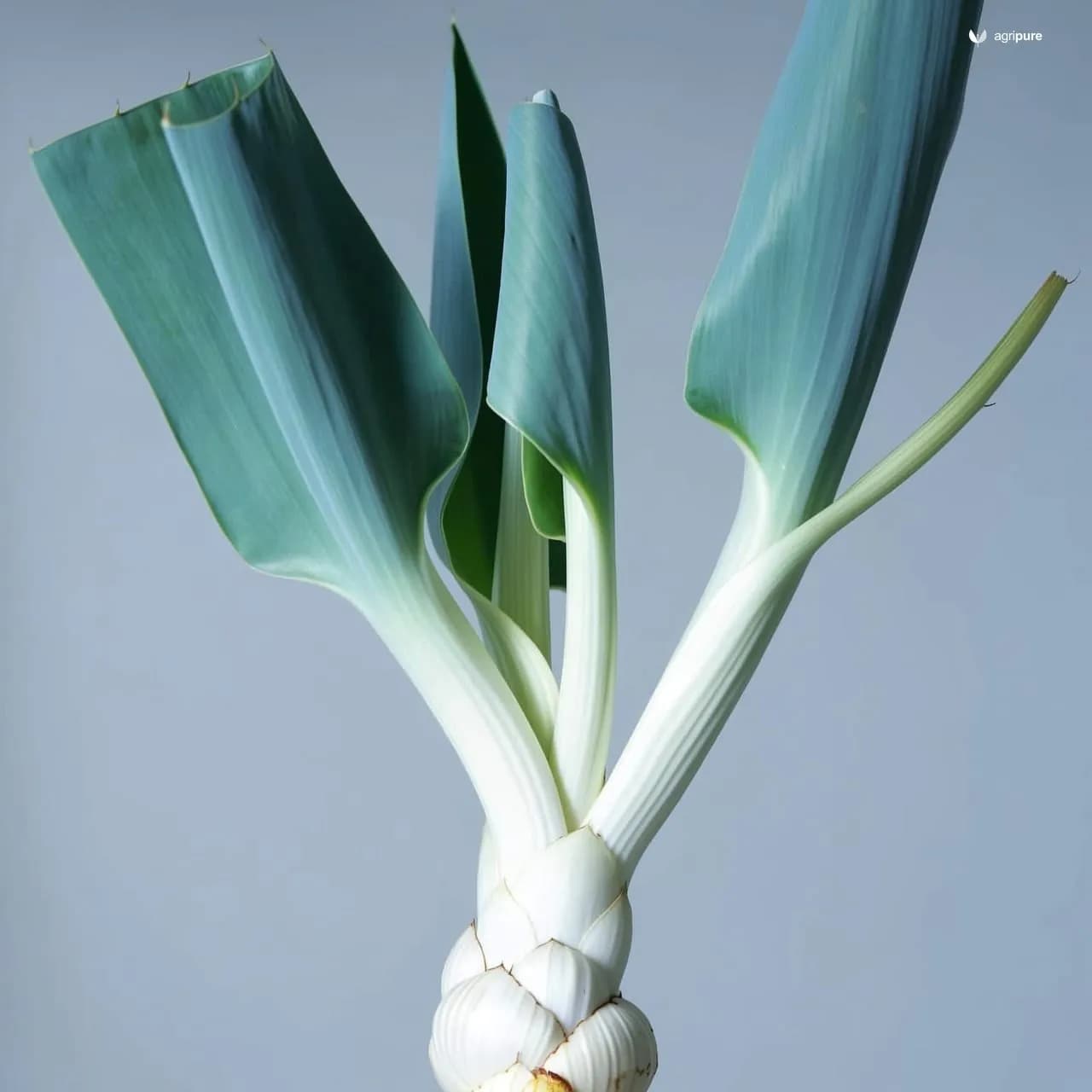
Leek (Allium ampeloprasum) is a biennial member of the onion genus in the family Amaryllidaceae, grown as an annual vegetable for its thick, mild leaf bases rather than for a swollen bulb. The cultivated leek is classified as Allium ampeloprasum Porrum Group, a domesticated selection of a species native to southern Europe, southwestern Asia and northern Africa, around the Mediterranean, Adriatic and Black Sea coasts, where its wild habitat is often rocky coastal ground. For a homesteader, the leek’s appeal is that it is a tough cool-season crop: it stands through winter in the ground, fills the cold-weather gap when little else is cropping, and turns into long, sweet, blanched shanks for the kitchen.
Description and identification
Leek does not form a true, swollen bulb the way an onion does; instead it builds a thick, fleshy structure like a large green onion, with the edible part being the tightly wrapped, thickened leaf bases and a slightly developed base. The leaves are stiff, flat and strap-like, fanning out from the shank in blue-green to yellow-green tones, and in wild forms the plant reaches 3 to 4 ft (0.9 to 1.2 m) tall and 1 to 2 ft (0.3 to 0.6 m) wide, with leaves up to about 3 ft (90 cm) long. The thick white leaf bases are mild in flavour, while the green upper leaves are more pungent, with a stronger, more acrid leek-to-garlic taste and odour. If allowed to bolt, the plant sends up a rounded flowering stalk (scape), round in cross-section, topped by a dense, spherical umbel of many small, urn-shaped flowers; wild plants can carry umbels of up to 500 flowers with white, pink or red tepals and yellow or purple anthers.
Growing leek
Leeks are normally started from seed or transplants. For an early crop, sow indoors in a heated propagator or on a windowsill in late winter (February in UK guidance) for harvest in late summer and early autumn; for outdoor sowing, March suits early and autumn varieties, May suits mid-season crops for around Christmas and New Year, and June suits late, overwintering crops. When the seedlings reach 15 to 20 cm (6 to 8 in) tall, move them to their final position, watering them well the day before lifting to reduce transplant stress. Give leeks full sun in average, well-drained soil, the conditions the wild species favours. They are best treated as a cool-to-mild-season crop; the standard, documented propagation route is from seed and transplants, while reliable leek-specific division of offsets is not clearly detailed in the horticultural sources here, so seed remains the method to rely on.
Leek is decidedly cold-hardy. It withstands a considerable amount of exposure to temperatures below 32 degrees F (0 degrees C), and UK growing guidance notes that leeks will stand throughout the winter in the ground without harm, which is what makes them such a useful cold-season standing crop. The wild species is listed as suitable for USDA zones 5a to 10b, and taken together the cultivated leek (Porrum Group) is broadly suited to temperate zones roughly USDA 5 to 10, performing best in cool to mild seasons.
Harvest and uses
The harvest is the thick, fleshy shank of blanched and unblanched leaf bases, which can be lifted across a long window because the plants hold in the ground through cold weather rather than needing to come out all at once. The white portion is often blanched by excluding light from the lower stem, which keeps the prized lower shank tender and pale. In the kitchen the mild lower stem is the main prize, while the more pungent green tops are stronger flavoured and better cooked down. The edible structure is essentially the thickened leaf bases with only a slight base development, distinguishing leek from bulbing alliums. Beyond the plate, leeks left to flower offer an ecological bonus: the spherical umbels are bee-pollinated, so a few plants allowed to bloom in mid-to-late summer feed pollinators.
Pollination and flowering
Leek is biennial, so flowering normally comes in its second season if plants are overwintered rather than harvested. The flowering stalk is round in cross-section and carries a dense, globe-shaped umbel of many small flowers; in wild A. ampeloprasum these umbels can hold up to 500 flowers in shades of white, pink or red. Flowering in wild plants typically falls in July and August, and the flowers are pollinated by bees, making any leeks you let bolt a late-summer nectar source as well as a route to saving your own seed.
Safety and cautions
Leek is a long-established food vegetable, but the sourced material does flag a low but real toxicity risk if it is eaten in very large quantities or by sensitive individuals. Eaten as a normal cooked vegetable it is a staple food; the caution is simply against treating any allium as risk-free in unusually large amounts or for people who react to onions and their relatives. This profile makes no medical claims for leek and gives no dosage; it is described here as a food crop.
Sources
- Allium ampeloprasum, Taxonomy – PubChem (NCBI)
- Allium ampeloprasum – NC State Extension Gardener Plant Toolbox
- Leek (Allium ampeloprasum, Porrum Group) – Growables
- Allium ampeloprasum – NBN Atlas
- Allium ampeloprasum – ScienceDirect Topics
- Leeks (Allium ampeloprasum) – Love The Garden