secondary
Chives
kucha
Allium schoenoprasum
- pothohar
- kpk hills
International hardiness
- USDA 3-9
- RHS H7
- AU: Cool temperate, Warm temperate, Mediterranean
Where it grows — regional guide
| Zones / rating | Regional notes |
|---|---|
USDA 3-9 | Grown as a perennial kitchen herb across temperate zones; snip leaves in spring, and keep foliage away as it is toxic to pets. |
| Zones / rating | Regional notes |
|---|---|
H7 (below -20C) | Fully hardy under RHS H7 for allotment clumps; leaves are cut through the season, but foliage is toxic to cats and dogs. |
| Zones / rating | Regional notes |
|---|---|
Cool temperate, Warm temperate, Mediterranean | Grown as a perennial herb in temperate and Mediterranean gardens; keep leaves away from cats and dogs as they are toxic to pets. |
| Zones / rating | Regional notes |
|---|---|
USDA 3-9 (USDA scale) Canada uses its own zone system; Canadian zones run roughly one lower than USDA. | A cold-hardy perennial across Canadian zones, returning in spring; keep clumps and trimmings away as foliage is toxic to pets. |
| Zones / rating | Regional notes |
|---|---|
Pothohar, KPK hills | Pakistan:Suited to the KPK hills, Balochistan highlands, and Pothohar plateau (sown in autumn/winter on the plains); provide afternoon shade or mulch during May–June pre-monsoon heat and ensure free drainage during the July–August monsoon. |
Grows alongside
Species that appear with Chives in 60 of our published guides — a starting list for a guild, not a planting plan.
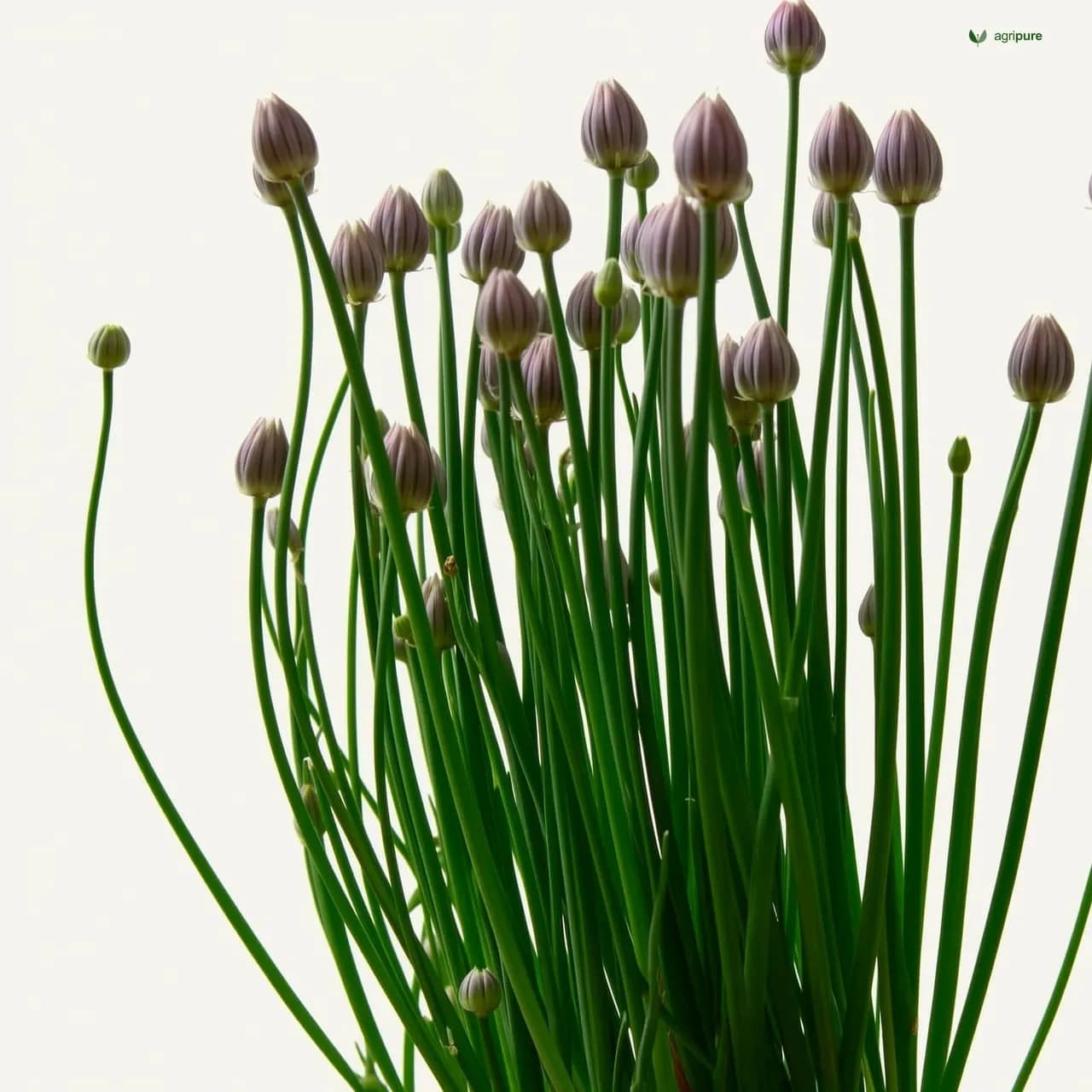
Chives (Allium schoenoprasum) are a small, clump-forming perennial herb in the onion family, grown for their thin, onion-flavoured leaves and their rounded heads of pale purple flowers. The species is widely distributed across the temperate Northern Hemisphere, native through northern Europe, Asia, and North America, which is why it behaves as a hardy, come-back-every-year perennial in most temperate gardens. For a homesteader, chives are about as low-effort as a productive herb gets: one or two clumps tucked into a bed give you a renewable, cut-and-come-again supply of mild onion greens, edible flowers, and a reliable draw for bees, with almost no annual replanting.
The plant forms dense tufts of leaves that are thin, tubular, hollow, and grass-like, with flowering stems (scapes) that rise above the foliage in spring and summer and carry globular clusters of pale purple to mauve blossoms. Most plants stand about 1 to 1.5 feet tall and spread to a similar width, although some ornamental selections are listed at a shorter height of roughly 12 inches. The neat clumping habit and tidy flower heads are part of why chives are grown as much for ornament as for the kitchen.
Growing chives
Chives are a temperate-climate perennial. Botanical sources place them reliably in USDA hardiness zones 4 to 8, while some horticultural plant databases extend the range to zones 4 to 10; the conservative, well-supported statement is that they are dependably hardy through zone 8 and grown more widely than that in milder areas. They can be propagated two ways: from seed, or by division of an established clump. If you start from seed, sow indoors about 8 to 10 weeks before the last frost, or direct-sow into the bed after the last frost has passed.
Give chives full sun to part shade (light shade is tolerated) and an average, medium, well-drained soil. They are not thirsty: landscape sources list a low water requirement and describe the plant as drought resistant, though regular moisture is commonly used in active cultivation to keep the leaves tender. A practical spacing is around 6 to 12 inches apart, which lets the clumps knit together over time. An established planting is easy to keep going: clumps can be divided in spring or fall to make new plants and to stop the centre from getting crowded, and chives will readily self-seed around the garden if the flower heads are left on rather than deadheaded.
Harvest and uses
Harvesting can begin once the plants are about 6 inches high, by clipping the leaves at the base. For ordinary kitchen use, many growers simply snip the leaf tips as needed, and regular cutting actually helps keep the clump fresh and compact rather than tired and floppy. The provided sources do not give a quantified yield figure, so none is stated here — but in practice a healthy clump produces far more leaf than a single household tends to use, and it keeps regrowing through the season.
In the kitchen, both the leaves and the flowers are edible and carry a mild onion flavour. They are used to season salads, soups, vegetables, sauces, eggs, butter, cheese, dips, and spreads — generally added fresh and late, since the delicate flavour fades with long cooking. Beyond the plate, chives earn their place in a homestead system: the species is valued ornamentally for its globular purple flower heads and neat habit in borders, herb gardens, and pots, the flowers attract bees, and the plant is noted as deer resistant, which makes it a useful, low-maintenance edging in pressure-prone gardens.
Safety and cautions
Chives are a culinary herb and the leaves and flowers are eaten in normal kitchen quantities, but they are still a member of the genus Allium (the onions and garlics), and that carries a couple of grounded cautions. At least one plant database explicitly lists chives as having “poisonous characteristics” in its human-poisoning section even while noting the plant is edible. The sensible way to reconcile this is that small culinary amounts of the leaves and flowers are edible and widely eaten, while chives remain an Allium with potential for trouble if consumed in unusually large quantities or misused. The available sources do not single out a specific toxic plant part for A. schoenoprasum, so none is named here rather than guessing.
A few horticultural listings mention traditional attributions to chives — for example, folk associations with supporting digestion or lowering blood pressure — but these are not clinical recommendations, and the sources here include no trials, dosing, or interaction data, so this profile makes no medical claims and gives no dosage. One further practical note for homesteaders with animals: like other members of the onion family, chives are best kept away from pets, since Allium species are well known to be toxic to cats and dogs.
Sources
- Allium schoenoprasum (Chives) — Texas Tech University Plant Resources
- Allium schoenoprasum — Missouri Botanical Garden Plant Finder
- Chives — Wikipedia
- Allium schoenoprasum (Chives) — NC State Extension Plant Toolbox
- Allium schoenoprasum — NatureServe Explorer