climax
Apple — Golden Delicious
saib zard (سیب زرد)
Malus domestica cv. Golden Delicious
- kpk hills
- balochistan highlands
International hardiness
- USDA 4-8
- RHS H6
- AU: Cool temperate, Warm temperate, Mediterranean
Where it grows — regional guide
| Zones / rating | Regional notes |
|---|---|
USDA 4-8 | A versatile dessert and culinary orchard apple across temperate zones, prized as a reliable pollinator for other varieties. |
| Zones / rating | Regional notes |
|---|---|
H6 (-20 to -15C) | Hardy under RHS H6 for garden and allotment planting; it yields sweet dual-purpose apples and helps pollinate other cultivars. |
| Zones / rating | Regional notes |
|---|---|
Cool temperate, Warm temperate, Mediterranean | Grown across cool-temperate and upland orchards for sweet golden dessert fruit and as a dependable cross-pollinator. |
| Zones / rating | Regional notes |
|---|---|
USDA 4-8 (USDA scale) Canada uses its own zone system; Canadian zones run roughly one lower than USDA. | Hardy in temperate valleys and southern apple belts, providing sweet fruit for fresh eating, baking and home storage. |
| Zones / rating | Regional notes |
|---|---|
KPK hills, Balochistan highlands | Pakistan:Grown in the temperate valleys of Balochistan and Swat for sweet golden fruit that stores well after harvest. |
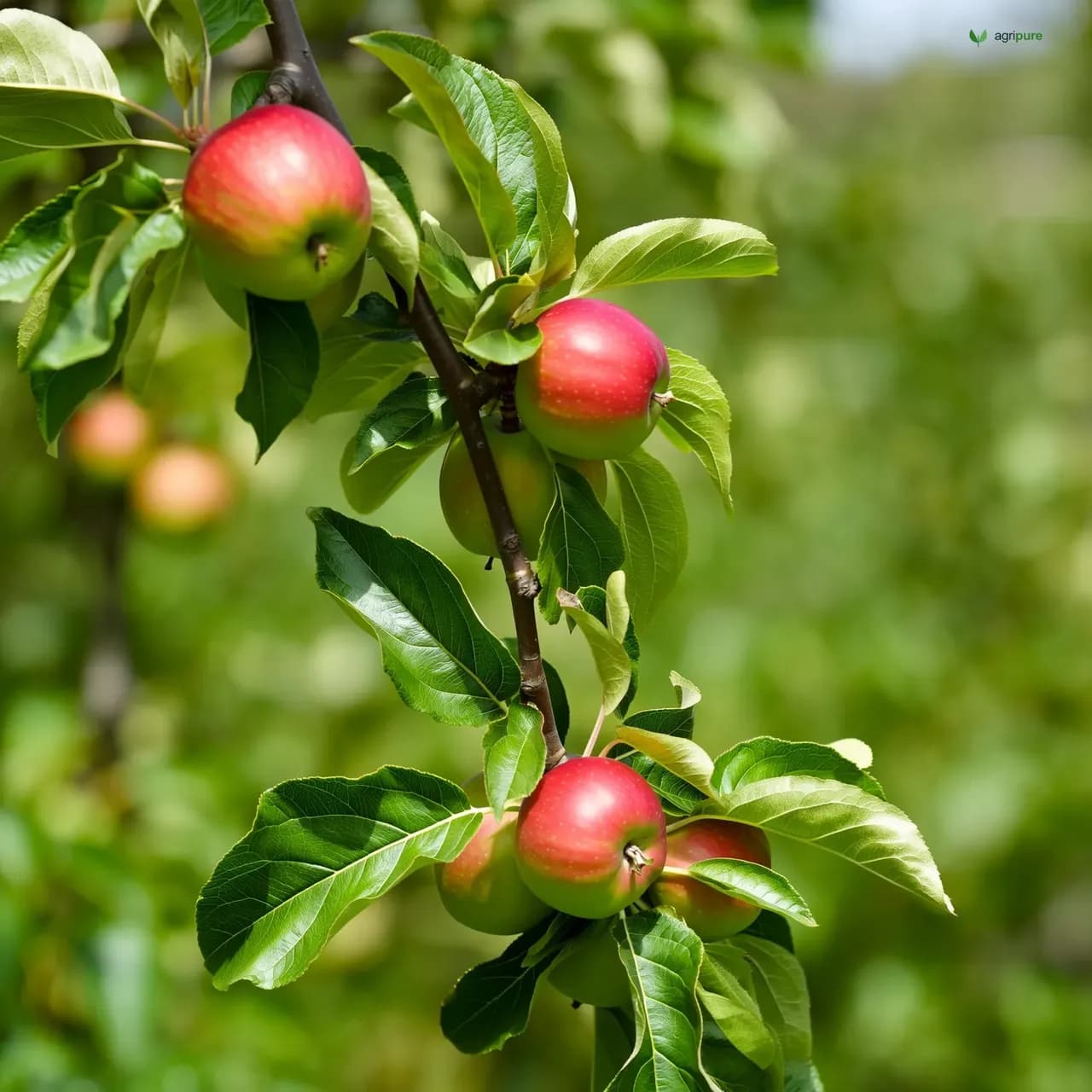
Golden Delicious (Malus domestica cv. Golden Delicious) is a large, yellow-green dessert and cooking apple in the rose family, Rosaceae.123 It is a named cultivar rather than a wild species with a native range: it arose as a chance seedling on the Mullins farm in West Virginia, in the United States, around the turn of the twentieth century, was commercialized by the Stark Brothers nursery in the early 1900s, and became one of the world’s major apple varieties.1245 For a homesteader, its appeal is the combination of a heavy, dependable crop, a sweet honeyed flavor that suits both the fruit bowl and the kitchen, and broad climate tolerance that lets it succeed in a wide band of temperate gardens.
The tree is moderately vigorous, forming a round, spreading crown, and it bears fruit on both spurs and terminal shoots.1 It is a heavy cropper, but left unthinned it tends toward biennial bearing, producing a glut one year and little the next.134 The fruit is large, with skin that starts pale green and ripens to a uniform gold-green or yellow, sometimes developing a fine russeting in humid climates.134 Inside, the flesh is cream-colored, tender, crisp, and juicy, with a sweet, mildly honeyed and floral taste, and it is notably slow to brown once cut.13 It is a late-ripening apple, maturing roughly 130 to 160 days after petal fall, which in many temperate regions falls in mid- to late September.135
Growing Golden Delicious
Like all named apple cultivars, Golden Delicious does not come true from seed and is propagated clonally, by chip budding or grafting onto a chosen rootstock, so that every tree is genetically identical to the original.3 The rootstock, rather than the variety, sets the tree’s final size: on a dwarfing rootstock the tree stays around 8 to 10 feet (2.4 to 3 m) tall, while a semi-dwarf rootstock produces a tree of roughly 12 to 15 feet (3.6 to 4.5 m), with a comparable spread.34 A dwarf or semi-dwarf tree keeps the canopy within reach for pruning, thinning, and picking in a hand-tended homestead orchard.
Give the tree full sun for the best fruiting; shade cast by taller trees or buildings reduces production.34 It performs in average to loamy, well-drained soil and rewards enriched ground with better productivity, and like apples generally it does best in slightly acidic soil in the range of pH 5.0 to 6.8.34 The cultivar is unusually adaptable to climate: NC State Extension lists it for USDA hardiness zones 4a through 9b, marking it as both cold-hardy and heat-tolerant, while nursery sources rate it hardy to about zone 5.34 In cooler maritime climates such as the United Kingdom, however, it needs a warm, sheltered microclimate to ripen reliably, a reminder that its late season demands a long enough run of warmth at the end of the year.2
Pollination guidance for this cultivar is genuinely mixed. Several sources describe Golden Delicious as self-fertile or self-pollinating, placing it in pollination group D, but agree that yields improve markedly with a compatible pollen source nearby.13 NC State Extension classes it as self-pollinating yet notes that a neighboring pollinator such as Red Delicious, Honeycrisp, or Empire increases fruit production.3 One nursery source goes further, stating it must be cross-pollinated with a crabapple or a different apple variety to set fruit at all.4 Given that conflict, the prudent course on a homestead is to plant at least one other mid-season apple or a crabapple within bee range, which satisfies every version of the advice and lifts the crop regardless.134
Harvest and uses
Golden Delicious is a late apple, so expect to pick it in mid- to late September in many temperate regions, roughly 130 to 160 days after the blossom has dropped.135 Because the tree is a heavy cropper that drifts into biennial bearing, thinning the developing fruit is the key management step: it evens out the load from year to year and improves the size and quality of what remains.134
In the kitchen the fruit earns its place twice over. It is a sweet, crisp dessert apple eaten fresh, and it doubles as a reliable cooking apple, valued for flesh that is slow to brown after cutting.135 Its mild, honeyed, floral sweetness makes it a versatile all-purpose apple rather than a sharp culinary one.13 As a late-ripening, high-yielding variety it has become one of the most widely grown apples in temperate regions worldwide, part of why it remains a dependable choice for a home orchard.125
Safety and cautions
The fruit itself is edible and is one of the most widely eaten apples in the world, with the usual food-allergy caution for sensitive individuals.15 The one genuine warning concerns the seeds: like the pips of other Rosaceae fruits, apple seeds contain cyanogenic compounds and should not be eaten in quantity.5 Swallowing the occasional pip with an apple is not the concern; deliberately collecting and consuming large numbers of seeds is. Eat the flesh freely and do not make a habit of eating the seeds.