secondary
Ber — Umran (Indian jujube)
ber — Umran (بیر امران)
Ziziphus mauritiana cv. Umran
- punjab plains
- sindh coast
- balochistan highlands
International hardiness
- USDA 9-11
- RHS H2
- AU: Tropical, Subtropical, Arid / semi-arid
Where it grows — regional guide
| Zones / rating | Regional notes |
|---|---|
USDA 9-11 | Grown in frost-free subtropical zones, where it tolerates high summer heat on well-drained ground. |
| Zones / rating | Regional notes |
|---|---|
H2 (1 to 5C) | No region-specific data yet |
| Zones / rating | Regional notes |
|---|---|
Tropical, Subtropical, Arid / semi-arid | No region-specific data yet |
| Zones / rating | Regional notes |
|---|---|
USDA 9-11 (USDA scale) Canada uses its own zone system; Canadian zones run roughly one lower than USDA. | No region-specific data yet |
| Zones / rating | Regional notes |
|---|---|
Punjab plains, Sindh coast, Balochistan highlands | Pakistan:Widely planted in arid plains for large, sweet fruit that ripens mid to late season; it grows on poor, dry ground. India:A leading commercial cultivar across dry regions, yielding large crisp fruit under heat and drought. |
Ber ‘Umran’ (Ziziphus mauritiana cv. Umran) is a selected cultivar of the Indian jujube, a spiny tree in the buckthorn family (Rhamnaceae) grown across the dry tropics for its sweet, crisp fruit. The species — also called ber or Indian plum — is native to South Asia, southern China, Southeast Asia, and parts of Central and West Africa, and has since naturalized through the warm Old World and been introduced to the tropical Americas. ‘Umran’ itself is one of the most widely planted commercial ber cultivars in India, valued for heavy crops of large fruit. For a homesteader, the draw is simple: this is one of the toughest fruit trees you can plant, shrugging off heat and drought on ground where thirstier orchard trees fail.
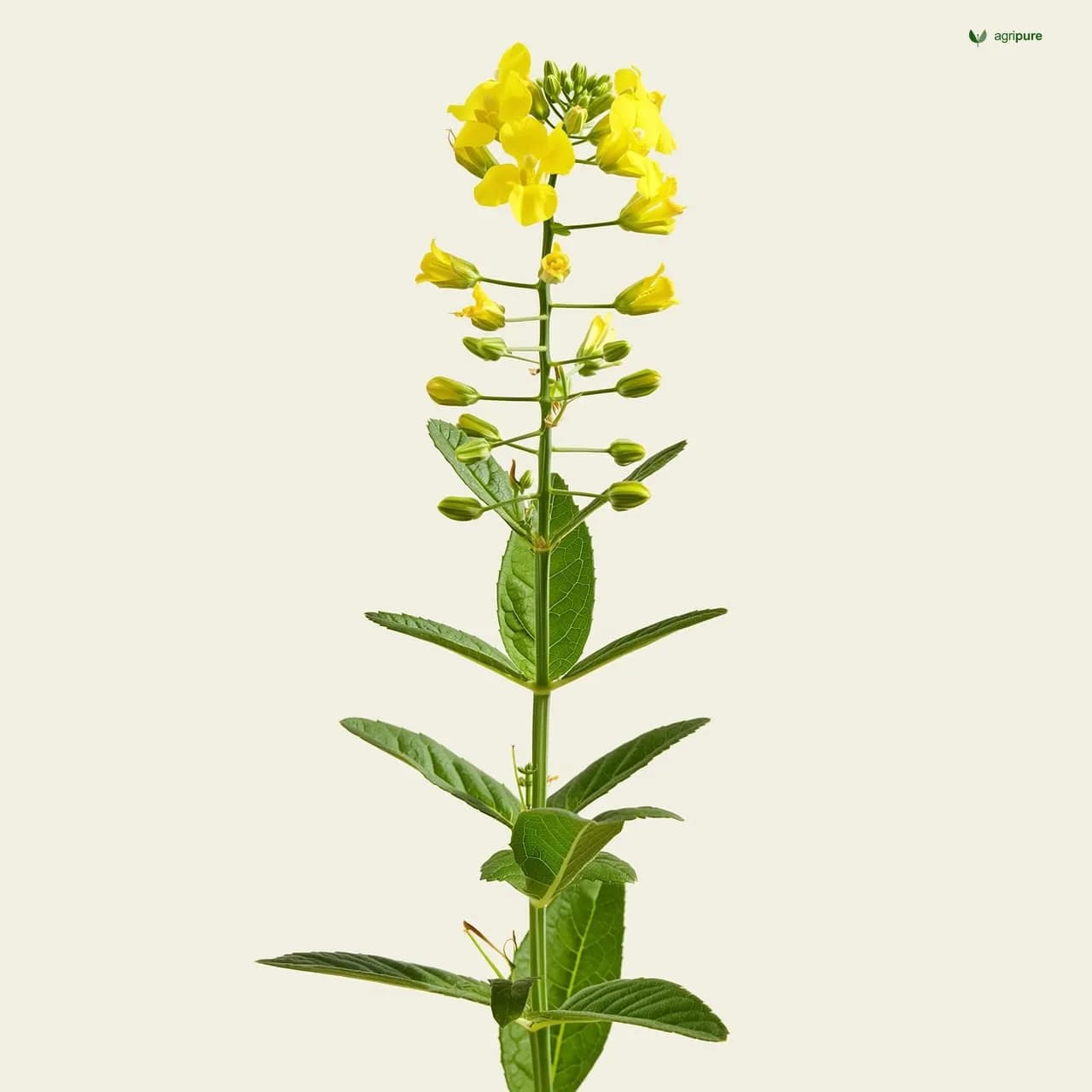
Indian jujube grows as a spiny, evergreen shrub or small tree, commonly 5 to 10 m tall and occasionally reaching 15 m, with a spreading to erect, densely branched crown that often carries thorny branchlets. The leaves are simple, alternate, and glossy green, 2.5 to 6 cm long and ovate to oblong, with three prominent veins running from the base and a finely toothed to nearly smooth margin. Small greenish-white to yellow flowers, only about 4 mm across, appear in clusters in the leaf axils and are insect-pollinated. The fruit is a drupe, oval to round, 2.5 to 6 cm long, with smooth skin that is light green when young and ripens to yellowish-green or red-brown; the white to yellowish pulp ranges from mealy to crisp and from sweet to acid or apple-like depending on cultivar, surrounding a hard, rough stone that holds one or two seeds. Among ber cultivars, ‘Umran’ fruits are generally described as oblate (flattened-round) and fall into the large-fruited group, with single fruits often above 20 to 25 g, though exact size varies with site and season.
Growing Ber ‘Umran’
Almost all the practical growing guidance for ‘Umran’ is shared with the species, since the cultivar follows the same principles. The most important point for anyone planting it: propagate it vegetatively, not from seed. Indian jujube is routinely grown by vegetative methods precisely to keep cultivar traits true, and ‘Umran’ is no exception — a seed-grown tree will not reliably reproduce the parent’s fruit.
This is a tropical to subtropical, distinctly warm-climate tree. It performs best where mean annual temperatures sit roughly between 20 and 40 degrees C, tolerates heat up to around 45 degrees C, and prefers a dry spell during flowering and fruiting. It is highly drought-tolerant and well suited to arid and semi-arid regions, and is grown successfully on as little as about 300 to 500 mm of annual rainfall — provided the ground drains well and never waterlogs. Good drainage is the recurring condition in every source: ber will take heat and dryness, but not standing water.
On cold, the picture is the limiting one. Ziziphus mauritiana is markedly less cold-hardy than the Chinese jujube (Z. jujuba) and is damaged by relatively mild frost, which is why it is replaced by the Chinese species in colder regions. Primary scientific sources do not assign formal USDA hardiness zones, but given its frost sensitivity and tropical distribution, horticultural and extension references commonly place it at roughly USDA zones 9 to 11. Treat that as an informed inference rather than a figure from the primary literature.
Detailed figures for plant spacing, time to first harvest, and per-tree yield specific to ‘Umran’ are scattered and inconsistent across the sources here, so they are deliberately left out rather than stated with false precision. In practice, give it full sun, free-draining soil, and the dry flowering window it wants, and avoid heavy or wet ground.
Harvest and uses
The harvest is the fruit. ‘Umran’ is grown commercially because it is a high-yielding, large-fruited, widely adapted cultivar — typically classed as a mid- to late-season variety in production guides, though it is grouped with early or late types in different regions. The drupes are eaten fresh and, across the species, are used both fresh and processed; the pulp may be mealy or crisp and sweet to tart depending on the variety. Because ber tolerates heat, drought, and poor sites so well, it has been promoted as a fruit tree that can improve livelihoods in arid regions where few other tree crops succeed.
How to identify it
Indian jujube, including ‘Umran’, can be recognized by this combination:13
- Habit: Spiny, evergreen shrub or small tree, usually 5 to 10 m tall, with a spreading, densely branched crown and often thorny branchlets.
- Leaves: Simple, alternate, glossy green, 2.5 to 6 cm long, with three prominent veins from the base and a finely serrate to nearly entire margin.
- Flowers: Tiny (about 4 mm), greenish-white to yellow, clustered in the leaf axils.
- Fruit: A smooth-skinned drupe, oval to round, 2.5 to 6 cm long, green ripening to yellowish-green or red-brown; in ‘Umran’, large and oblate.
Sources
- Ziziphus mauritiana – Wikipedia
- Ziziphus mauritiana (Indian jujube) – Food and Agriculture Organization (FAO)
- Ziziphus mauritiana (jujube) datasheet – CABI Digital Library
- [Study on Physiological Attributes of Ber (Ziziphus mauritiana Lam.) Genotypes – Plant Archives](https://www.plantarchives.org/article/331-Study%20on%20Physiological%20Attributes%20of%20Ber%20\(Ziziphus%20mauritiana%20Lam.\)%20Genotypes%20under%20Awadh%20Region%20of%20India.pdf)
- Ber (Ziziphus mauritiana): an annotated bibliography – University of Southampton
- Ziziphus mauritiana, a potential fruit tree for livelihoods in arid regions – International Society for Horticultural Science (ISHS)
- Ber cultivar studies – Indian Council of Agricultural Research (ICAR)
- Indian jujube, a potential fruit tree to improve livelihoods – Saudi Journal of Biological Sciences (ScienceDirect)