support
Afghan Ash
shum
Fraxinus xanthoxyloides
Also known as Shum (Pakistan), Algerian Ash (UK & Ireland).
- balochistan highlands
- kpk hills
International hardiness
- USDA 6-9
- RHS H5
- AU: Cool temperate, Warm temperate
Where it grows — regional guide
| Zones / rating | Regional notes |
|---|---|
USDA 6-9 | No region-specific data yet |
| Zones / rating | Regional notes |
|---|---|
H5 (-15 to -10C) | Native small deciduous tree; managed for tough timber, but it is not edible and its unvalidated medicinal bark should not be used. |
| Zones / rating | Regional notes |
|---|---|
Cool temperate, Warm temperate | No region-specific data yet |
| Zones / rating | Regional notes |
|---|---|
USDA 6-9 (USDA scale) Canada uses its own zone system; Canadian zones run roughly one lower than USDA. | No region-specific data yet |
| Zones / rating | Regional notes |
|---|---|
Balochistan highlands, KPK hills | Pakistan:Native small deciduous tree; managed for tough timber, but it is not edible and its unvalidated medicinal bark should not be used. India:Native small deciduous tree; managed for tough timber, but it is not edible and its unvalidated medicinal bark should not be used. |
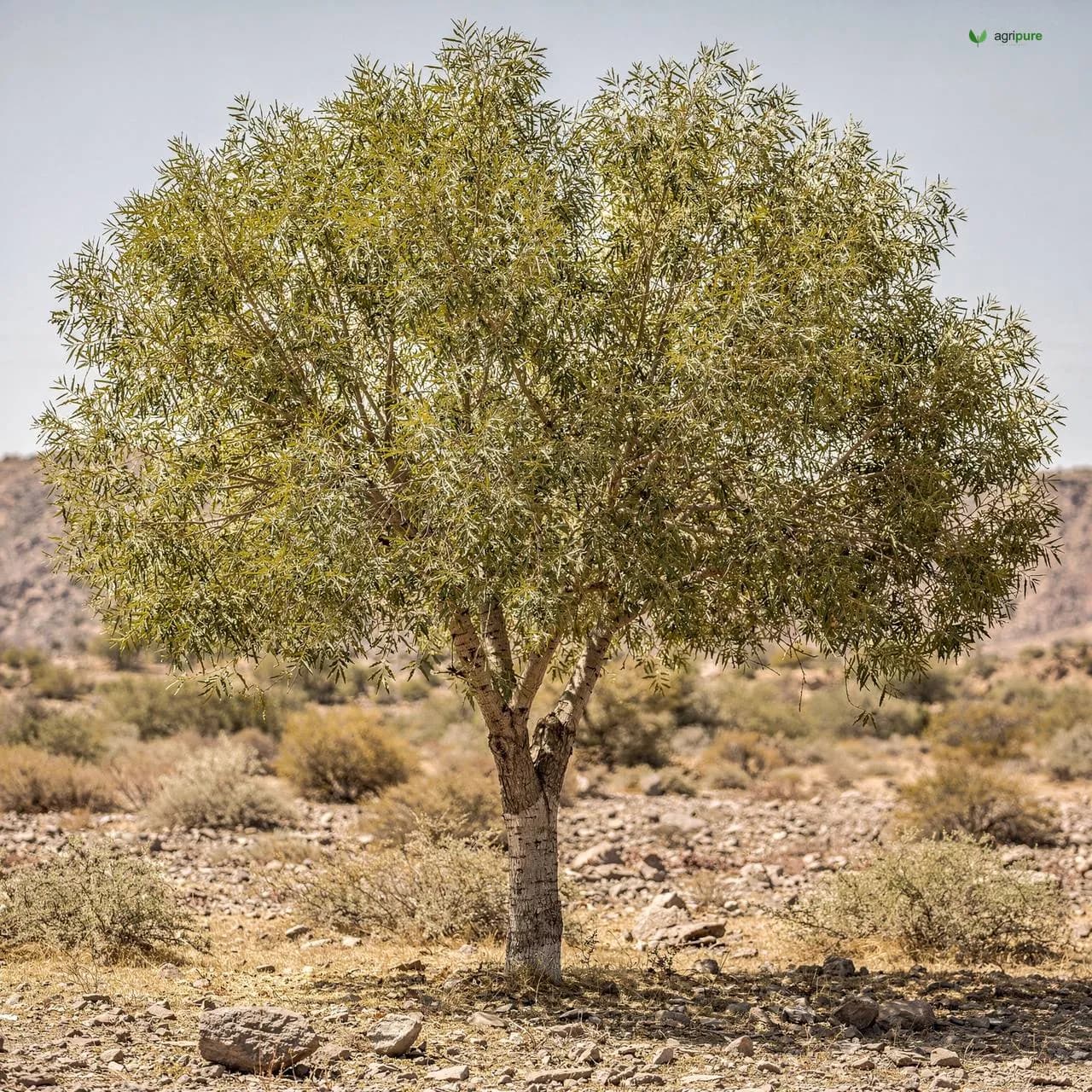
Afghan ash (Fraxinus xanthoxyloides) is a small, hardy tree in the olive family (Oleaceae), the same family as the lilac, privet, and the better-known European and white ashes. It is a plant of dry, high country, native across a long arc of arid highlands that runs from North Africa through Southwest and Central Asia into the western Himalaya and on toward China. Also called Algerian ash, it is grown chiefly as a tough ornamental and for small, useful wood rather than as a food crop. For a homesteader on thin, stony, low-rainfall ground its appeal is simple: a compact, cold-tolerant, drought-adapted tree that stays a manageable size, well suited to windbreaks, hedgerows, and dryland plantings where larger ashes would be too big or too thirsty.
This is a small tree with a rounded, oval crown that typically reaches only about 4 to 5 m tall, so it never becomes the towering shade tree people associate with the genus. The crown is half-open and fairly light rather than densely shading, the bark and branches are brown-grey, and the young twigs are thin and brown-green. Like other ashes the leaves are odd-pinnate (feather-shaped), made up of 5 to 9 oval leaflets roughly 4 to 6 cm long and dull green, carried on a central stalk that is narrowly winged — a useful identification detail. The species name xanthoxyloides points to its yellow wood, another distinguishing feature. As an ash it is broadly deciduous, though in its harshest, driest sites it can grow as a stunted small tree or shrub rather than reaching full height.
Growing Afghan ash
Well-documented, species-specific cultivation data for Afghan ash are limited; the points below are drawn only from sources that deal directly with F. xanthoxyloides, and gaps are left as gaps rather than filled with guesswork.
- Propagation: No retrieved source gives a tested, step-by-step protocol for this species. Ash trees in general are usually raised from seed, often after a period of cold stratification, but for Afghan ash specifically that is an inference from the genus rather than a confirmed method — so for reliable stock, seek seed or plants from a specialist nursery.
- Soil: Nursery guidance for the species calls for well-drained (“well-permeable”), rich soil. Its natural home in arid highlands also suggests it copes with dry, lean ground once established, though that is supported by habitat descriptions rather than formal trials.
- Climate and hardiness: It is adapted to dry, continental-to-montane conditions with cold but not extreme winters. European nursery data list it as winter-hardy to roughly zone 7b (about −15 to −12 °C), which lines up with USDA zone 7b for planning purposes.
- Water: Its presence in arid highlands, and its shrubby growth in especially dry valleys such as the Sutlej Valley of the western Himalaya, both point to good drought tolerance relative to most temperate trees.
Sun exposure, plant spacing, irrigation rates, and time to maturity are not reliably documented for this species, so they are left out rather than stated with false precision. In practice, treat it as a dryland tree: give it open, free-draining ground and avoid wet or waterlogged sites.
Harvest and uses
Afghan ash is not a food or yield crop, and no reliable homestead-scale harvest or yield figures exist for it, so none are invented here. Its practical value is in its wood: the close, yellow timber has historically been worked into walking sticks and tool handles and hafts, the classic small-dimension uses for a tough, springy ash. Beyond that, its main role on a property is as a compact, drought-hardy ornamental and structural tree for windbreaks, screens, and hedgerows on difficult dry sites.
There is also emerging medicinal research on the species, focused on compounds in its bark, but this work is preliminary and not clinically validated; treat it as a research curiosity, not a homestead remedy. The flowers are yellow and borne in compact panicles — in European cultivation they open around April — and are followed by the winged single-seeded fruits, the “keys” or samaras, typical of every ash.
How to identify it
Afghan ash can be recognized by this combination of features:123
- Size and habit: a small tree, only about 4 to 5 m tall, with an oval-to-round, half-open crown; reduced to a shrub on the driest sites.
- Bark and twigs: brown-grey bark and branches; thin, brown-green young twigs.
- Leaves: odd-pinnate with 5 to 9 dull-green oval leaflets about 4 to 6 cm long, on a narrowly winged central stalk.
- Wood: distinctly yellow, the trait behind the name xanthoxyloides.
- Flowers and fruit: yellow flowers in compact panicles (April in cultivation), followed by typical ash samaras.
Range and a note on naming
Records place Afghan ash from Afghanistan eastward to Uttarakhand in the western Himalaya, with the wider distribution running from Morocco to China. Some North African populations were previously treated as a separate species, Fraxinus dimorpha — worth knowing when comparing references, since older sources may split what newer ones lump together. The accepted scientific name is Fraxinus xanthoxyloides (G. Don) DC.
Safety and cautions
Afghan ash is a wood and ornamental tree, not a food crop, and there is no documented edible or culinary use to rely on, so it should not be treated as forage or a kitchen plant. The only medicinal interest is the emerging research on compounds in its bark, and that work is preliminary and not clinically validated — it is a research curiosity, not a home remedy, and the bark should not be used medicinally on that basis.
Sources
- Fraxinus xanthoxyloides – Wikipedia
- Fraxinus xanthoxyloides – Van den Berk Nurseries
- Fraxinus xanthoxyloides – Royal Botanic Garden Edinburgh
- Phytochemical study of Fraxinus xanthoxyloides – PLOS ONE
- Fraxinus xanthoxyloides – Royal Horticultural Society
- Fraxinus xanthoxyloides – Global Biodiversity Information Facility
Sourcing notes
Grow from seed collected off local Quetta or trans-Indus hill trees, which are pre-adapted to hard frost and thin rain. Manage it on a lopping cycle for fodder and fuel rather than letting it grow out, unless you want timber from a few stems.