pioneer
True Indigo
neel
Indigofera tinctoria
Also known as Neel (Pakistan).
- punjab plains
- sindh coast
International hardiness
- USDA 10-12
- RHS H1c
- AU: Tropical, Subtropical
Where it grows — regional guide
| Zones / rating | Regional notes |
|---|---|
USDA 10-12 | Grown in frost-free USDA zones 10 to 12 in full sun for craft dye and soil improvement; foliage is toxic if swallowed. |
| Zones / rating | Regional notes |
|---|---|
H1c (5 to 10C) | No region-specific data yet |
| Zones / rating | Regional notes |
|---|---|
Tropical, Subtropical | Grown in frost-free tropical gardens for craft indigo dye and soil improvement; foliage contains toxins and is not food. |
| Zones / rating | Regional notes |
|---|---|
USDA 10-12 (USDA scale) Canada uses its own zone system; Canadian zones run roughly one lower than USDA. | No region-specific data yet |
| Zones / rating | Regional notes |
|---|---|
Punjab plains, Sindh coast | Pakistan:Historic nitrogen-fixing dye shrub grown in frost-free plains; foliage contains toxic rotenoids and must not be eaten. India:Historic dye and green-manure legume cultivated across tropical plains; foliage contains toxic rotenoids and is not edible. |
True indigo (Indigofera tinctoria) is a small leguminous shrub in the bean family (Fabaceae), grown for centuries as the source of natural blue dye rather than as a food. Its native and natural range runs across tropical West Africa, eastern and southern Africa from Tanzania to South Africa, and the Indian subcontinent into mainland Southeast Asia; long cultivation and naturalization have since spread it much more widely. For a homesteader, the draw is twofold: it is a nitrogen-fixing legume that can be worked into the ground to improve the soil, and its leaves yield the famous indigo pigment, so a single warm-season shrub does double duty as a soil improver and a craft-dye crop.
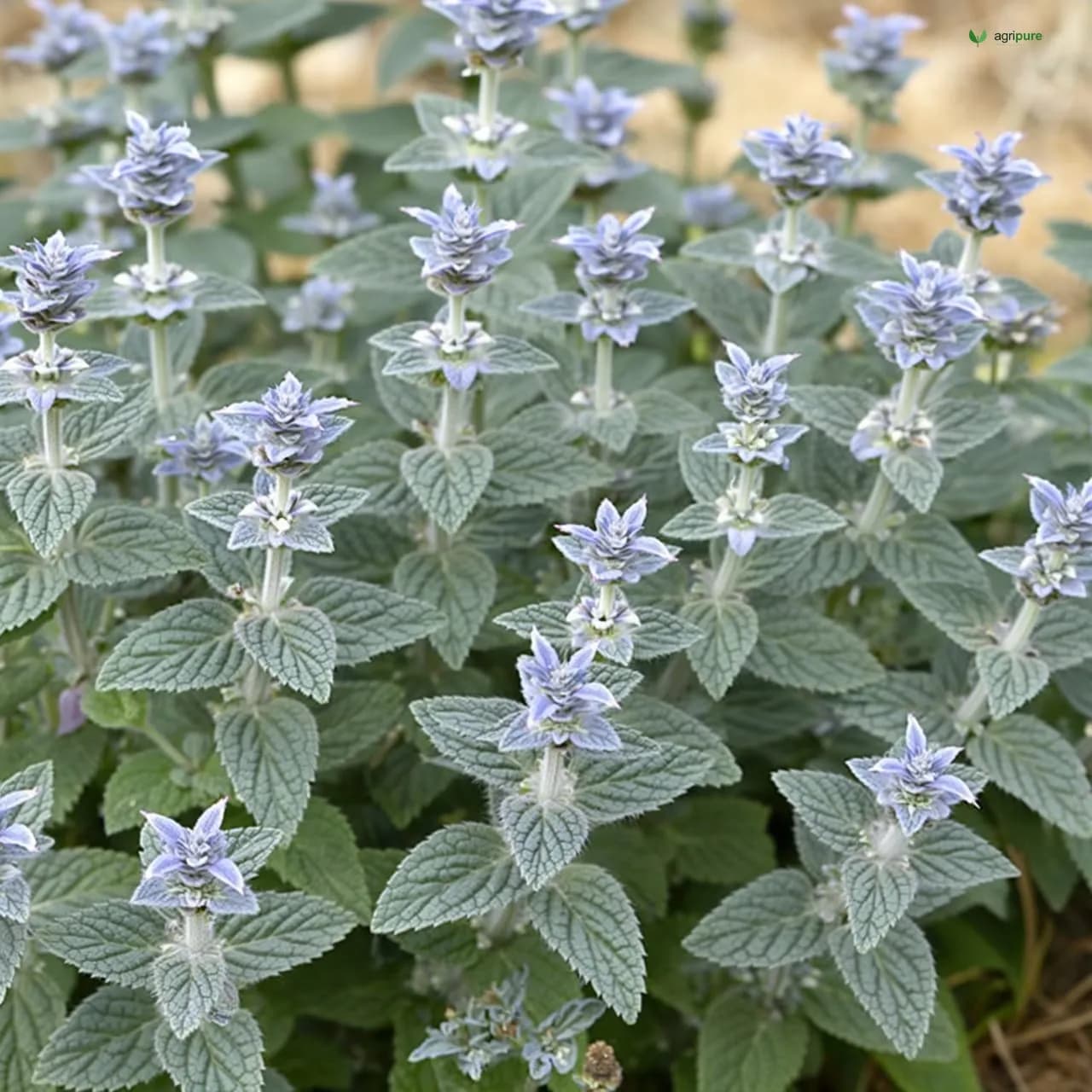
Indigo is a deciduous, spreading tropical shrub or subshrub, typically reaching about 2 to 3 feet (60 to 90 cm) tall and roughly as wide in cultivation, though under good conditions it can stretch to 1 to 2 m and behave as an annual, biennial, or perennial depending on the climate. The foliage is light green and pinnate, each compound leaf carrying 4 to 7 pairs of leaflets. Through summer it bears pink to violet-purple flowers in short racemes, followed by slender legume pods up to about 2 inches (5 cm) long. The dye itself is locked inside the leaves as a colourless glycoside called indican, which fermentation converts into the blue pigment indigotin.
Growing true indigo
Indigo is propagated from seed, which extension and horticultural sources treat as the standard method; reliable homestead-scale protocols for cuttings or division are not well documented, so seed is the route to plan around. Give it full sun — it tolerates anywhere from full sun (six or more hours) to partial shade (two to six hours), but in hot, humid summer climates it appreciates a little light afternoon shade.
For soil, aim for medium-moisture, well-drained, fertile ground; the plant performs best in moist but free-draining soil and grows well at a roughly neutral pH of 6 to 7.124 As a legume, true indigo fixes nitrogen in the soil, which is why it has long been rotated into fields to improve them and is grown as a soil-improving groundcover in some systems. Keep it on consistently moist soil through the growing season and ease off the water in winter; once established it tolerates moist-to-occasionally-dry conditions and shows some drought tolerance, but it is not a plant for waterlogged ground.
Because mature plants spread to about 2 to 3 feet (60 to 90 cm), allowing that much room between plants matches their natural size; the cited sources give the mature spread rather than a precise row spacing, so use the plant’s own dimensions as your guide rather than a fixed agronomic figure. Frost is the main limit: it is winter-hardy only in the warmest zones (broadly USDA 10 to 12, evergreen in 10 to 11), so in cooler climates it is grown as a tender annual or kept in a container and moved under protection for winter.
Harvest and uses
The leaves are the part that matters. They carry the indican glycoside, and the traditional process ferments the harvested foliage to convert it into indigotin, the deep blue dye that has made this plant economically important for centuries. Beyond dye, the chief horticultural value is as a legume cover and green-manure crop: grown for its nitrogen-fixing roots, it can be turned into the soil to build fertility much as other legumes are, and it works as a soil-improving groundcover in cropping systems. It also has a documented history of traditional medicinal use, but it is consistently described as a dye and soil plant, not a food. Be realistic about scale: this is a niche dye plant and a fertility builder, not a high-yield cash crop, and the cited research does not give specific tonnage figures, so none are invented here.
How to identify it
Use this combination of features to tell true indigo apart:1234
- Habit: A deciduous, spreading shrub or subshrub, usually 2 to 3 feet (60 to 90 cm) tall and wide, sometimes reaching 1 to 2 m.
- Leaves: Light green and pinnate, with 4 to 7 pairs of leaflets per compound leaf.
- Flowers: Small, pink to violet-purple, carried in short racemes through summer.
- Pods: Slender legume pods up to about 2 inches (5 cm) long after flowering.
Safety and cautions
True indigo is a dye and soil plant, not a food crop, and the sources are explicit on this point. Modern descriptions note that some of its constituents (including rotenone-type compounds) are toxic, so the plant should not be eaten or ingested casually. While it has a record of traditional medicinal use, that is not the same as a proven, safe remedy, and this profile makes no medical claims and gives no dosages. Grow it for the blue and for the nitrogen it returns to the soil, and treat the plant itself as something to work into the ground or process for dye rather than to put on the table.
Sources
- Indigofera tinctoria – Missouri Botanical Garden
- Indigofera tinctoria – NC State Extension Gardener Plant Toolbox
- Indigofera tinctoria – Wikipedia
- Growing True Indigo Plants – Gardening Know How
- Indigofera tinctoria – ScienceDirect Topics (Pharmacology & Toxicology)