secondary
Kair (caper bush)
kair (کیر)
Capparis decidua
Also known as Ker (India).
- sindh coast
- punjab plains
- balochistan highlands
International hardiness
- USDA 9-11
- RHS H2
- AU: Arid / semi-arid, Subtropical, Tropical
Where it grows — regional guide
| Zones / rating | Regional notes |
|---|---|
USDA 9-11 | No region-specific data yet |
| Zones / rating | Regional notes |
|---|---|
H2 (1 to 5C) | No region-specific data yet |
| Zones / rating | Regional notes |
|---|---|
Arid / semi-arid, Subtropical, Tropical | No region-specific data yet |
| Zones / rating | Regional notes |
|---|---|
USDA 9-11 (USDA scale) Canada uses its own zone system; Canadian zones run roughly one lower than USDA. | No region-specific data yet |
| Zones / rating | Regional notes |
|---|---|
Sindh coast, Punjab plains, Balochistan highlands | Pakistan:Drought-hardy desert shrub gathered for pickling; stems bear sharp spines and any medicinal use requires professional guidance. India:Native to arid deserts for pickled buds and berries; stems bear sharp spines and any medicinal use requires professional guidance. |
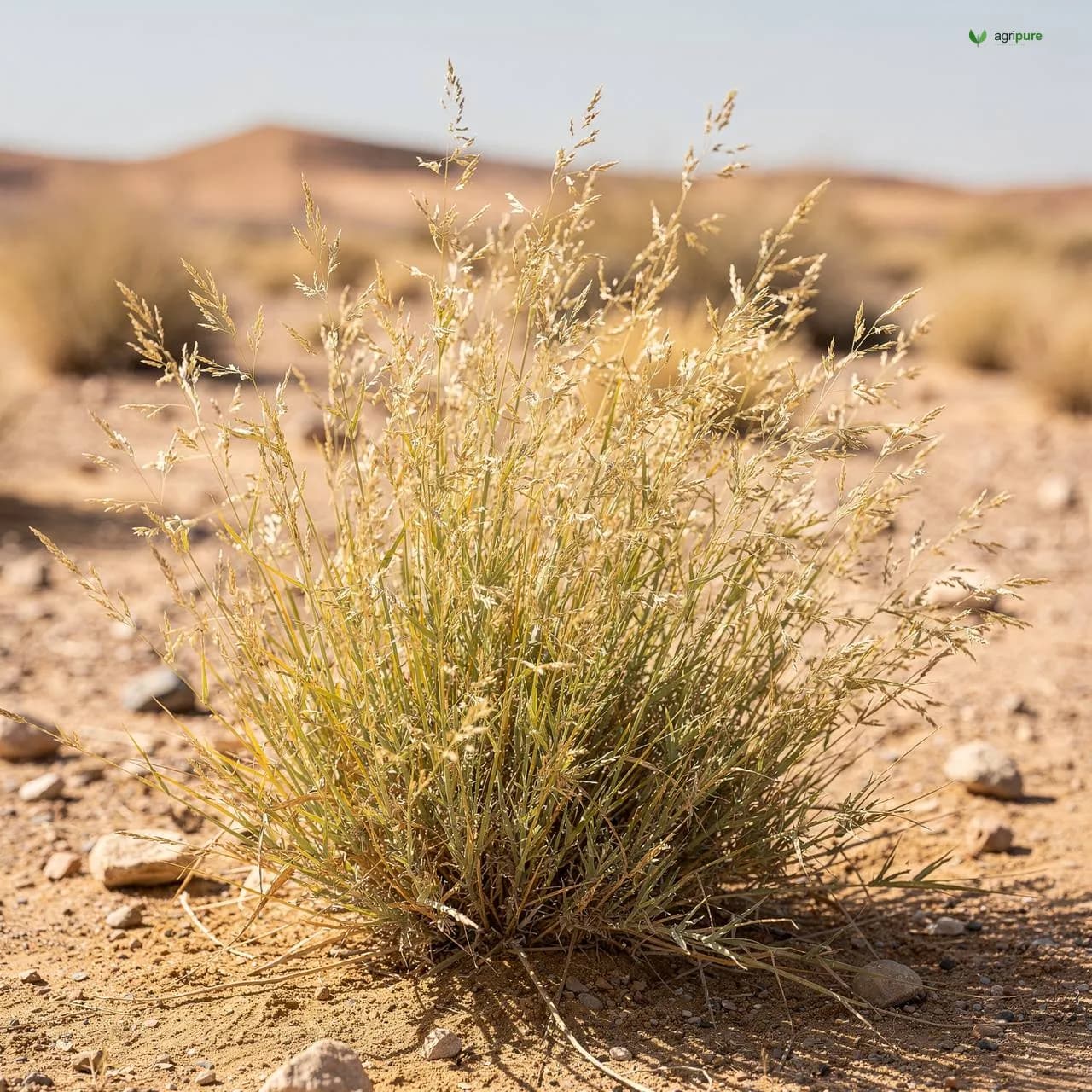
Kair (Capparis decidua), also called karira or karil, is a leafless, much-branched desert shrub or small tree, usually reaching about 4 to 5 m tall, with green photosynthetic branches, paired spines at the nodes, pink-to-red flowers, and small berry-like fruits that are pink when fresh and darken as they dry. Its native range is broad across arid and semi-arid Africa, the Middle East, and South Asia, spanning from Mauritania across to India and the Andaman and Nicobar Islands in Kew’s assessment. For a homesteader working hot, dry, sandy ground, the appeal is plain: this is a tough, near-leafless shrub that produces edible buds and fruit and helps hold marginal soil where thirstier plants simply will not grow.
Kair is unmistakable once you know it. The plant carries little or no foliage for much of the year and instead photosynthesises through its slender green stems, which are armed with paired spines at the nodes. It bears pink-to-red flowers and small, round, berry-like fruits that are pink when fresh and turn darker as they ripen and dry. It is accepted as a distinct species and is fundamentally a plant of the seasonally dry tropical biome.
Growing kair
Kair is a creature of hot, dry country. The IUCN records it across North Africa, the Sahel, the Arabian Peninsula, Iran, Pakistan, and India, and assesses it as Least Concern globally: a widespread, resilient species. Agroforestry data place it in genuinely harsh conditions: a mean annual temperature of roughly 25 to 31 degC, annual rainfall anywhere from about 100 to 750 mm, and growth on alkaline, sandy, gravelly, shallow, and rocky soils. A few grounded points for getting it established:
- Sun and site: Give it full sun in open, arid positions. Its natural ecology in dry tropical deserts and semi-deserts points to exposed, sunny ground rather than shade.
- Soil and drainage: It grows best on well-drained, alkaline, sandy or gravelly soils, and tolerates shallow rocky ground that defeats most fruiting plants.
- Water: It is described as extremely drought-resistant and adapted to prolonged drought, so its strength lies in surviving on the rainfall the site actually gets rather than in regular irrigation.
- Regeneration: The species coppices well and produces root suckers freely, which is useful both for establishment and for recovery after cutting.
The sources here do not give dependable, species-specific figures for propagation method, plant spacing, irrigation schedules, or time to first harvest, so those are deliberately left out rather than stated with false precision. Treat kair as a slow, low-input dryland shrub: plant it on hot, open, free-draining ground and let its drought tolerance and suckering habit do the work.
Harvest and uses
The harvest from kair is its young flower buds and its fruits. Both are used for food, and the fruits in particular go into vegetables, curries, and pickles. The fruit and young buds can also be eaten raw. The sources here do not provide reliable quantitative yield data for the shrub, so no yield figure is given rather than an invented one.
Beyond the kitchen, kair earns its place several ways:
- Culinary: Fruit and young buds eaten raw, and fruits used in vegetables, curry, and pickles — a genuine arid-zone food crop.
- Ecological and agroforestry: It is used in afforestation, reforestation, landscape gardening, and desert and semi-desert stabilisation, and it helps reduce soil erosion. It also offers habitat value, with the fruits eaten by birds.
- Medicinal (traditional): Traditional and review literature report use of the roots and root bark for ailments such as swollen joints, and a review notes broad ethnomedicinal use of the species.
Safety and cautions
The sources here identify the fruit and young buds as edible, but they do not provide a rigorous food-safety assessment for every part of the plant, and they do not clearly state which parts, if any, are unsafe. Where the research is silent, no claim is made here — kair’s edible parts are the buds and fruit as described above.
On the medicinal side, a review of the species reports traditional use and multiple bioactivities, but it does not establish clinical safety, effective doses, safety in pregnancy, or drug-interaction risk. Because the medicinal record rests on traditional use and pharmacology rather than human safety trials, any medicinal use should be approached cautiously, and pregnant or breastfeeding people, children, and anyone on prescription medication should seek qualified medical advice first. This profile makes no claim that kair treats or cures any condition.
Sources
- Capparis decidua — Wikipedia
- Capparis decidua — IUCN Red List of Threatened Species
- Capparis decidua — Agroforestry Tree Database, World Agroforestry (ICRAF)
- Capparis decidua — Plants of the World Online, Royal Botanic Gardens, Kew
- Capparis decidua: A Comprehensive Review of Traditional Uses, Phytochemistry and Pharmacology — Arabian Journal of Chemistry