pioneer
Lettuce
salaad patta
Lactuca sativa
Also known as Salaad Patta (Pakistan).
- punjab plains
- pothohar
- kpk hills
International hardiness
- USDA 8-10
- RHS H3
- AU: Cool temperate, Warm temperate, Mediterranean, Subtropical
Where it grows — regional guide
| Zones / rating | Regional notes |
|---|---|
USDA 8-10 | Grown across USDA zones 4 to 9 as a cool-season salad crop; shallow roots require steady moisture to prevent early bolting. |
| Zones / rating | Regional notes |
|---|---|
H3 (-5 to 1C) | Hardy under RHS H3 across allotments; sown in succession from spring into autumn for fresh salad leaves. |
| Zones / rating | Regional notes |
|---|---|
Cool temperate, Warm temperate, Mediterranean, Subtropical | Grown during autumn, winter, and early spring in home gardens; summer heat and dry soil push the shallow-rooted plants to bolt. |
| Zones / rating | Regional notes |
|---|---|
USDA 8-10 (USDA scale) Canada uses its own zone system; Canadian zones run roughly one lower than USDA. | Hardy salad crop grown as a cool-season annual in spring and autumn; requires steady watering to prevent bitter leaves. |
| Zones / rating | Regional notes |
|---|---|
Punjab plains, Pothohar, KPK hills | Pakistan:Grown across the plains as a cool-season rabi salad green; plants require steady irrigation and bolt quickly when heat arrives. India:Cultivated as a winter salad vegetable in home gardens and plains fields; requires cool weather to avoid premature bolting. |
Grows alongside
Species that appear with Lettuce in 248 of our published guides — a starting list for a guild, not a planting plan.
Lettuce (Lactuca sativa) is an annual, cool-season vegetable in the daisy family (Asteraceae), grown mainly for its edible leaves and occasionally for its stem or seeds. It was domesticated from wild prickly lettuce (Lactuca serriola) and is considered native to a broad band from the Mediterranean region to Siberia; today it is cultivated worldwide and has naturalized as a weed in disturbed habitats across most of the globe. For a homesteader it is the workhorse of the cool-season bed: fast, shallow-rooted, and forgiving, it slots into the gap between heavier crops and rewards a steady trickle of succession sowings with weeks of fresh salad.
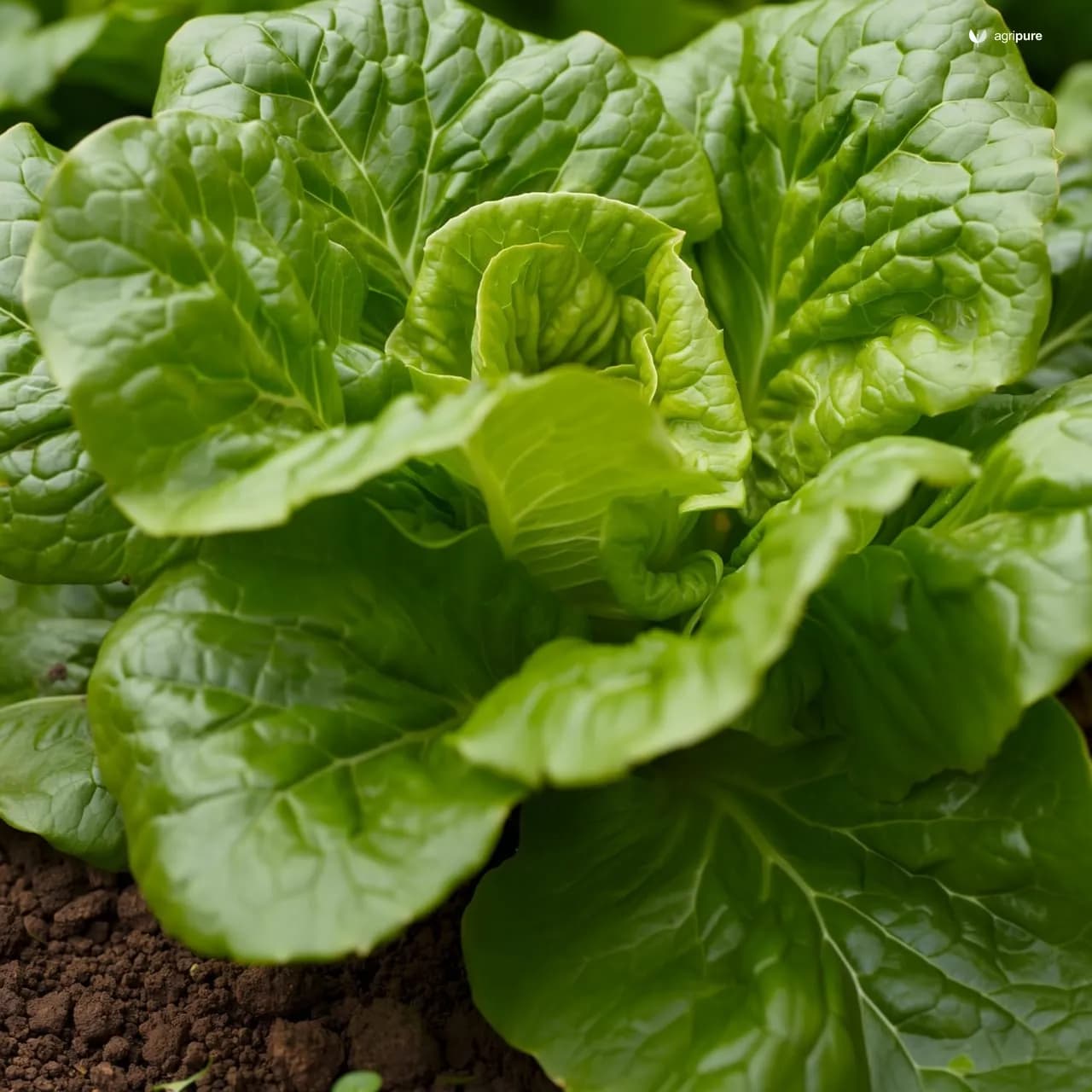
It is an erect annual herb, usually about 0.5 to 1 ft (15 to 30 cm) tall and wide in garden culture, growing taller when it bolts to flower. The leaves vary enormously by type: head-forming (crisphead/iceberg and butterhead), upright (romaine/cos), or loose-leaf, with entire, lobed, or frilled margins in shades from green to red. The flowers are small, yellow, daisy-like heads typical of the sunflower family, each maturing into small achenes tipped with a white pappus of hairs that carries the seed on the wind. A reliable field cue: a cut stem or leaf bleeds a white, milky latex — the genus name Lactuca comes from the Latin lac, “milk,” for exactly this sap.
Growing lettuce
Lettuce is propagated by seed only. For a spring crop you have two routes: start seed indoors 6 to 8 weeks before the last frost and transplant out, or direct-sow about 2 weeks before the last spring frost. To keep salad coming rather than arriving all at once, sow successive batches at roughly 2-week intervals from the last frost through to mid-June. For an autumn crop, sow about 3 months before the first frost, or simply in late summer for fall harvest.
Give the plants full sun to partial shade. In summer heat, a spot that gets 3 to 4 hours of sun and shade the rest of the day helps reduce heat stress and bolting. Lettuce prefers fertile, organically rich, moist, well-drained soil at a pH of 6.0 to 6.7.23 Because the root system is shallow, the soil needs to stay consistently moist for good growth and flavour; dry soil is a known trigger for bolting and bitter leaves. Spacing follows the plant’s size — the Missouri Botanical Garden lists a typical height and spread of 0.5 to 1.0 ft, which works out to roughly 6 to 12 inches (15 to 30 cm) between plants depending on cultivar; the cited sources give no tighter figure, so treat this as a guideline rather than a rule.
Time to maturity depends on the type. Head lettuces (crisphead, iceberg and similar) are ready 70 to 80 days after seeding, or 60 to 70 days after transplanting. Leaf types mature faster — 50 to 60 days after seeding, or 30 to 45 days after transplanting.
Harvest and uses
Harvest head lettuces once the heads are firm and full size. Leaf types are more flexible: pick individual outer leaves as you need them, taking from the outside so the plant keeps producing from its centre. The main use is culinary — lettuce is grown chiefly for its edible leaves, with some types also valued for an edible stem. Its strength on a homestead is timing: the loose-leaf types in particular let you crop a little and often through the cool months rather than committing the whole bed to one cut.
Climate and where it grows
Lettuce is a true cool-season crop, performing best in the cool weather of spring and fall and faring poorly in sustained heat. It is reported as grown across **USDA hardiness zones 2 to 11 as a cool-season annual. The key limit is temperature: high heat (around **70 to 80 °F / 21 to 27 °C) combined with dry soil pushes the plant to bolt — sending up a flower stalk — at which point the leaves turn bitter and useful production stops. Planning your sowings so the bulk of growth lands in cool weather, and keeping the soil evenly moist, is the single biggest lever on quality.
How to identify it
Lettuce is recognisable by this combination of features:1234
- Habit: Erect annual herb, usually 15 to 30 cm tall and wide in the garden, taller when bolting.
- Leaves: Highly variable — head-forming, upright/romaine, or loose-leaf, with entire, lobed or frilled margins in green to red.
- Sap: A white, milky latex that bleeds from cut stems and leaves.
- Flowers: Small yellow daisy-like flower heads.
- Seed: Small achenes carried on a white pappus of hairs; the flat cypsela has 5 to 9 nerves and an elongated beak.
Sources
- Lactuca sativa (cultivated lettuce) – Go Botany, Native Plant Trust
- Lactuca sativa (Lettuce) – NC State Extension
- Lactuca sativa – Missouri Botanical Garden Plant Finder
- Lettuce (Lactuca sativa) Plant Profile – Mother Earth Living
- Lactuca sativa – iNaturalist