pioneer
Khip
khip
Leptadenia pyrotechnica
- sindh coast
- balochistan highlands
- punjab plains
International hardiness
- USDA 9-11
- RHS H2
- AU: Arid / semi-arid
Where it grows — regional guide
| Zones / rating | Regional notes |
|---|---|
USDA 9-11 | No region-specific data yet |
| Zones / rating | Regional notes |
|---|---|
H2 (1 to 5C) | No region-specific data yet |
| Zones / rating | Regional notes |
|---|---|
Arid / semi-arid | No region-specific data yet |
| Zones / rating | Regional notes |
|---|---|
USDA 9-11 (USDA scale) Canada uses its own zone system; Canadian zones run roughly one lower than USDA. | No region-specific data yet |
| Zones / rating | Regional notes |
|---|---|
Sindh coast, Balochistan highlands, Punjab plains | Pakistan:An indigenous sand-dune stabilizing shrub across the arid plains and coastal sands; belongs to the latex-bearing dogbane family and internal use warrants caution. India:Grown or harvested wild in the Thar desert tracts for dune binding and dryland fibre; carries bioactive latex principles requiring caution regarding internal use. |
Khip (Leptadenia pyrotechnica), also called broom bush, is a long-lived, deep-rooted, mostly leafless desert shrub in the dogbane and milkweed family (Apocynaceae, formerly placed in the Asclepiadaceae). Its native range runs as a broad belt from the Sahara through Arabia and Iran to northwestern India, in true desert and dry-shrubland habitats on deep, shifting sand. For a homesteader on a hot, sandy, frost-free site, khip is one of the few woody plants that will form thickets on ground that defeats almost everything else, and it carries a long record of use for fodder, fuel, fibre, famine food, and traditional medicine.
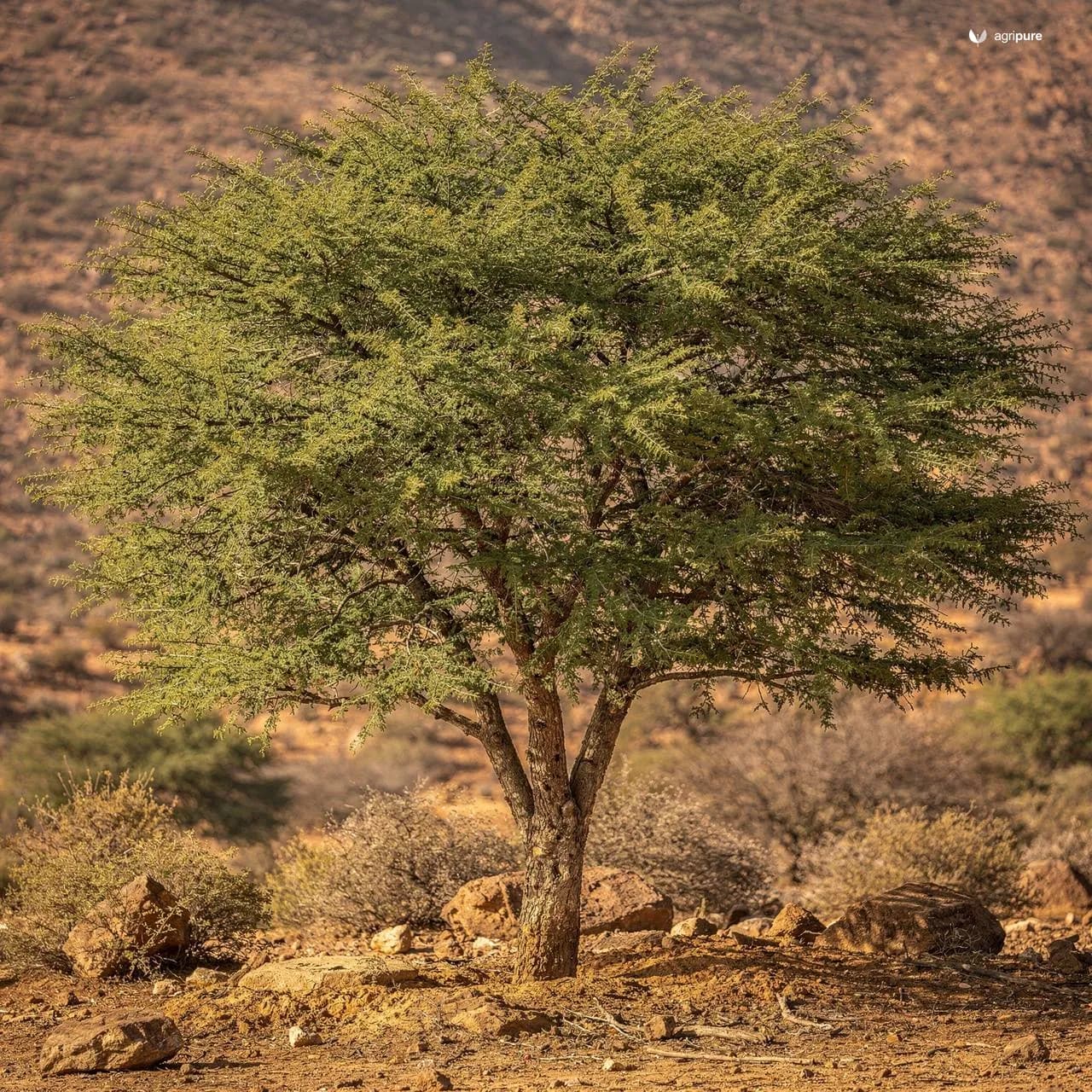
In the field, khip reads as a loose, broom-like clump of erect, smooth, greenish to yellow-green leafless twigs, often forming dense stands on sand dunes. It is a much-branched, leafless shrub or small tree, with field accounts giving heights of roughly 1 to 3 m and others up to about 2 to 4 m (occasionally 6 m). The stems are straight, slender and terete (cylindrical) with minutely downy young tips, and they do the work of leaves: any small linear leaves on young shoots are shed early as a drought adaptation. Below ground it drives a deep tap-root reported as far as 12 m down, which is what lets it hold on through extreme drought and moving sand.
Growing khip
Khip is a true desert species, best matched to very hot, dry, sandy sites in full sun with little or no frost. It grows in arid to hyper-arid deserts including sand dunes and sandy plains, tolerating very low rainfall, high summer heat, and high evapotranspiration. Reliable agronomic manuals are sparse, so the points below draw on desert ecology and plant-use sources rather than cultivation trials.
- Propagation: Usually from seed. The plant sets many wind-dispersed seeds carried on tufts of silky hairs (a coma), and desert databases record it as both wild and cultivated, which points to workable seed propagation in its region. Fresh seed in sandy, free-draining seedbeds gives the best result; seedlings are typically raised in nurseries and transplanted, or seed is direct-sown onto dunes for stabilisation and fodder.
- Vegetative material: Some Leptadenia species can be raised from stem cuttings, but robust species-specific data for L. pyrotechnica were not found here, so cuttings should not be assumed without local guidance.
- Soil and site: Deep, sandy, well-drained ground. Its whole physiology is built around dry, sandy conditions, and it is not a plant for heavy or wet soils.
- Sun and water: Full sun, and very little water once established. Its deep tap-root carries it through drought, so the establishment goal is to get that root down rather than keep the surface moist.
Detailed sowing dates, plant spacing, and time-to-maturity figures are not consistently documented in the general sources available here, so they are deliberately left out rather than stated with false precision.
Harvest and uses
Khip is a multipurpose desert shrub rather than a single-harvest crop, and across its native range it is used for fodder, fuel, fibre, famine food, and traditional medicine. Its green, leafless stems do the forage work, the woody growth supplies fuel, and the tough plant fibres have traditional uses. The seeds, borne in follicles and tipped with silky hairs for wind dispersal, are the basis for raising new plants. Beyond direct products, the species is valued ecologically: its deep, extensive roots and dune-forming habit make it a sand binder that stabilises shifting sand and sandy plains. For a homesteader, the most durable return is often the ground itself, since a stand of khip can hold a sandy site together while tougher trees and understory establish in its shelter.
How to identify it
Khip is recognisable from a combination of features that together are hard to mistake on a desert site:412
- Habit: A much-branched, broom-like, leafless shrub or small tree, roughly 1 to 3 m (up to about 4 to 6 m), often in dense thickets on sand.
- Stems: Straight, slender, smooth, cylindrical green to yellow-green twigs that photosynthesise in place of leaves.
- Leaves: More or less absent; any small linear leaves appear only on young shoots and drop early.
- Flowers and fruit: Small flowers typical of the milkweed group, followed by follicles (pods) whose seeds carry silky hairs.
- Roots: A very deep tap-root, reported to around 12 m, an underground clue to its drought endurance.
Safety and cautions
The sources describe khip as a plant used in places for famine food and traditional medicine, but they are explicit that safety data are incomplete and reliable information comes mainly from its native desert environments. Because it belongs to the milkweed and dogbane family (Apocynaceae), a group with many latex-bearing, bioactive plants, any food or medicinal use should be approached conservatively and guided by knowledgeable local practice. This profile records the plant’s traditional roles without making any medical claim and gives no dosages; treat khip first as a hardy desert and dune-stabilising shrub, and regard its edible or medicinal uses as traditional practices needing informed, local guidance.
Sources
- Comparative morpho-anatomical study on Leptadenia pyrotechnica in hyper-arid and arid habitats — PMC (National Library of Medicine)
- Leptadenia pyrotechnica — Useful Tropical Plants Database
- Leptadenia pyrotechnica (Forssk.) Decne. — Plants of the World Online, Royal Botanic Gardens, Kew
- Leptadenia pyrotechnica (Forssk.) Decne. — International Plant Names Index (IPNI)