pioneer
Velvet Bean
kewanch
Mucuna pruriens
Also known as Kewanch (Pakistan).
- punjab plains
- sindh coast
International hardiness
- USDA 10-12
- RHS H1b
- AU: Tropical, Subtropical
Where it grows — regional guide
| Zones / rating | Regional notes |
|---|---|
USDA 10-12 | Vigorous summer green manure and cover vine in warm southern states; pod hairs cause severe itching dermatitis and raw seeds contain toxic levels of L-dopa. |
| Zones / rating | Regional notes |
|---|---|
H1b (10 to 15C) | No region-specific data yet |
| Zones / rating | Regional notes |
|---|---|
Tropical, Subtropical | Used as a fast summer green manure in tropical and subtropical agriculture; bristly pod hairs cause painful dermatitis and raw seeds are toxic without cooking. |
| Zones / rating | Regional notes |
|---|---|
USDA 10-12 (USDA scale) Canada uses its own zone system; Canadian zones run roughly one lower than USDA. | No region-specific data yet |
| Zones / rating | Regional notes |
|---|---|
Punjab plains, Sindh coast | Pakistan:Grown as a summer soil-enriching kharif vine in Punjab and Sindh plains; maturing pod hairs cause severe itching dermatitis and raw beans carry toxic L-dopa. India:A traditional monsoon green manure and medicinal climber; stinging pod hairs cause intense skin dermatitis and raw seeds are toxic with high L-dopa content. |
Grows alongside
Species that appear with Velvet Bean in 1 of our published guides — a starting list for a guild, not a planting plan.
Velvet bean (Mucuna pruriens) is a vigorous, fast-climbing legume vine in the pea family, grown as a heat-loving annual. Its native range is reported as tropical Africa and tropical Asia, with one review tracing its origin to southern China and eastern India; today it is widespread across the tropics and subtropics and naturalized in parts of the Americas and Australia. For a homesteader, the hook is that it is one of the hardest-working summer cover crops available: it grows explosively in heat and humidity, fixes nitrogen, smothers weeds, and rebuilds tired soil in a single season.
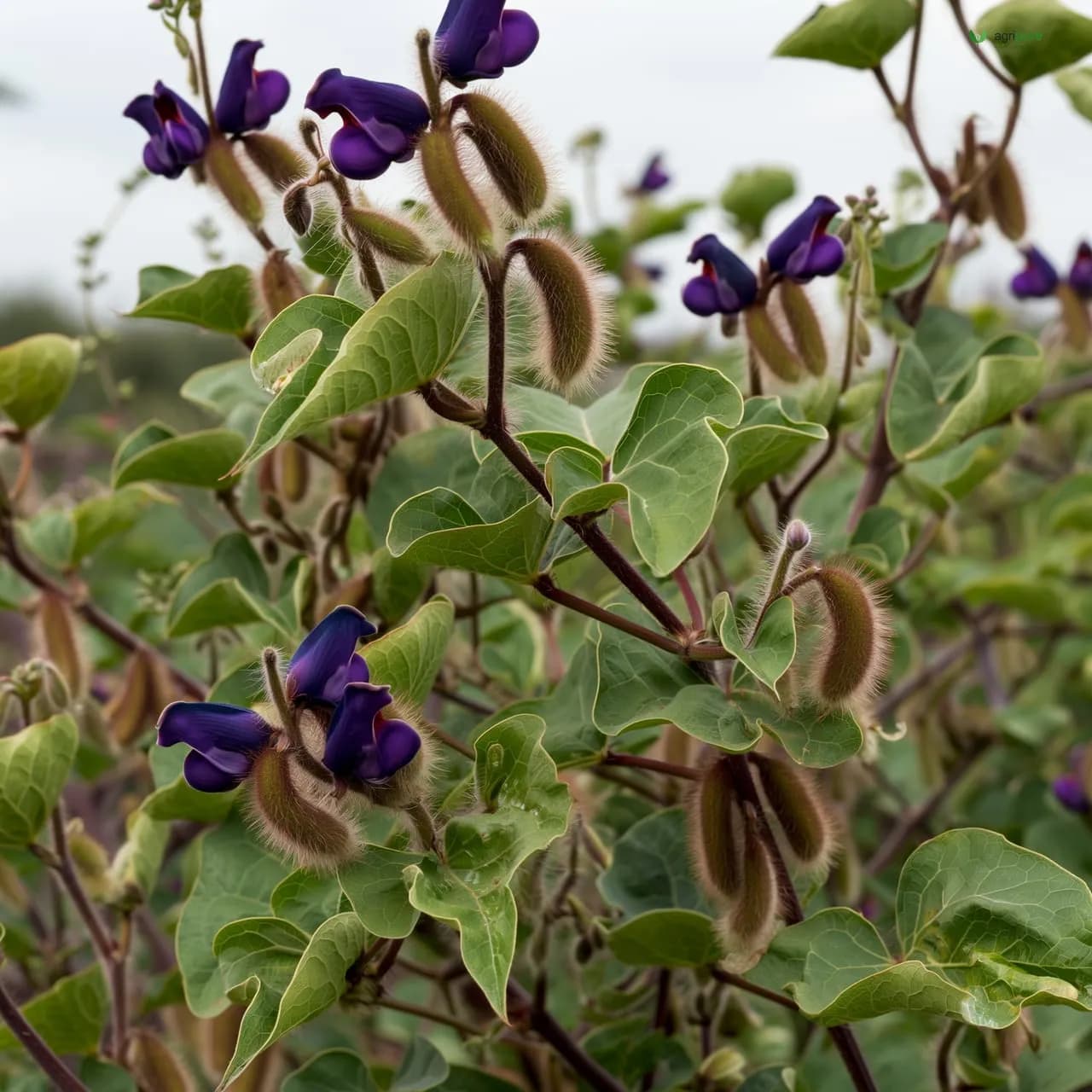
The plant is easiest to recognize by its fruits. The pods are clothed in silky to intensely irritating hairs: non-stinging forms carry appressed, soft silky hairs, while other forms bear hairs that cause severe skin irritation on contact. The trait is so defining that the species epithet pruriens itself refers to those itching hairs. It is a rampant climbing annual, and that same vigor is what makes it so effective at smothering weeds and covering bare ground.
Growing velvet bean
Velvet bean is best handled as a spring-sown, summer cover crop. It is a tropical, heat- and humidity-tolerant annual that is intolerant of frost, so it must be timed to the warm season once the danger of cold has passed. Its virtue for low-input growers is adaptability: it grows rapidly and tolerates a wide range of soil types and pH, performing well in heat and humidity where many crops struggle.
Because the vining forms run hard and far, management is the main consideration. Dwarf “bush” cultivars are available and are easier to keep in bounds than the long-running vining types, useful if you want the soil benefits without the sprawl. Like other members of the pea family it fixes nitrogen and improves soil fertility, leaving the ground richer than it found it.
The available botanical and horticultural sources do not give reliable figures for spacing, irrigation, sowing depth, or exact days to maturity, so those are left out rather than stated with false precision. In practice, treat velvet bean like other warm-season tropical legumes: sow into warm ground at the start of the hot season, give the vining types room or a support to climb, and plan for fast, dense growth.
Harvest and uses
If you grow velvet bean as a cover crop, the clearest sourced recommendation is to cut the crop at flowering, timed specifically to avoid the irritating hairs that develop on the maturing fruits. The seeds are nutritionally dense: one study measured roughly 314 g/kg crude protein in mature seed, though that is a composition figure rather than a field yield. No dependable yield-per-plant or yield-per-acre number appears in the available sources, so none is given.
Its primary value is as a cover crop and forage plant in warm regions, prized for rapid growth, nitrogen fixation, and weed suppression; it has also been credited with suppressing some nematodes, including the southern root-knot nematode. It is a food and feed resource in some contexts, and one review describes it as a “good source of food,” but that must be read with caution given the plant’s toxicity and antinutritional compounds (see Safety below). More broadly it is valued as a green crop and soil-improving legume in tropical farming systems.
Medicinal uses
Velvet bean has a substantial place in herbal and pharmacological literature. A review of the species notes that all parts have been investigated for medicinal activity, including anti-Parkinson and neuroprotective, anti-diabetic, aphrodisiac, anti-neoplastic, anti-epileptic, anti-microbial, anti-venom, and anti-helminthic effects. Most notably, the beans are a recognized commercial source of L-dopa, the compound used in treating Parkinson’s disease. This profile describes documented research and traditional interest only; it makes no claim that the plant treats or cures any condition, and the same potency that makes it medicinally interesting is what makes it hazardous to consume casually.
Safety and cautions
Toxicity and edibility cautions are essential for this species, and the sources are explicit about them. A few grounded points for any homesteader:
- Irritating hairs: The hairs on the fruits and pods can cause contact dermatitis and severe skin irritation. Handle maturing pods with care, and note that cutting the crop at flowering is the recommended way to sidestep them.
- Toxic and antinutritional compounds: The plant contains toxic constituents including L-dopa and hallucinogenic tryptamines, alongside antinutritional factors such as phenols, tannins, trypsin inhibitors, phytate, cyanogenic glycosides, oligosaccharides, saponins, lectins, and alkaloids.
- Raw seed is not casual food: Because of those compounds, raw seed should not be treated as ordinary food. The literature indicates that processing such as dry heating or autoclaving reduces antinutritional factors and improves protein quality.
- Treat it as clinically active: The strongest evidence for hazard concerns the pod hairs (irritation) and the seeds (high L-dopa and other toxic constituents). The review notes all parts have medicinal properties, but that is not an endorsement for eating them; the L-dopa content makes any medicinal use clinically active rather than benign.
The available sources do not provide a formal contraindication, drug-interaction, or pregnancy warning list, so none is invented here. As a general principle with any plant carrying potent bioactive compounds, anyone considering medicinal use, especially those pregnant, breastfeeding, or taking prescription medication, should seek qualified medical advice first.
Sources
- The Magic Velvet Bean of Mucuna pruriens — PMC (National Library of Medicine)
- Mucuna pruriens (Velvetbean, Cowitch) — NC State Extension
- Composition and processing of Mucuna pruriens seed — Journal of Agricultural and Food Chemistry (ACS)
- Mucuna pruriens plant profile — USDA PLANTS Database
- Mucuna pruriens — iNaturalist