pioneer
Proso Millet
cheena
Panicum miliaceum
Also known as Broomcorn Millet (United States), Cheena (Pakistan, India).
- punjab plains
- pothohar
International hardiness
- USDA 9-11
- RHS H3
- AU: Warm temperate, Cool temperate, Subtropical, Arid / semi-arid
Where it grows — regional guide
| Zones / rating | Regional notes |
|---|---|
USDA 9-11 | Short-season warm-season annual grain for dry northern plains; mature seeds are a nutritious grain, but fresh young forage can be toxic to young sheep and goats. |
| Zones / rating | Regional notes |
|---|---|
H3 (-5 to 1C) | No region-specific data yet |
| Zones / rating | Regional notes |
|---|---|
Warm temperate, Cool temperate, Subtropical, Arid / semi-arid | Quick-maturing summer grain crop in semi-arid and temperate cropping areas; take care not to graze young sheep or goats on fresh regrowth due to toxicity risks. |
| Zones / rating | Regional notes |
|---|---|
USDA 9-11 (USDA scale) Canada uses its own zone system; Canadian zones run roughly one lower than USDA. | A fast short-season summer annual cereal grain on dry prairie soils; seed is harvested for food or birdseed, but green shoots can poison young sheep and goats. |
| Zones / rating | Regional notes |
|---|---|
Punjab plains, Pothohar | Pakistan:A fast-maturing, drought-hardy zaid or kharif millet sown in Punjab and Pothohar; grain is wholesome, but young green regrowth can poison young sheep and goats. India:A traditional short-duration summer millet cultivated on marginal dryland soils; grain is safe for cooking, but grazing young sheep on fresh sprouts is hazardous. |
Proso millet (Panicum miliaceum) is a warm-season annual grass and one of the earliest cereals humans domesticated, still grown today for food, livestock feed, and birdseed. It is native to Eurasia — domestication evidence points to temperate China along with prehistoric cultivation in Turkey and southern Europe — and has since spread across several continents, from temperate zones into semi-arid country. For a homesteader, the appeal is simple: this is a tough, low-input grain that asks for little water, shrugs off heat, and fills a short slot in the growing season, which makes it a sensible cereal for dry, marginal ground where thirstier crops sulk.
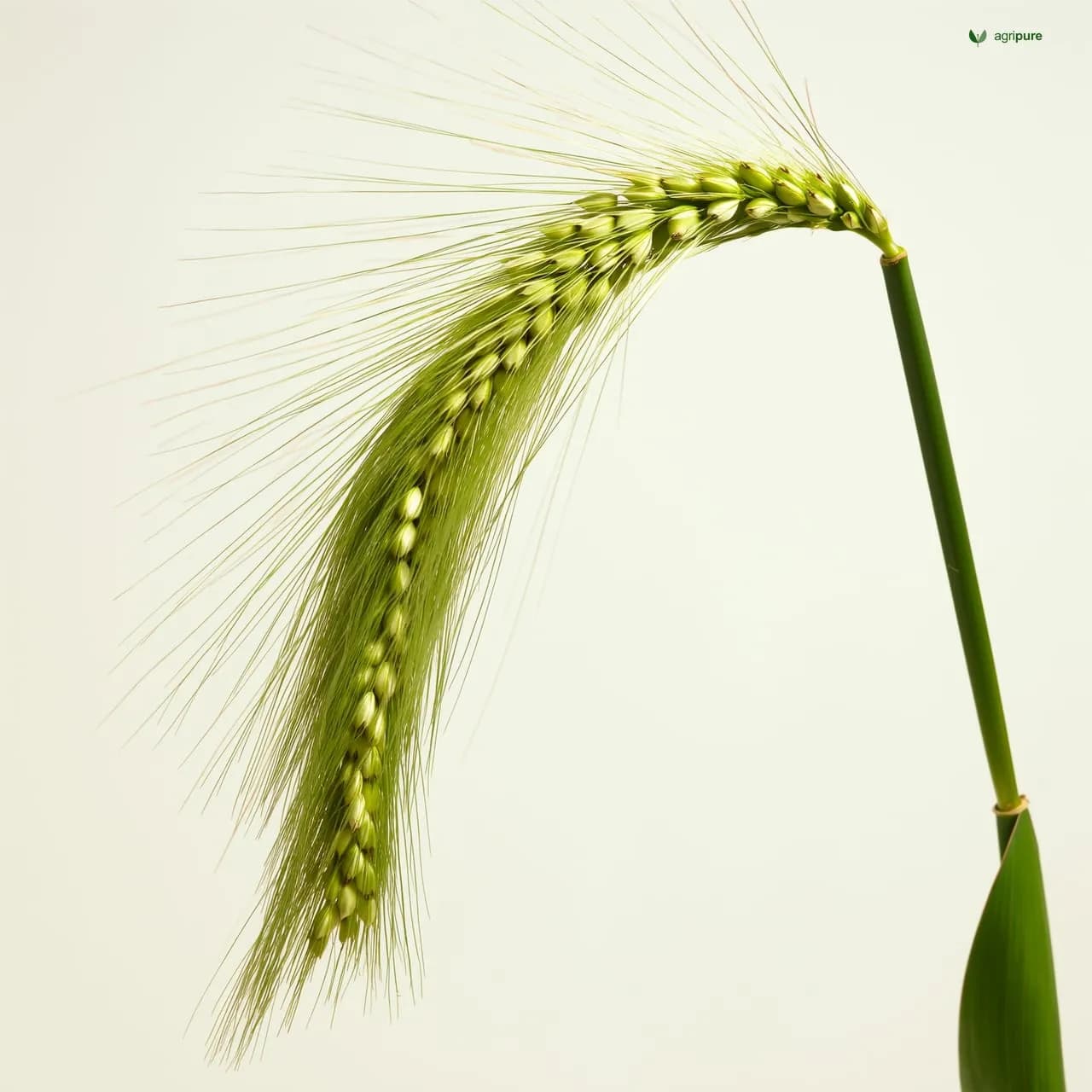
Proso millet grows as a tufted, erect annual, typically 0.5 to 1.2 m (about 1.5 to 4 ft) tall, with stems that may branch at the base. The stems (culms) are erect, light green, and cylindrical, ranging from hairless to sparsely hairy, and can be stout and somewhat spreading at the base in cultivated forms. Leaves are alternate along the stem, with blades up to about 30 cm (12 in) long and roughly 2 cm wide, widest near the base; the blades are generally smooth and hairless on both surfaces, while the leaf sheaths are whitish-green, swollen, and carry long spreading hairs in many forms. There are no auricles, and the ligule is a fringe of hairs. The seed head is a terminal panicle 7 to 25 cm (3 to 10 in) long, which can be compact and broom-like or more open depending on the variety.
Growing proso millet
Proso millet is propagated by seed only; it is a true annual with no vegetative spread. Sow once the soil has warmed to at least 18 °C (65 °F), because it is a heat-loving warm-season crop that is not overwintered. The seed is relatively large, which lets seedlings emerge from a comparatively greater depth and gives the crop a longer germination window in the field.
- Soil: It tolerates a wide range of textures — clay loam, loam, sandy loam, and gravelly soils — and copes with conditions from moist through to quite dry, but it needs well-drained ground and performs poorly on waterlogged sites. It is often described as a low-input, low-maintenance cereal that does well on marginal, drought-prone soils.
- Sun: Give it full sun for best growth.
- Water: It performs in dry to medium moisture regimes and is notably drought tolerant compared with many other cereals.
- Spacing: For garden-scale plantings, Missouri Botanical Garden suggests sowing seed 3 to 6 inches apart and 1 inch deep into a weed-free, well-tilled bed.
One honest caveat: the general botanical and extension sources used here do not give consistent figures for commercial row spacing, days to maturity, or harvest timing for proso millet, so those numbers are deliberately left out rather than stated with false precision. Treat it as a fast warm-season cereal: get it into warm, free-draining soil in full sun, keep it on the lean side, and avoid heavy, wet ground.
Climate and where it grows
Proso millet is grown as a warm-season annual rather than a perennial, so hardiness is really a question of whether the summer is hot enough rather than how cold the winter gets; Missouri Botanical Garden lists it as suitable for USDA Zones 2 to 11 when grown as an annual crop. Its standout traits are high drought and heat tolerance, which suit it to semi-arid and continental climates. It also ranges further north than most other millets — up to about 54°N latitude — and adapts to plateau and high-elevation conditions, while it does not tolerate waterlogged soils.
How to identify it
The key field characters for proso millet are its hairy leaf sheaths set against hairless blades, its large, smooth (glabrous) spikelets, and its variable but often broom-like panicle. The mature grains are about 3 mm long, ovoid to broadly ellipsoid and slightly flattened on one side, and their colour runs from nearly white through to reddish brown, with many cultivated colour types in between. Taken together — the tufted erect habit, the hairy swollen sheaths, the long hairless blades widest near the base, and the broom-like seed head — these make it recognisable in the field.
Safety and cautions
Proso millet grain is generally considered non-toxic to humans and to most livestock, which is part of why it has such a long history as a food and feed crop. There is, however, one specific caution worth knowing if you graze animals: the young forage or regrowth can poison young sheep and goats, so it must be used cautiously as pasture for those animals. The straightforward homestead takeaway is to value it primarily as a grain and seed crop, and to be careful before turning young stock onto fresh or regrowing stands.
Sources
- Proso Millet (Panicum miliaceum) – Illinois Wildflowers
- Wild Proso Millet – Cornell University Weed Science
- Panicum miliaceum – Missouri Botanical Garden Plant Finder
- Proso Millet – Ontario Weed Identification Guide (Government of Ontario)
- Proso Millet (Panicum miliaceum L.) and Its Potential for Cultivation in the Pacific Northwest: A Review – PMC (National Library of Medicine)
- Proso Millet – Agricultural Marketing Resource Center (Iowa State University)
- Proso millet (Panicum miliaceum) – Feedipedia (INRAE / CIRAD / AFZ / FAO)